


The Los Angeles Lakers, arguably the NBA’s most popular team, has been sold for $12bn to Bob Iger and Joshua Kushner after just 14 months since it was last sold.
The Los Angeles Lakers is set to be sold for $12bn to former Disney CEO Bob Iger and Joshua Kushner.
According to unnamed sources cited by ESPN, the NBA team will be sold for a record-breaking figure only 14 months after it was last sold to Mike Walter and his investment firm TGW Global, who acquired the team from Jeanie Buss last year.
“As lifelong NBA fans, we are deeply honoured for the opportunity to become stewards of the Los Angeles Lakers, one of the most iconic sports franchises in the world,” said Iger and Kushner in a statement.
“Our long-term commitment is to build on that foundation, compete at the highest level, and serve this extraordinary team, its fans, and the city of Los Angeles.”
It is unknown why Walter sold his majority ownership. His acquisition of the Lakers was approved by the NBA Board of Governors in October 2025 after announcing the deal in June 2025.
In Iger and Kushner’s statement, they highlighted that they are grateful to “Jeanie Buss, the Buss family, the players, and the staff for welcoming me into this chapter”.
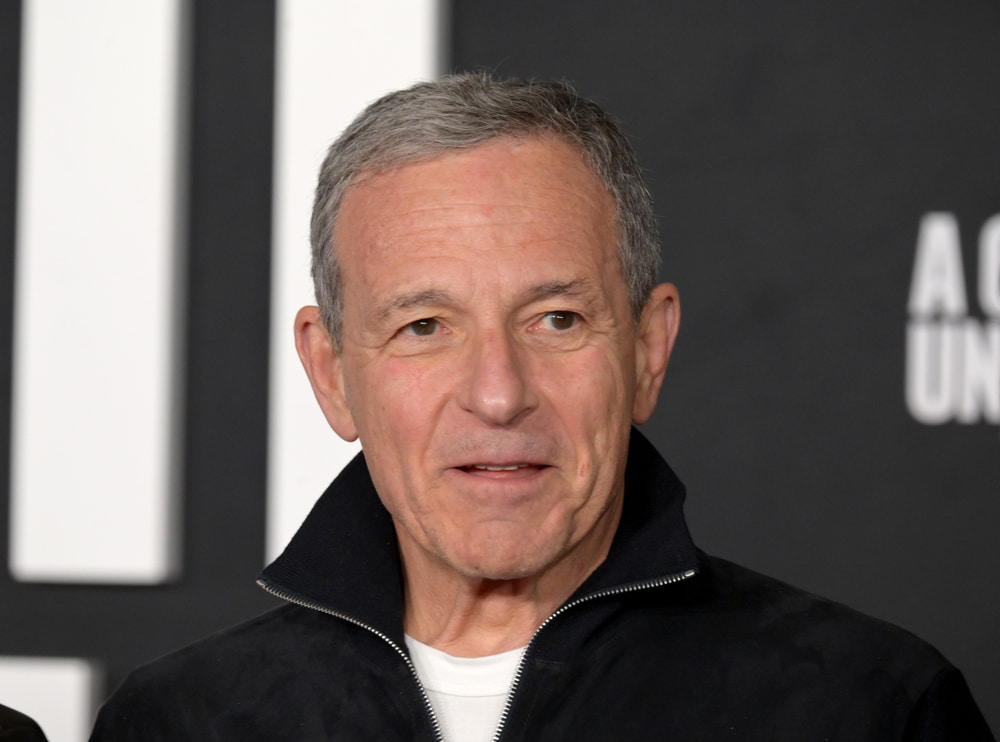
Iger is the former CEO of Disney, having been succeeded by Josh D’Amaro this year. His net worth, according to Forbes, is worth up to $700m and he has previous sports investments, acting as a controlling owner of the National Women’s Soccer League team, Angel City FC, alongside his wife Willow Bay.
Kushner is the brother of Jared Kushner, the son-in-law of US President Donald Trump. He leads Thrive Capital, which Iger is an investor in, which has minority ownership stakes in other NBA teams- the Miami Heat and Memphis Grizzlies – as well as a majority share in the MLB’s San Francisco Giants.
Thrive Eternal, an investment arm of Thrive Capital, was one of the primary investors in Gianni Infantino’s FIFA Forward Enterprise before it was controversially scrapped.
Iger and Kushner’s consortium was linked with a bid connecting to the NBA’s proposed Las Vegas expansion team, which was reportedly demanding a fee of up to $10bn.
The Lakers are the second most-successful NBA team in history with 17 championships, home to the US’ second most valuable media market in Los Angeles, and have seen some of the all-time great players play for the franchise, which includes LeBron James, Kobe Bryant and Shaquille O’Neal.
Why Walters is selling the Lakers so soon after buying
There are many potential reasons as to why Walters is selling his majority 78% stake in the Lakers after just acquiring the NBA franchise.
The TWG Global Founder has been the subject of federal investigations from the Department of Justice (DOJ) and the Securities and Exchange Commission (SEC) over alleged financial fraud, loan disclosure violations and misrepresentation since last year.
The investigation focuses on related-party transactions associated with Walter’s companies Delaware Life Insurance and Clear Spring Life and Annuity. Walter is being investigated to determine whether he has illegally funnelled billions of dollars of assets into private credit investments and loans to TGW Global.
Reviews into his businesses by state regulators revealed that approximately 3%, or $1bn, of investment portfolios were tied to related parties. This was later corrected as filings showed $16bn-$21bn of total assets were tied to associated businesses.
Financial authorities and the Justice Department are now assessing whether Walters violated third-party laws, as the breaking of laws would mean he made loans appear as independent and third-party investments on paper, which would evade regulatory limits and reporting requirements.
The Federal Bureau of Investigation (FBI) has already seized electronic devices related to the investigation.
Walter nor his companies have been charged with any crime or misconduct and are fully cooperating with the investigation.
There is no official determination as of the time of writing whether this relates to the funds used to acquire the Lakers in June 2025.
Bloomberg reported yesterday (12 August) that TWG will use the $12bn, which could rise to $12.5bn, from Kushner and Iger to reduce the affiliated loans on its balance sheet of insurers.
Walter suffered a stroke in 2024 during the World Series finals between the Los Angeles Dodgers and the New York Yankees. His health has since improved from this.
A new commercial avenue for the Lakers?
Speaking to Insider Sport, Dani Cushion, Chief Marketing Officer for Teads, says the Lakers deal represents a huge commercial upside for Kushner and Iger as owners of one of the most valuable US sports teams.

“The record-breaking Lakers deal is another reminder that sport today is much bigger than what happens on the court,” says Cushion.
“Major sporting moments have become global entertainment events, bringing huge audiences together around a shared experience in a way few other forms of media can compete with.”
In 2025, the Lakers posted total revenue of $551m and an operating EBITDA at $170m. Ticket sales accounted for $101m, while sponsorship revenue brought the Lakers in $155m. Media and local TV rights brought in $110m.
Being one of America’s most popular teams, the Lakers have sponsorship and partnerships with the likes of Crypto.com, Bibigo, Toyota and Delta Air Lines.
Cushion believes that due to the close proximity sports have with sponsorships, the Lakers’ new front office could see more sponsorship and commercial ventures in the future as more companies look to leverage the Lakers brand to gain new customers.
“In the US, half of consumers are more likely to consider brands advertising alongside sports content, while 45% trust advertising from brands they wouldn’t traditionally associate with sport,” says Cushion.
“That shows that the opportunity extends far beyond the usual sports advertisers. What’s more, engagement doesn’t stop when the final whistle blows. Among fans who use a second screen while watching, 40% shop online and 35% search for products or offers related to the event. Interestingly, consumers are also more receptive to advertising before and after games than during them.
“As sports franchises increasingly become entertainment and lifestyle brands in their own right, the opportunity for advertisers is expanding too. The brands that benefit won’t necessarily be those with the biggest halftime spot, but those that understand how to become part of the wider culture and conversation surrounding sport.”