


FIFA and football generally appear to have sleepwalked into chaos. The 2026 World Cup has generated record revenues, and more people than ever are in love with the beautiful game.
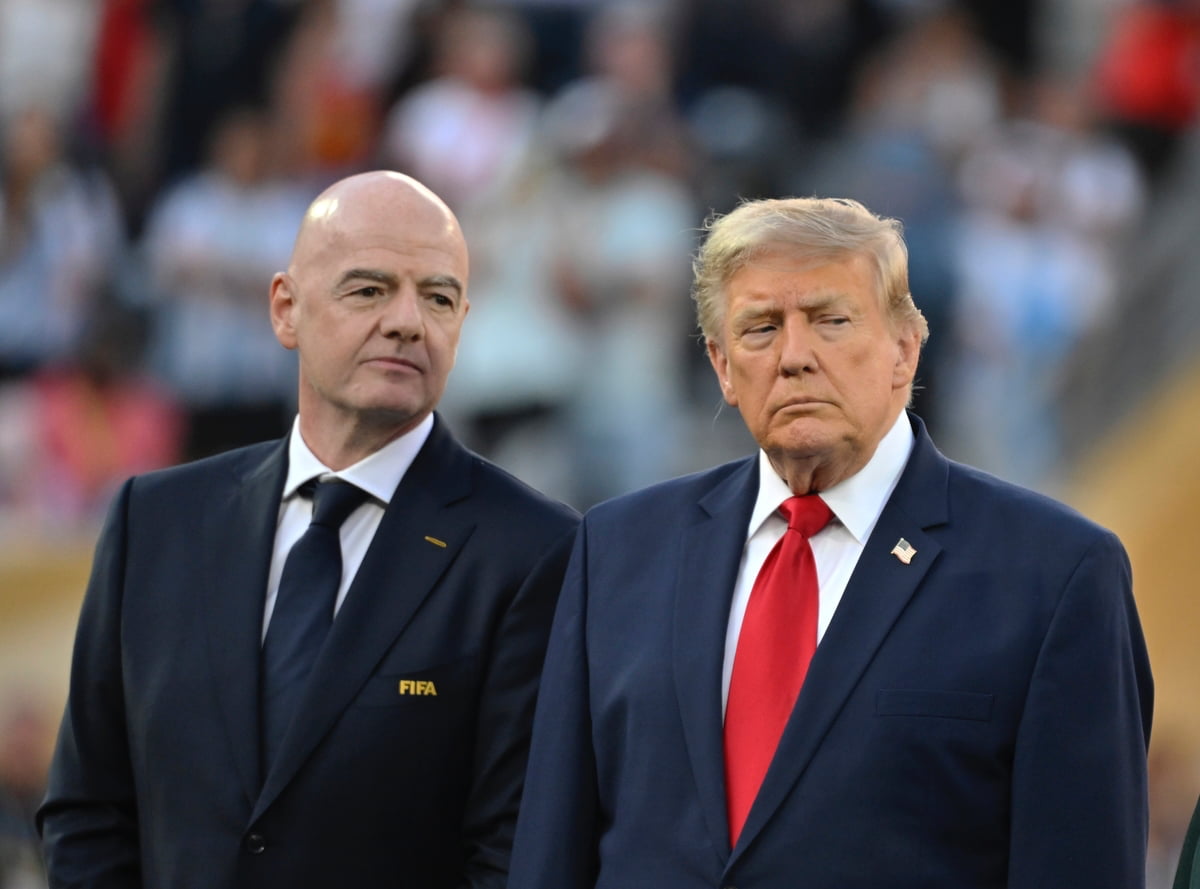
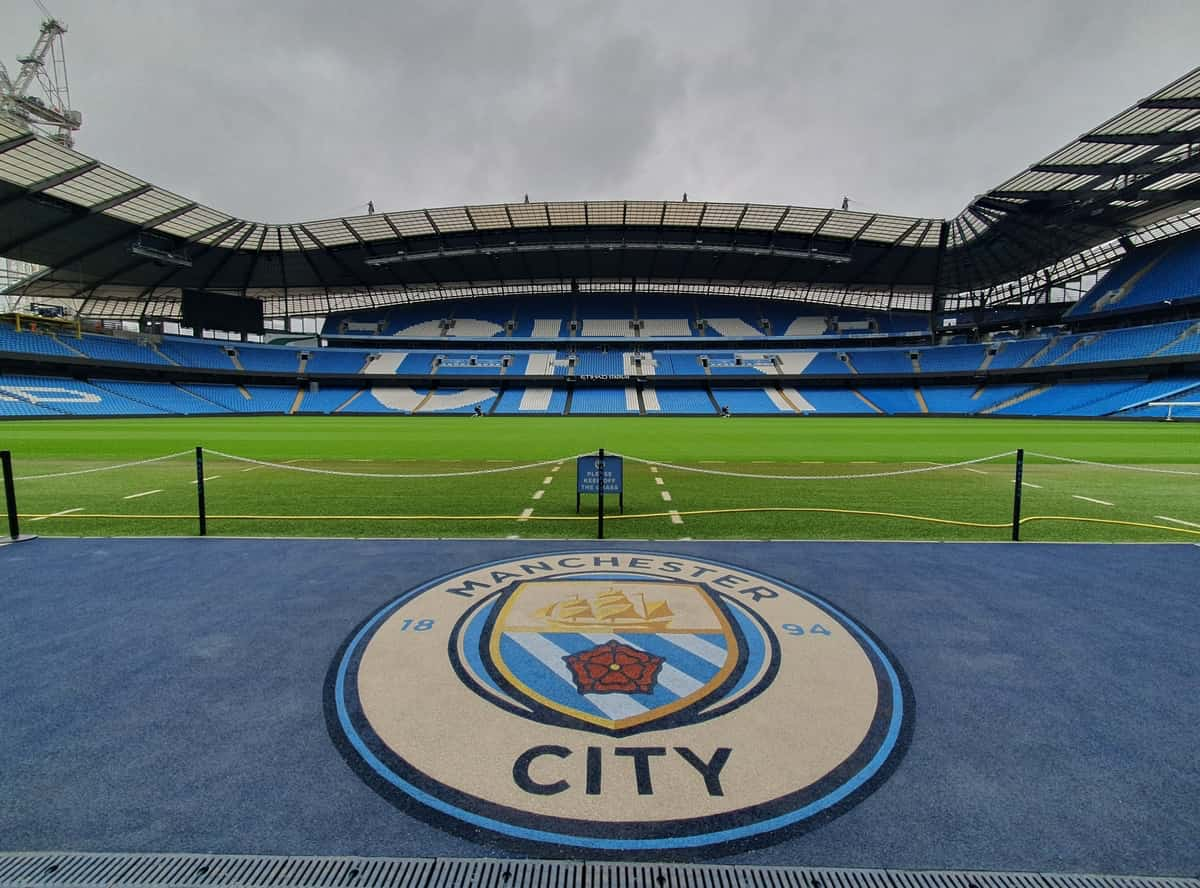
However, these successes have been overshadowed by a constant cycle of controversies surrounding FIFA, its president, Gianni Infantino, as well as scandals at club level, such as the Manchester City case.
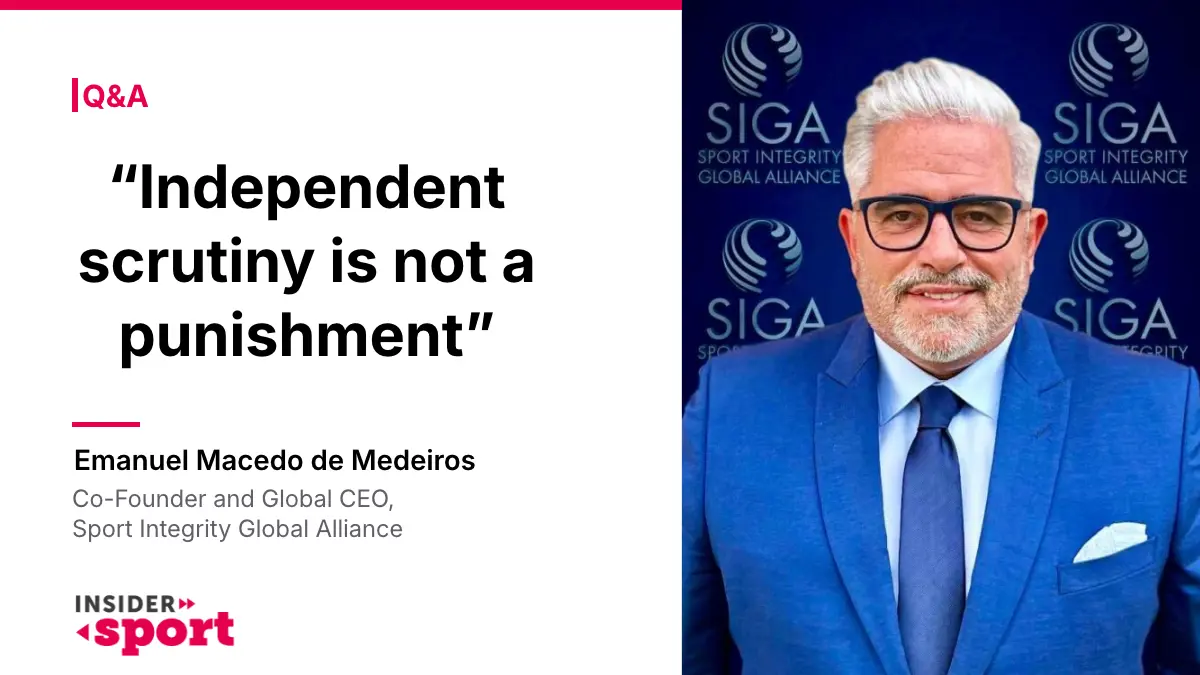
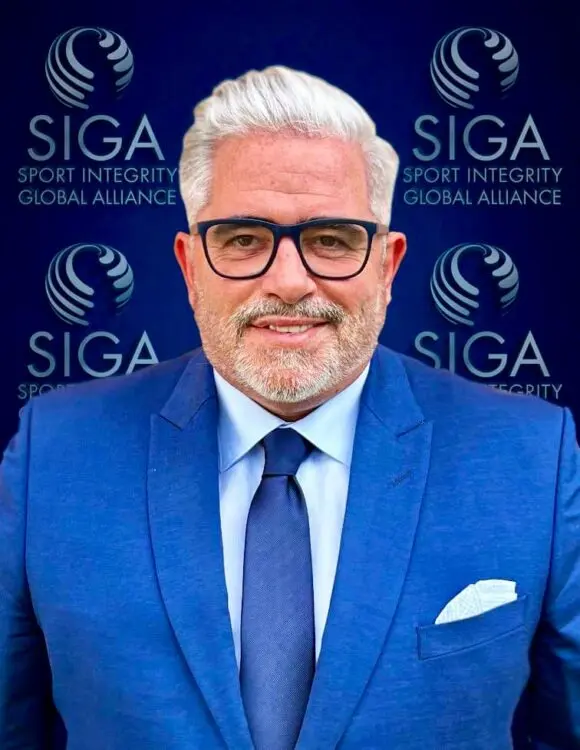
Emanuel Macedo de Medeiros, who has worked at UEFA and FIFA, believes that many of the challenges facing football can be addressed through proper governance, something he feels the sport is crying out for.
As Co-Founder and Global CEO of the Sport Integrity Global Alliance, he has spent almost three decades working across football and sports governance, and has become an advocate for greater transparency, accountability and independent scrutiny.
In a recent article, he argued that sporting autonomy should not mean immunity from accountability and that organisations must demonstrate independently that they are governing themselves properly.
As football’s governing bodies, leagues, clubs and supporters may feel like football is reaching boiling point, he sat down with Insider Sport to discuss the need for reform, the concentration of power in football, financial integrity and why those entrusted to lead the game must be prepared to answer for it.
You have worked across clubs, leagues, UEFA and FIFA. What originally attracted you to sports governance?
Well, I’m a lawyer by trade and have always loved sport. I practised different sports and was even a volleyball champion, winning the third national championship and then reaching the first division. I also practised football.
In 1993, I was invited to become the legal director of a club. I decided to accept the challenge because, whilst I’m not one of what they call the ‘football men’ – you know, the man that breathes the dressing room, as they used to say – I knew that this was an amazing industry with huge potential for growth.
It also has unrivalled social, human and cultural impact. So, if we could bring the same standards that we were already seeing in other sectors, I thought football could enhance the way it is regarded and the respect it expects to earn from people and the different sectors of our society and economy.
Was there a particular moment when you realised that governance and integrity would become your life’s work?
I never premeditated what my life would be. I always loved law, I always loved sport, I always loved public intervention. I take sides, I make choices, I make options. I am not neutral in that sense, you know. I cannot be, like I said, I am not a bystander.
But I know the sector inside and out. I know the challenges, I know the solutions, and I know that if I persuade the leaders of today to do what is within their reach, to walk the walk and to bring about long-overdue reforms, I think this industry has not only the opportunity to enhance itself and the way it is regarded by everyone, but also the social and economic impact that it can deliver
In a recent article you wrote, you argue that sport should no longer be treated as an exception to the standards expected elsewhere in society. Why do you think football has resisted independent scrutiny for so long?
Because it has always been like this, you know. Sport has existed in its current form since the 1850s here in this country, in Chapel, to be more precise. But it has always been considered a sector that is off-limits.
The principle of autonomy of sport is the backbone of what sport is and what it stands for. But autonomy is not unlimited power, nor is it unconditional power.
Organisations must govern themselves with the highest standards of integrity and governance, and that means democracy, transparency, accountability, and stakeholder engagement in the decision-making process.
Those who are elected are elected to serve the game, not to take advantage.
Every sport executive is a custodian. They don’t own the game. They have the game’s values. They must do everything to leave their organisation better than they found it.
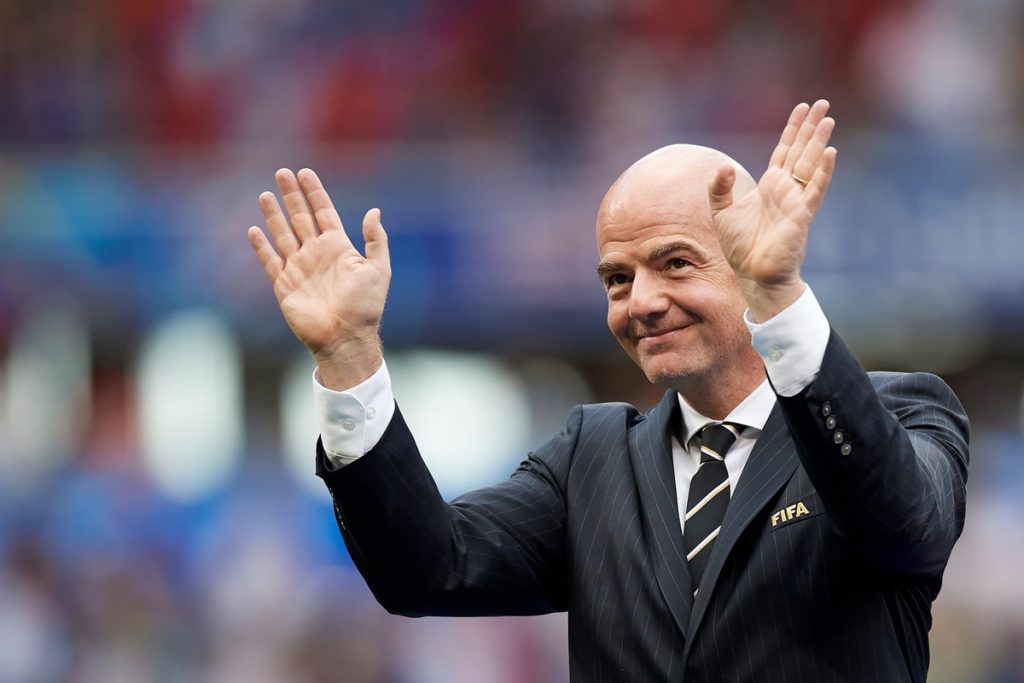
Do you think FIFA has become too centralised in recent years under its current leadership?
First of all, I have known Gianni Infantino for twenty-five years. I know him well. Second, he’s a football administrator. He was elected. Fair enough. He has a challenge, but he also has a mandate.
During his ten-year mandate, FIFA has grown – it has grown in revenue, in impact, and in multiple other ways. Having said that, FIFA also has a responsibility to lead by example.
There comes a moment when balance is indispensable. The future of sport cannot be dictated by turmoil, conflicts and tensions. The future of sport needs to be built on consensus, taking into account the best interests of the sport, alongside a strategic alignment and a sense of responsibility from those who are at the helm.
If you could prioritise governance reforms in football today, what would they be?
I would prioritise two reforms, two areas. One is good governance. That is the backbone. That is the starting point. Without that, everything else becomes accessory.
Good governance means organisations that are governed and regulated under the highest governance standards, with free democratic elections, with term limits that are for real, not term limits that keep being pushed.
We also need separation of powers with checks and balances between those who are responsible for the executive area and, of course, the deliberation bodies and the bodies of justice need also to be bulletproof and immune to any suspicion.
And then I would prioritise also financial integrity. I have been saying this for twenty-five years, that the future of sport and its credibility cannot depend on a mere perception. It needs to be real, it needs to be sustained in real reform.
We cannot have doubts about where the money is coming from and where the money is going to, and who is in the middle of the process.
The Manchester City case has become one of the most significant governance stories in modern football. What does the process tell us about the strengths and weaknesses of the regulatory system?
Well, I think that the question that you have raised has multiple dimensions, one of which is the need to respect due process.
Acknowledging that there are certain constitutional rights that those who are under scrutiny must enjoy. This is valid for every sector, every individual or every company. No one is above the law and no one is exempt from these guarantees. These are constitutional guarantees.
Obviously, this means in many cases that the speed at which justice is served is too slow. And we have this frustration shared by those who are finger-pointing and those who are finger-pointed at. But we must trust in institutions and in the law.
It takes time because they can’t. And I think that the situation is complex. This matter is very serious. It’s not the end of the road.
But I want to say that financial integrity is not just a nice soundbite and it’s not a slogan. It is the backbone of loyal competition.
Sport enjoys popularity because of one factor, the unpredictability of results. And the chance that the underdog has to surpass the big dog. That implies equal conditions, a level playing field, and the same rules for everybody.
You have previously highlighted the Premier League’s financial regulations. Has it provided an example of what football governance should look like?
There cannot be any doubt that the Premier League has been at the forefront in terms of good governance and financial regulations.
For many years, I have used the Premier League example, or the Premier League and the FA and the clearing house that they have put together.
And I have exhorted FIFA to do the same. Because without knowing where the money is coming from, where the money is going to, and who the ultimate beneficial owners are, the seed of doubt will always be there. And that is corrosive to the credibility of sport.
FIFA has decided to do a clearing house only for training compensation, which is a drop in the ocean, insignificant on the big scale of things.
So when we look at the Premier League and we analyse its financial structure and its regulations, it is important to acknowledge that, as financial governance is concerned, the Premier League is right at the top. It’s right at the top.
Can it be improved? Yes. And that is why recent amendments were incorporated so that you can always be one step ahead of the curve.
Do you think football is approaching a moment where independent external scrutiny becomes unavoidable?
I think that’s the real question. That is the real question that governments should be asking because governments are the custodians of public interest and it’s their duty to promote and to ensure that the law is respected for the benefit of all.
Independent scrutiny is not a punishment. Independent scrutiny is a tool and it’s a means that helps them to demonstrate that they are fit for purpose, that they walk the walk, that they can be reliable, that they can be trusted.
Why would any sport organisation be afraid of independent scrutiny? Independent scrutiny is exactly the opportunity they have to show to the whole community that they are governing themselves and operating under the highest integrity standards.
And what I find is the silence, which was another difficult-to-understand remark that I made.
The silence of those who invest billions. When a brand signs a sponsorship agreement, it’s not just to promote itself. And it’s not just to put money in, a financial investment. It is a reputational investment.
There is something that keeps me up at night. And that is the fear of reputational damage because we don’t have any means to show the evidence to show that that organisation, the beautiful assurances, they are fit for purpose.
Would football be more successful if it adopted these governance standards?
Absolutely. Absolutely. Absolutely, because by adopting these standards and going through our independent rating and verification system, by having independent scrutiny, it’s no longer a question of opinion. It’s no longer wishful thinking. It is a fact.
Why should sports organisations and their leadership not go through the same outstanding journey that sport has done to overcome this unprecedented crisis? With more success comes more responsibilities. And that is the price, that is the sine qua non conditions that fall on those who have the privilege but also the responsibility to lead.