













Andrei Kampff , journalist, lawyer, master in sports law and partner at AK Direito na Comunicação e no Esporte, with an analysis of the governance challenges faced by FIFA .
In the article “FIFA’s Power Demands New Controls,” Kampff discussed the concentration of power within the organization and the limits of current oversight mechanisms following Gianni Infantino ’s attempt to sell World Cup shares to private investors, among other controversies.
This article first appeared on SBC Notícias Brasil.
FIFA’s power demands new controls

FIFA has never had so much power. And perhaps it has never been so evident that the mechanisms created to control that power are no longer sufficient. This, for me, is the central issue in the crisis facing the world’s largest sporting organization. Recent events may seem independent when viewed in isolation, but they are linked to a form of governance that no longer fits the size of the organization.
The crisis caused by FIFA Forward Enterprise, the human rights issues surrounding the 2026 World Cup, the increasingly explicit rapprochement between President Gianni Infantino and political power, and the questions about the independence and effectiveness of internal control structures all have different origins. But they all point to the same place.
Today, there is a huge gap between the power wielded by FIFA and the mechanisms that exist to oversee it.
For some time now, I’ve been working with compliance, governance, and human rights in sports. I’ve also been talking a lot with colleagues from outside Brazil, professionals responsible for integrity programs in large companies, and people who work in international sports organizations. I participate in meetings and debates on the subject. And one perception is emerging with increasing frequency in these conversations: sports have grown economically, expanded their political influence, and made their decisions global, but their governance structures have not evolved at the same pace.
In the case of FIFA, this contradiction has become particularly evident.
We’re not just talking about the organization that runs the World Cup. We’re talking about a private organization that handles billions of dollars, distributes resources to 211 national associations, controls global competitions, establishes rules that affect clubs, athletes, intermediaries and investors, decides where events capable of transforming cities and economies will be held, and exercises a kind of transnational regulatory power.
Very few private organizations in the world have such a wide reach.
And that is precisely why we cannot continue discussing FIFA’s governance as we did decades ago.
The crisis that revealed the problem
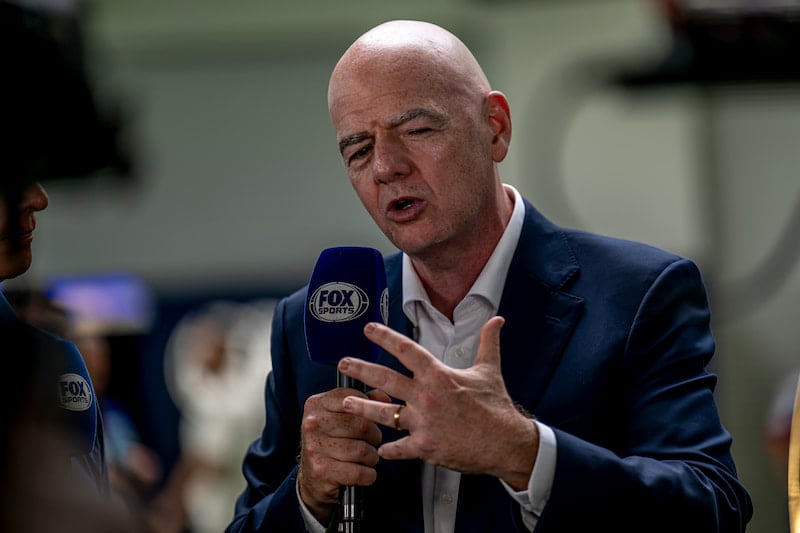
FIFA Forward Enterprise was perhaps the most obvious demonstration of this weakness.
The project aimed to promote a profound reorganization of the commercial exploitation of FIFA’s assets, creating a business structure capable of receiving private investment and managing a significant portion of the revenue related to the organization’s competitions.
Regardless of the economic assessment of the proposal, there was a prior question.
Who decided?
And most importantly, how did he decide?
When an association intends to promote a transformation of this magnitude, it is not enough to discuss whether there is statutory authorization to do so. It is necessary to know how the proposal was constructed, what information was made available to the associations, what conflicts of interest were identified, what independent mechanisms evaluated the operation, and what effective space was granted to the organization’s members to participate in the decision.
Governance is not about carrying out a vote at the end of the process. Governance is about ensuring transparency, participation, and oversight from the very beginning.
The strong reaction from federations, confederations, leagues, and representatives of other sectors of football forced FIFA to withdraw the project. But it would be a mistake to interpret this retreat as the end of the crisis.
The project is over. The institutional problem that allowed it to get this far remains.
And that is perhaps the most important aspect of this entire discussion.
Autonomy does not mean absence of control
For a long time, sport built its international organization around the concept of autonomy.
This autonomy has an important historical reason. Sport needs the freedom to establish its rules, organize competitions, and protect its institutions from undue political interference.
But there is a huge difference between autonomy and lack of control.
FIFA wields extraordinary power precisely because it receives legitimacy from the associations that comprise it. It is an associative structure. Its authority originates from the bottom up.
When strategic decisions become excessively concentrated at the top, a rupture occurs between the power wielded and the base that should legitimize it.
This tension becomes even greater when we realize how many different functions are brought together within the same organization.
FIFA regulates football. It organizes competitions. It commercially exploits these competitions. It distributes resources. It oversees associations. It applies sanctions. It defines development policies. It negotiates with governments. It chooses host countries.
It is a regulator, organizer, economic agent, and distributor of resources all at once.
This accumulation should lead to extraordinary controls.
No extraordinary concentration.
One of the reforms that needs to be discussed involves a clearer separation between regulatory, commercial, and development functions. The logic is well-known in any minimally sophisticated governance system: whoever creates the rules should not also concentrate, without effective checks and balances, the economic exploitation, oversight, and distribution of resources resulting from that same system.
The World Cup showed that the problem goes beyond money
The 2026 World Cup has broadened this discussion.
For the first time, a World Cup has been organized since its bid under a more robust formal framework of commitments related to human rights. This should represent a historic step forward.
In many respects, it was representative.
But the events surrounding the tournament also demonstrated the gap that still exists between the institutional commitments made by FIFA and its ability to uphold them when they clash with economic or political interests.
The difficulties faced by certain participants due to migration policies, the debates involving discrimination, the restrictions related to participating countries, and various episodes of political interference have shown that human rights cannot exist solely as commitments written into institutional policies.
They need to have enforcement mechanisms. That is, mechanisms that force compliance.
This is a compliance issue.
A policy that fails to produce consequences when violated ceases to be an instrument of governance and risks becoming merely a reputational tool.
That is why I have been advocating for some time for the creation, within the international structure of football, of an independent human rights mechanism, made up of experts with sufficient autonomy to assess situations involving competitions, host countries and institutional decisions.
Human rights cannot depend exclusively on the political expediency of the administration in charge of FIFA.
They need to be institutionalized in the same way that Ethics Committees need to be independent and composed of qualified individuals.
The problem of proximity to political power
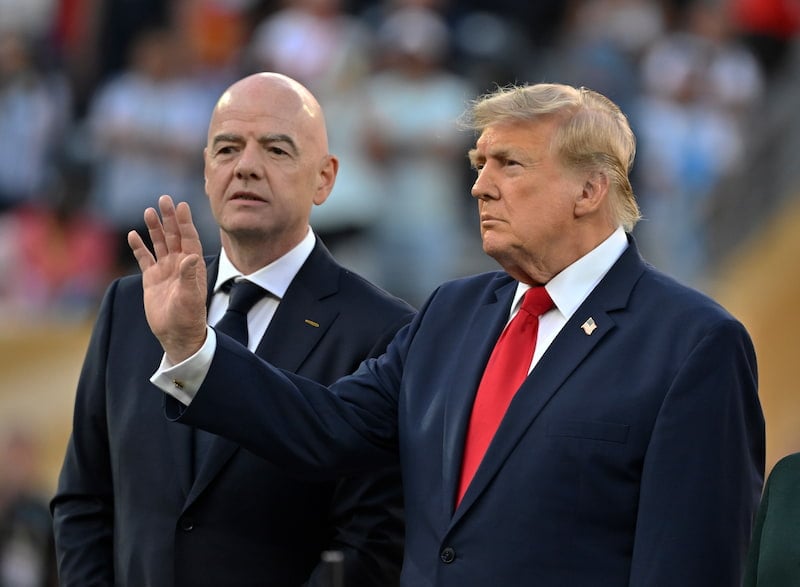
There is yet another element that cannot be ignored.
The close relationship between Gianni Infantino and political leaders during the World Cup placed FIFA in a difficult-to-explain contradiction.
The organization demands independence from governments for national federations. Its statutes and regulations combat political interference. Federations can suffer serious consequences when state power exceeds certain limits.
This protection makes sense. But the credibility of this rule also depends on the conduct of those at the top.
An organization that demands political independence from its members needs to demonstrate political independence in its own actions.
When that boundary becomes blurred, the problem isn’t just one of image. It’s one of governance.
The rules must apply to everyone, including those who wield the most power within the structure.
Compliance needs to control power
There is a recurring misconception in how sports understands compliance.
For years, many organizations treated compliance as a separate department. They created codes of ethics, whistleblowing channels, internal policies, and formal structures designed to demonstrate a commitment to integrity.
All of this is important. But compliance isn’t a collection of documents. It’s a system for controlling power.
An effective integrity program needs to be able to ask uncomfortable questions before decisions are made.
Who gets to decide? Is there a conflict of interest? Has the information reached everyone who should be involved in the decision? Are there independent oversight mechanisms? Who controls who wields power? Is there a real possibility of accountability?
If these questions only arise after the crisis, the system has failed.
The Fifagate scandal should have left this lesson definitively incorporated into the structure of international football.
The scandal that began in 2015 produced a profound transformation in the perception of sports governance. Reforms were implemented, integrity mechanisms were strengthened, and FIFA itself began to publicly advocate for a new institutional culture.
More than a decade later, however, the discussion has returned to the same fundamental point:
Who controls the power?
The architecture needs reform
The answer to the current crisis cannot simply be to replace people.
The problem is institutional.
Reducing everything to whether or not Gianni Infantino stays would be simplifying a much larger discussion. Presidents come and go. Structures remain.
FIFA needs to take advantage of this crisis to reform its governance structure.
This involves reducing the concentration of power in the presidency; a clearer separation between commercial, regulatory, and development functions; the effective strengthening of independent ethics and compliance bodies; the creation of external oversight mechanisms; stricter transparency rules; a review of resource allocation systems; and more democratic participation from the various actors that make up football.
Athletes, clubs, leagues, and other stakeholders cannot continue to show up only after the major decisions have practically been made.
External oversight also needs to be viewed not as a threat to sporting autonomy, but as an element of legitimacy.
Organizations that manage billions of dollars and wield global power cannot expect the world to simply trust them.
They need to demonstrate why they deserve trust.
Legitimacy does not come from money
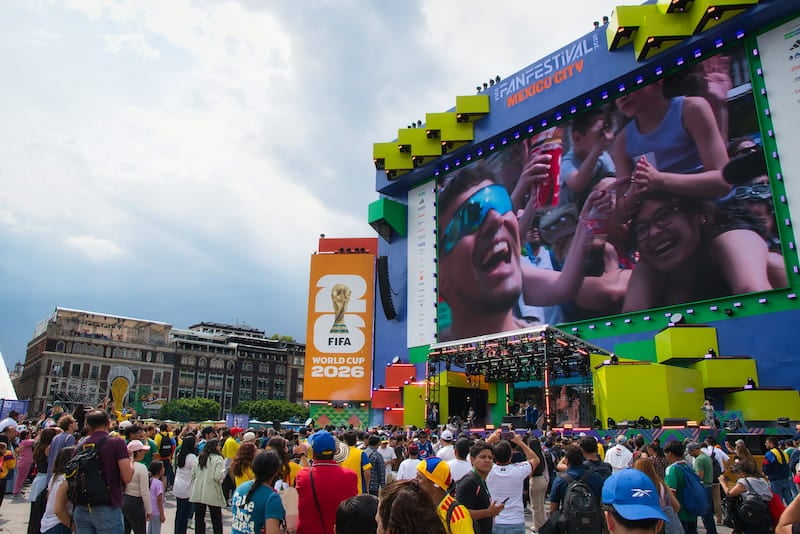
Football is perhaps experiencing the period of greatest economic expansion in its history.
New competitions, new markets, investment funds, digital platforms, and commercial revenues have dramatically expanded the financial capacity of sports organizations.
But there is something that money can’t buy. Legitimacy.
It depends on trust.
Institutional trust is built through transparency, participation, oversight, and accountability.
The current crisis at FIFA therefore presents an opportunity.
Not just to abandon a contested business project or manage yet another political upheaval, but to acknowledge that the institutional architecture created to govern football no longer corresponds to the magnitude of power that is now concentrated in Zurich.
International sport has changed.
The market has changed.
Society has changed.
The oversight has changed.
Governance needs to change as well.
Because the greater the power of an organization, the less that power can depend solely on trust in whoever is currently wielding it.
It needs to depend on institutions capable of controlling it.