



Ahead of SBC Summit 2026, Insider Sport spoke to Casa de Apostas Chief Innovation Officer Livia Troise about how in-play odds are set, what AI can and cannot do to them, and how operators police match-fixing and problem gambling in live markets
Live betting prices move within seconds of a goal, a red card or a substitution. Machine learning models recalculate probabilities across many markets at once. Operators must detect match-fixing and identify at-risk players as those prices move.
Insider Sport spoke to Livia Troise, Chief Innovation Officer at Casa de Apostas, ahead of SBC Summit 2026, about how in-play odds are set, what AI can and cannot do to those odds today, and how operators handle integrity and player protection in live markets.
Read the full interview below...
Does live betting on a Brazilian league game work differently from a European one?
Not at its core. The sport and pricing logic are the same. The bigger difference is market maturity and bettor profile. Brazil is still a developing betting market, and many customers prefer familiar options with a greater perception of safety, such as double chance or draw no bet.
In live betting, behaviour depends heavily on how the match unfolds. In a balanced game, customers may watch more and bet less. When there is a clear favourite or strong momentum, activity tends to increase. More experienced Brazilian bettors behave much like European ones, although their interest is naturally focused on local competitions.
How quickly does what happens on the pitch reach your odds – and does that speed decide who wins?
For well covered competitions, we are talking about seconds rather than minutes, but there is no honest universal number. It depends on the official data source, the competition, the event, the platform and the operator’s own risk controls. The chain goes from the pitch to the datafeed, then through the model, the trading and suspension rules, and finally to the customer interface.
Speed is extremely important, but speed alone does not decide anything. The winning combination is low latency, reliable data, good models, disciplined risk management and a stable customer experience.
What’s the hardest moment in a match to price – a penalty, a red card, a keeper injury?
I would say a red card. A penalty is a more contained event: there is an immediate yes or no outcome and the relevant markets will normally be suspended while it is resolved. A goalkeeper injury can be difficult to assess, especially before we know its severity, but there is usually the possibility of a substitution.
A red card creates a permanent structural change to the match. The model has to reconsider the remaining time, the score, the relative strength of the teams, which team lost the player and sometimes the role of that player. A red card for the stronger team in the first half is a very different pricing problem from one for the weaker team in the final minutes. It is common enough to require a robust model, but contextual enough that it cannot be treated as one standard adjustment.
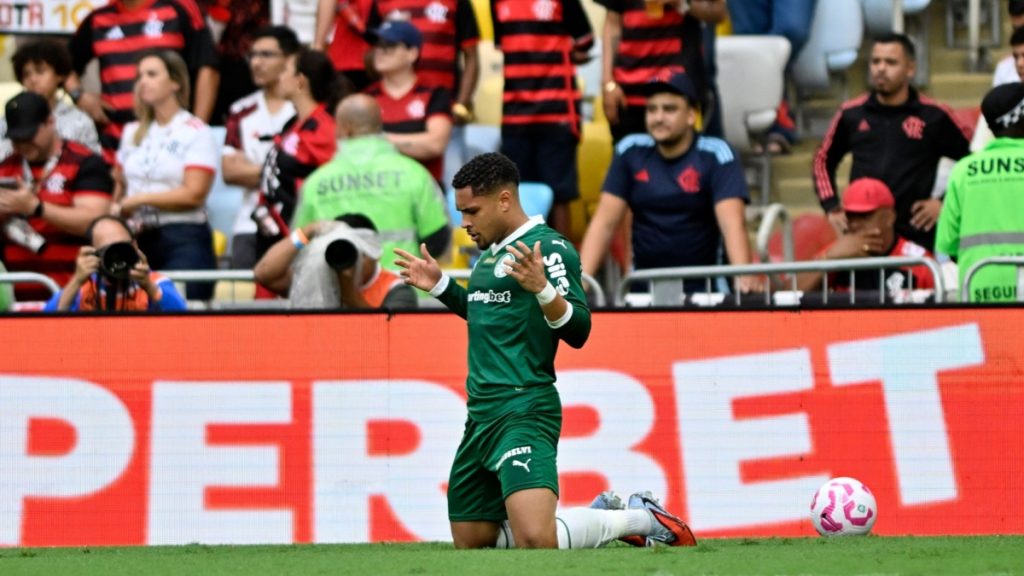
Football’s the big one. Can you run good live betting on volleyball, tennis or MMA too?
Absolutely, but the product must be native to the sport. Tennis is naturally suited to live betting because it has clear point by point states, service advantage and frequent moments at which probabilities can be recalculated. Volleyball has a similarly structured progression.
MMA is different. There are fewer discrete scoring events, position and physical condition, and judging introduces another layer of uncertainty. That does not make it a poor live product; it means the data, markets and customer interface must be designed specifically for MMA.
When that is done properly, a smaller sport can be a very strong product. You are not necessarily trying to reproduce football’s scale. You are serving a highly engaged audience with an experience that understands its sport.
Is there any real value in betting on the next corner or throw-in, or is it just for churn?
There can be real value. These markets let customers respond to the flow of the match and can make the live experience more interactive. But measuring them only by bet count or session frequency would be a mistake.
We should ask whether they generate genuinely incremental engagement, whether the pricing and settlement are clear, whether customers value the experience, and whether the activity remains sustainable. Short duration markets also require integrity controls, limits and responsible gambling monitoring.
So I would not call them “just churn”, but neither should an operator add them simply to generate more clicks. A good micro market needs a clear customer proposition and the same product discipline as any larger market.
Odds change in seconds now. How do you still spot match-fixing and protect problem gamblers that fast?
These are two different risks, so they need two different control operating at machine speed.
For sporting integrity, look for abnormal patterns across events, markets and accounts: unusual concentrations of stakes, coordinated timing, pricing divergences, activity in a low liquidity market and patterns that do not fit normal customer behaviour. But a suspicious alert is not proof of manipulation, it gives investigators the evidence and speed to act.
For player protection, the system must look at the customer’s whole journey, not one isolated sports bet. Relevant indicators include changes in frequency and stake size, time spent playing, chasing losses, sudden deposits, cancelled withdrawals and movement between sportsbook and casino. A player who wins on sports and then loses the balance elsewhere cannot be assessed from sportsbook data alone.
AI helps us detect and prioritise these patterns in real time. It should support timely interventions and human judgement, rather than automatically treating every successful or unusual customer as a problem.
In football, what can AI actually do to your odds today – and what’s still just a pitch?
AI is not just a pitch; it is already changing how odds are produced. Machine learning models can process live match data, recalculate probabilities, analyse liabilities and adjust prices across many markets simultaneously. They can also identify unusual betting patterns, coordinated accounts and changes in customer risk.
What is still more promise than reality is a fully autonomous system that understands every match context, compensates for poor quality data and removes the need for experienced people and model governance. AI is already a powerful operational tool, but it is not magic. Its output is only as strong as the data, controls and people behind it.
What can a Brazilian operator your size do that the global giants can’t?
Brazilian operators can understand the local customer in greater detail, adapt products and communication, respond rapidly to an operational issue and coordinate product, CRM, customer service and compliance without every decision travelling through a global structure.
But all that is only an advantage if we turn that proximity into execution. Speed must produce a better and more reliable customer experience, not simply more campaigns. Our objective is to build recognition through relevance, trust and consistency.
As I have said before, we want to build relationships, not dependency.
SBC Summit takes place at the Feira Internacional de Lisboa from 29 September to 1 October 2026. The event brings together 40,000 attendees for three days of conference sessions, networking and a major exhibition featuring brands from across the betting and gaming industry.
For more information and tickets, visit sbcevents.com/sbc-summit.