


A leading sports lawyer warns that Deputy Luiz Carlos Hauly’s bill breaches the constitutional autonomy of sporting bodies and risks triggering FIFA intervention against the CBF
A bill before Brazil’s Chamber of Deputies risks dragging the country’s football confederation into direct conflict with FIFA, according to a sports lawyer who argues the proposal breaches the constitutional autonomy that shields sporting bodies from state interference.
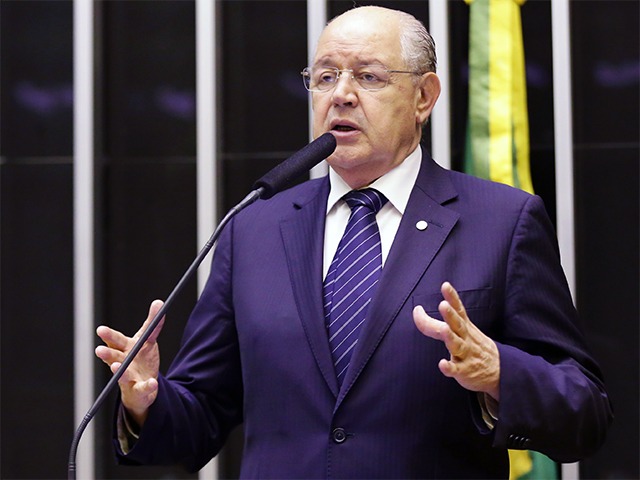
Bill No. 3,582/2026, tabled on 8 July by Federal Deputy Luiz Carlos Hauly (Podemos-PR), would restrict national-team call-ups to players registered with Brazil-based clubs and sever every commercial tie between betting operators and Brazilian sports entities.
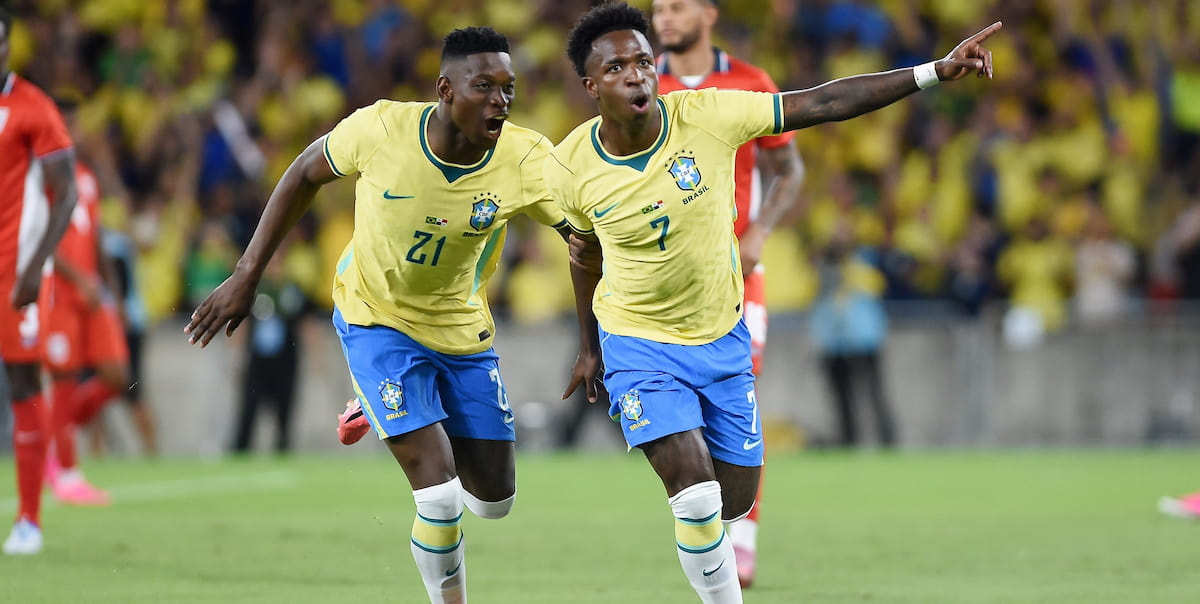
Filed days after Brazil was eliminated by Norway in the 2026 World Cup, the bill stipulates that the men’s and women’s national teams must be composed exclusively of athletes registered with clubs based in the national territory who play in official competitions organised in Brazil, a rule that would leave out key players like Vinícius Júnior, Endrick, and Gabriel Magalhães, among others.
The same requirement would apply to the coaching staff. The coach, assistants, physical trainers, goalkeeping coaches, and other members would have to be Brazilian citizens and have a professional affiliation with clubs or sports organisations established in the country. Currently, the Brazilian National Team is led by the Italian Carlo Ancelotti, who has several foreign assistants.
The restrictions would apply to the permanent national teams and all youth categories when officially representing Brazil in international competitions.
According to Hauly, the early departure of players to foreign clubs has reduced the competitiveness of Brazilian championships, weakened youth development teams, and diminished the identification of fans with the national team.
The congressman argues that valuing athletes and coaches who work in Brazil could stimulate investment and increase revenue and jobs in national football.
Draft bill prohibits sponsorships and advertising by betting companies
The bill also proposes prohibiting partnerships between betting companies and organisations that are part of the Brazilian sports system.
Sports governing bodies, federations, clubs, associations, and other organisations are prohibited from entering into, maintaining, or publicising sponsorship, advertising, promotional, licensing, naming rights, or any other form of commercial exposure related to fixed-odds betting and online gaming.
The ban would affect the presence of brands, logos, applications, email addresses, and slogans in:
- uniforms and sports equipment;
- training centres, stadiums and arenas;
- signs, panels and backdrops;
- interviews and broadcasts;
- social networks and web pages; and
- competitions, events and institutional campaigns.
The text also prevents the restriction from being circumvented through parent companies, subsidiaries, affiliates, or other companies belonging to the same economic group as the betting operator.
If the proposal is approved, existing contracts would have to be terminated within 180 days. Renewals, extensions, and replacements with agreements of equivalent purpose would be prohibited.
Entities that fail to comply with the rule could lose access to federal public funds, tax incentives, subsidies, aid, and agreements. The bill also allows for the application of other civil, administrative, and sporting sanctions, the procedures for monitoring and gradation of which would be subsequently regulated by the Executive Branch.
In his justification, Hauly states that excluding betting brands would help preserve the integrity of competitions and reduce the exposure of children, adolescents, and young people to gambling. The congressman also links sponsorships to risks of debt, addiction, conflicts of interest, and match-fixing.
Hauly’s bill is unconstitutional, says Andrei Kampff
Given the complexity of the bill, which involves state interference in a private institution like the CBF (Brazilian Football Confederation), Insider Sport‘s sister publication SBC Notícias Brasil interviewed journalist and lawyer Andrei Kampff to delve deeper into the debate.
Kampff was a reporter for TV Globo between 2003 and 2018, the year he created Lei em Campo, a portal specialising in sports law that remains online to this day. In 2022, he completed his master’s degree in Law at PUC-São Paulo.

Currently, Kampff is a partner at AK Direito na Comunicação e no Esporte and maintains a column on UOL. Check out the full interview below:
From a constitutional standpoint, can the National Congress dictate criteria regarding which players and members of the coaching staff can be called up by the CBF, or does this represent undue interference in the autonomy of sports entities?
In my opinion, the project is unconstitutional. Article 217 of the Constitution guarantees autonomy to governing sports entities regarding their organisation and operation, and the definition of who will be called up for the Brazilian National Team is part of the CBF’s technical activity. When a law begins to impose criteria for call-ups or the composition of the technical committee, the State ceases to regulate an activity and begins to interfere directly in a technical decision of a private entity. That is precisely where the violation of the sporting autonomy foreseen in the Constitution lies.
Is it legitimate for a congressman to present a proposal with this scope, even if it involves technical and administrative decisions of the CBF?
The presentation of bills is part of parliamentary activity, and any deputy can propose legislative changes within the competence of the National Congress. The discussion is not about the legitimacy of the initiative, but about the constitutionality of its content.
In my assessment, this is a waste of legislative time and public resources, because there are very clear constitutional parameters regarding the autonomy of sports entities. Parliamentarians have technical advisors precisely to assess the constitutionality of proposals before they are processed. A bill can be properly presented and still contradict the Constitution and generate conflicts with international norms that bind Brazil in the sports field.
Is a broad ban on sponsorships by betting companies to clubs, federations, and other sports entities legally more viable than restrictions on player selections? What points could be challenged?
These are distinct issues. The restriction on call-ups directly interferes with the technical autonomy of the CBF and, therefore, faces more evident constitutional obstacles. The regulation of advertising and sponsorships, on the other hand, falls, in principle, within the purview of the Legislative Branch.
This does not mean that a broad ban is automatically valid. It could still be challenged on aspects such as economic freedom, free enterprise, proportionality, legal certainty, and respect for existing contracts. But, from the perspective of sporting autonomy, this is a different discussion from intervention in team selections.
How does FIFA typically react when governments or parliaments directly interfere in the management and decisions of its affiliated associations?
FIFA treats the independence of national associations as one of the pillars of world football. Its Statutes stipulate that federations manage their affairs independently and without undue influence from third parties, including governments.
Over the years, the organisation has suspended national federations in cases of state interference deemed incompatible with its rules. Obviously, each situation is analysed individually. There is no automatic punishment, but a law of this nature would certainly put Brazil on FIFA’s radar and create a concrete risk scenario for the CBF. Sport has its own internationally recognised governance system. Technical issues, such as the selection of the Brazilian National Team, should be decided by the sporting movement itself, and not by the government.