


The USL’s new branding reminds the world that US soccer is edging closer to a European-style football pyramid.
The United Soccer League (USL) has tied its upcoming 2028 promotion-and-relegation model to its new brand identity.
Under the “United for Soccer” concept, the league has unveiled new logos for its seven existing leagues and the first official emblem for USL Premier, the top tier of the USL‘s men’s professional leagues, launching in 2028.
Paul McDonough, President and CEO of the USL, said the slogan “United for Soccer” reflects the league’s ambition to grow the game with its stakeholders, fans, players, and owners.
“We believe American soccer is stronger when more communities have clubs to call their own, more players have opportunities to advance and competition rewards performance on the field,” said McDonough.
When changing the league’s logo, the league said it drew inspiration from the geometry of a football, using lines and rounded corners in the lettering to create a consistent look across all its competitions.
Another key feature is a stair-step shape within the letter “S”, which symbolised the introduction of promotion and relegation across the men’s professional leagues in 2028.
In terms of colours, the logo uses a palette of USL Blue, supported by USL Dark, Cyan, and Steel.
Promotion and relegation plans
In January, the league announced it would ditch its current model for a three-tier men’s professional pathway made up of the USL Premier, USL Championship and USL League One.
USL Premier and USL Championship will operate as single national tables, each targeting 20 clubs, while its League One will expand nationally and organise competition regionally.
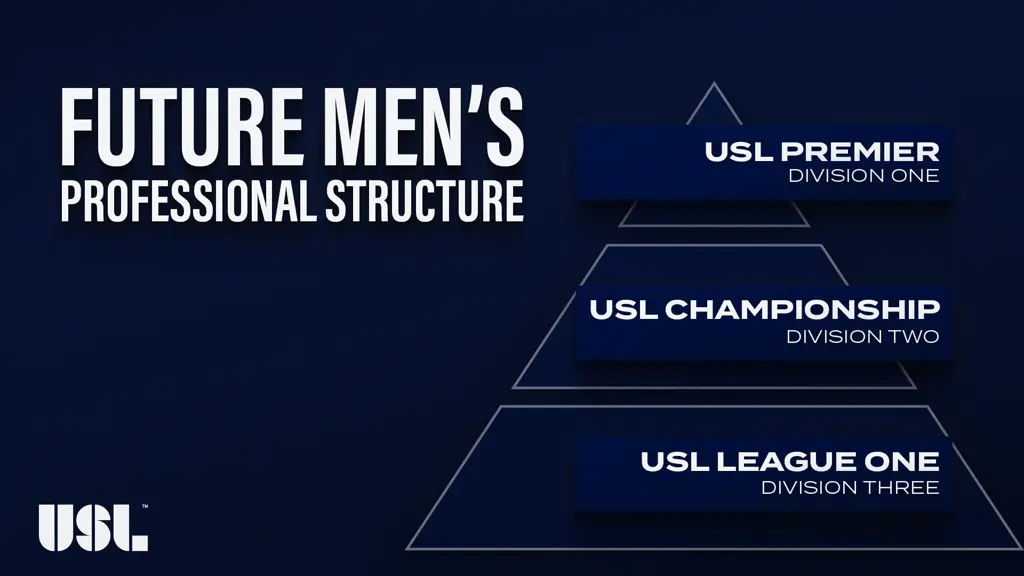
This will allow the league to introduce promotion and relegation in 2028, opening a pathway between divisions as seen in football leagues outside the US.
“USL Premier is a defining piece of our long-term vision for the men’s game,” said Alec Papadakis, CEO of the USL in January. “By establishing a clear structure, we’re creating a strong foundation for clubs, players, and fans, and unlocking meaningful opportunities for stakeholders and investors.”
The USL is reviewing applications from clubs interested in joining USL Premier, with its inaugural members to be announced at a later date.
Changing the US sports model
Promotion and relegation is common across football leagues worldwide and considered an important part of the game. The model creates storylines as clubs climb the divisions, as seen with Wrexham AFC, while giving teams a route to the top based on their performance.
However, it is largely unfamiliar in US professional sports, where leagues such as the NFL, NBA, MLB and NHL operate closed franchise systems. Teams retain their place in the league regardless of results and leagues control entry for new franchises through expansion.
That US structure offers obvious commercial advantages for investors. National broadcasting and sponsorship deals can provide predictable revenue and mechanisms such as salary caps in some leagues help control costs.
Additionally, restricted membership and media deals have also driven franchise valuations into the billions, though profitability isn’t guaranteed.
Promotion and relegation introduce a different balance between sporting ambition and financial risk. Rather than protecting a club’s place in a division, it lets teams rise or fall based on results, theoretically creating more meaningful matches and handing smaller clubs a route to the top.
The football league will likely try to turn sporting drama into sustained commercial growth, hoping the model deepens local fan loyalty, attracts investment, and helps it capitalise on increased attention on US football following the 2026 FIFA World Cup.
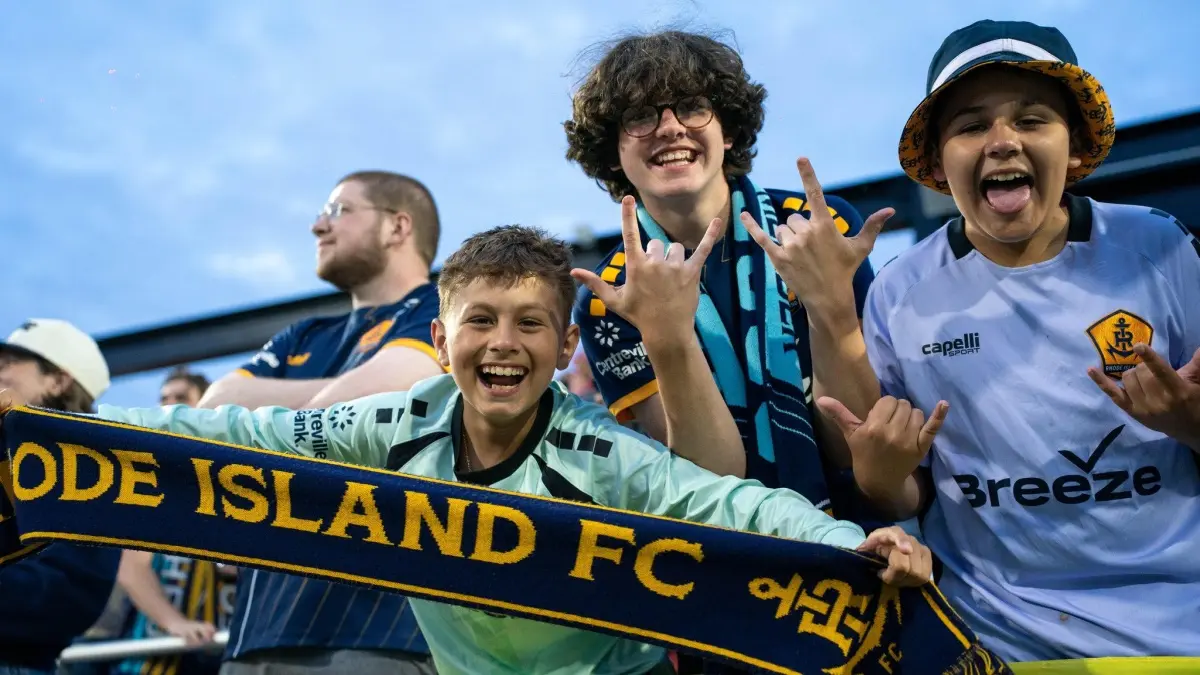
The league can ease pressure by looking at clubs like Rhode Island FC, which have built sustainable models and strong communities in recent years.
Asked how Rhode Island FC sees itself contributing to the USL’s mission to rival the franchise model, Co-founder and Chairman Brett Johnson said the club is proving the model works in a smaller market.
“Rhode Island FC deserves credit for being able to achieve what we have achieved – a world-class stadium with surrounding mixed-use real estate development on the way – as an expansion team in the second division. If a state the size of Rhode Island can support a club with this level of infrastructure and community engagement, it opens the door for countless other markets across the country,” said Johnson.
“We are showing that you do not need to be in a top 20 market, or spend upwards of $600m on a franchise fee, to create something special. We are also demonstrating that with the right stadium, the right talent and the right commitment to developing players, you can create a sustainable, profitable operation that competes at a high level. That is the formula the USL needs to replicate across the league.”