


Major League Soccer (MLS) has undergone a surge in fan popularity, commercial growth and global appeal in the last several years and is projecting newfound growth opportunities when the 2026 FIFA World Cup will be held in its native US.
While Lionel Messi’s arrival in Miami three years ago undoubtedly brought new eyes to the MLS, the upcoming World Cup this summer could have equally profound effects on the league the last time the competition was hosted in the US in 1994, which ultimately birthed the MLS.
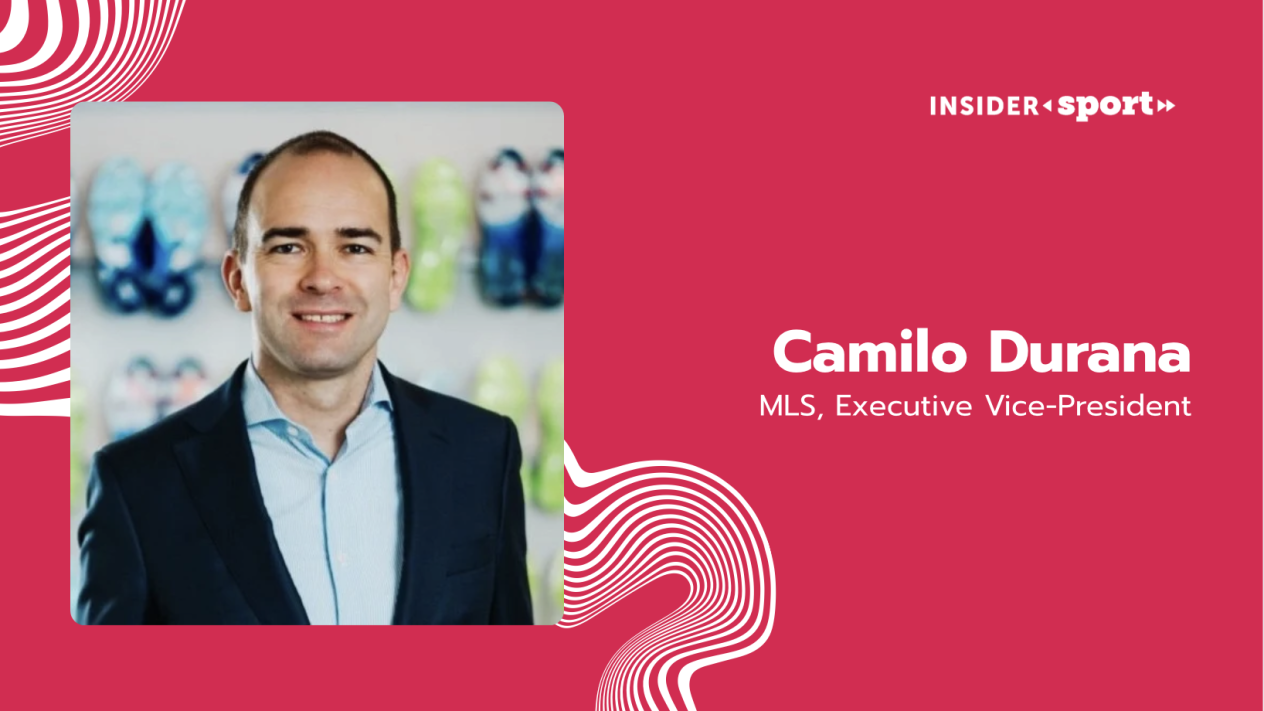
Speaking to Insider Sport, Camilo Durana, Executive Vice-President of MLS, reveals some of the key metrics which have helped the league grow year-over-year, the impact Messi has brought to the league, and what the MLS plans are for when the league pauses for the World Cup this summer.
Read the full interview below.
Could you reveal some of the successes from the 2025 MLS season and in areas of new growth?
The momentum with which we enter 2026, is the real success from the 2025 season.
As North America takes center stage and hosts the 2026 FIFA World Cup, exposure to our sport and consideration of our league will expand to new levels. The energy behind our product on the field, on broadcast, and in our stadiums has never been better, putting us in a great position to drive growth and new levels of success for our league.
From a viewership perspective, the MLS regular season averaged 3.7 million gross live match viewers per week across streaming and linear platforms, representing a 29% increase year-over-year. That momentum continued into the Audi MLS Cup Playoffs, which delivered strong audience growth across platforms.
From a business standpoint, our clubs now have a combined valuation exceeding $23bn, with five clubs valued at more than $1bn each. According to Sportico, MLS represents a significant share of the world’s most valuable football clubs, as six MLS club values increased by double digits from 2025 to 2026.
We continue to see growing levels of support from our corporate partners, who see the value of the MLS, our 30 clubs and the vibrant, young and diverse fan base that is fueling the rise of our league. We’re proud to enter 2026 with partners like Walmart, adidas, Audi, Apple, ABInBev, Procter & Gamble, EA Sports and many others – brands who are invested in delivering access, experiences and opportunities to our audiences.
Our league is also more global than ever. MLS rosters feature players from over 80 countries, more than any other league worldwide, reinforcing MLS as an increasingly attractive destination for international talent. For 30 years, MLS has continued to grow the sport, build world-class infrastructure, and create opportunity across the US and Canada, and we remain the fastest-growing league in world football in the modern era.
With average attendance remaining steady, are there certain demographics the league has looked to capture for both in-stadium attendances and viewership differently this year and through what strategies?
MLS has the youngest and most diverse fan base among North American professional sports leagues. We love that position, as those are also the segments that will drive the population growth in the US and Canada in the next decades.
While we’re going to continue serving our core audiences, we’ll have a generational opportunity to reach broader sports fans when the FIFA World Cup takes place in our backyard this summer. Based on historical growth in World Cup years, we believe interest in soccer will experience double digit growth. That’s an opportunity for us to introduce new fans to our League and build lasting relationships.
Through best-in-class stadium atmospheres, high-quality broadcast production, and digital engagement, we’ll be ready to make the best of MLS visible and accessible to those ready to embark on their journey of soccer fandom.
What do you attribute to the increase in viewership across the regular season and playoffs this season?
Our partnership with Apple has made it easier to be a fan of MLS. With a single Apple TV subscription, you can watch every minute of our season in over 100 countries on your preferred device. It’s an experience built for our fans, who love streaming live sports, watching at home or on the go.
We’re in an age of convenience and we’re delivering that for our fans, while also maintaining linear and other distribution partners domestically and internationally to help new fans experience our League.
In 2025, we produced TikTok streams of matches with close ups of star players like Lionel Messi. We also introduced Ref Cams into our matches, giving viewers a closer look at the referee experience and their on-field interactions with players. We were also the first league to stream live games on the EAFC mobile app, reaching new audiences around the world. We continue to push boundaries with our product and fans have responded.
As our matches are largely played on Saturdays across multiple viewing windows, MLS offers a consistent and accessible matchday experience that builds viewing habits that ultimately strengthen fan connection.
We are incredibly proud of our viewership from across the 2025 MLS season as it underscores how MLS is continuing to expand its presence across both North America and worldwide.
Specifically, as it relates to the Audi MLS Cup Playoffs, our strong viewership was fueled by dramatic, high-stakes matchups that featured standout performances from stars like Lionel Messi, Thomas Müller, Anders Dreyer, and Son Heung-Min, which generated significant year-over-year gains across linear and streaming platforms.
Lionel Messi has had a profound impact on the league since his arrival in 2023. How pleased was the league when he renewed his contract with Inter Miami for a further three years?
Messi’s impact on MLS has been transformational. He is coming off one of the most successful seasons in league history, having won the 2025 MLS Cup and earning Landon Donovan MLS MVP honors for a second consecutive year, a league first.
He has impacted all aspects of our business, which includes fan interest, attendance, viewership, revenue, etc. We’re thrilled that he wants to continue his career in MLS.
Messi’s presence in our league has provided more visibility to showcase the high quality of our league that has helped fuel player decision making to come to Major League Soccer as we continue to attract global stars, future stars and exciting players.
What’s interesting about 2026 is that Lionel Messi will defend both MLS and FIFA World Cup titles. Those are storylines that will generate tremendous energy and visibility for our League and extend his impact far into the future.
What opportunities does removing the MLS Season Pass on Apple TV and becoming part of standard subscriptions offer the league from 2026 onwards?
From day one, our partnership with Apple has been about delivering a best-in-class experience in one easy-to-access place. Moving MLS to Apple TV lets us reach a much broader audience and reflects the kind of innovation we believe in — making soccer easier to find, easier to watch, and more valuable for our fans.
It’s also great for MLS fans. In addition to watching their favorite MLS club, they’ll have access to the full suite of Apple premium programming, including Apple originals like Severance, Ted Lasso, and The Morning Show, along with F1 for fans in the US and MLB.
Could you reveal some of MLS’ efforts to support the build-up of the upcoming 2026 FIFA World Cup next summer?
In 2026, MLS is implementing a marketing effort that is unlike anything done before in the league’s history, as the 2026 FIFA World Cup will place a global spotlight on North American soccer.
We will kick off in February with “MLS Is Back,” featuring three campaigns and a coordinated strategy to launch the season. Rooted in energy, entertainment, and community, the effort reflects how North American soccer fandom is driven by live moments, personalities, and storytelling that forge lasting connections.
The approach engages fans where they are, inviting participation across digital platforms, local communities, and matchday experiences.

During the seven-week break of the 2026 MLS season for the World Cup, how will the league still look to engage and create new fans during this period?
With a record number of MLS players expected on World Cup rosters, MLS will take a break from matches and will resume at the end of the tournament. During this time, all MLS clubs will be engaged, especially those in host cities where MLS club leadership is part of the hosts committees.
We are the North American version of the world’s game and will be focused on making sure people understand they can continue their soccer journey with us after the World Cup is finished.
We will do that through bold, creative storytelling, local experiences and viewing events that will ensure the World Cup is being consumed in our 30 markets with a local and MLS lens.
Our training facilities and stadiums will be hosting World Cup matches and participating teams, and this is an opportunity for us to showcase the more than $11bn that has been invested by our owners to provide our league with a world class infrastructure. This is a great story for fans from around the world, but also an opportunity to showcase what MLS has developed for the best players worldwide.
Do you anticipate the aftermath of the World Cup to provide further growth to the league and if so, in what key metrics?
Every World Cup that the US Men’s National Team has participated in has led to double digit growth in soccer interest. With an expanded World Cup on home soil taking place this summer, the opportunity is even greater.
We anticipate 100 million World Cup fans will emerge from the tournament with an openness to continue their soccer journey. If we are successful in connecting with these fans and helping them understand the power of our league, clubs and communities, we’ll set MLS on a path to a new era of growth.
Growing out of its disruptor phase, does the MLS believe it can break through and overtake one of the US’ Big Four leagues (NFL, NBA, MLB, NHL) or even join them as part of a Big Five and what would this take?
We already consider ourselves as part of the big five, and by many metrics we are exceeding some of the other North American leagues.
We have spent 30 years building the right venues, academy systems and improving all aspects of our product. We also have the youngest and most diverse fanbase in all of North American sports, and those are consumer segments that will drive population growth across North America the next 30 years.
We’re well positioned for continued growth and believe we’ll be increasingly competitive not only in North America but also globally amongst some of the world’s top soccer leagues.