


World Triathlon’s President, Antonio Arimany, is pursuing a model unlike anything else in elite sport, and he believes it could transform the discipline from a niche pursuit to a high-tier fixture
There is a familiar playbook in professional sport when governing bodies decide it is time to grow. Invite private equity to the table, negotiate a stake, take the money, and hope the commercialisation that follows lifts all boats.
World Triathlon, the international federation that oversees the sport from Olympic competition to grassroots development across five continents, is doing something rather different.
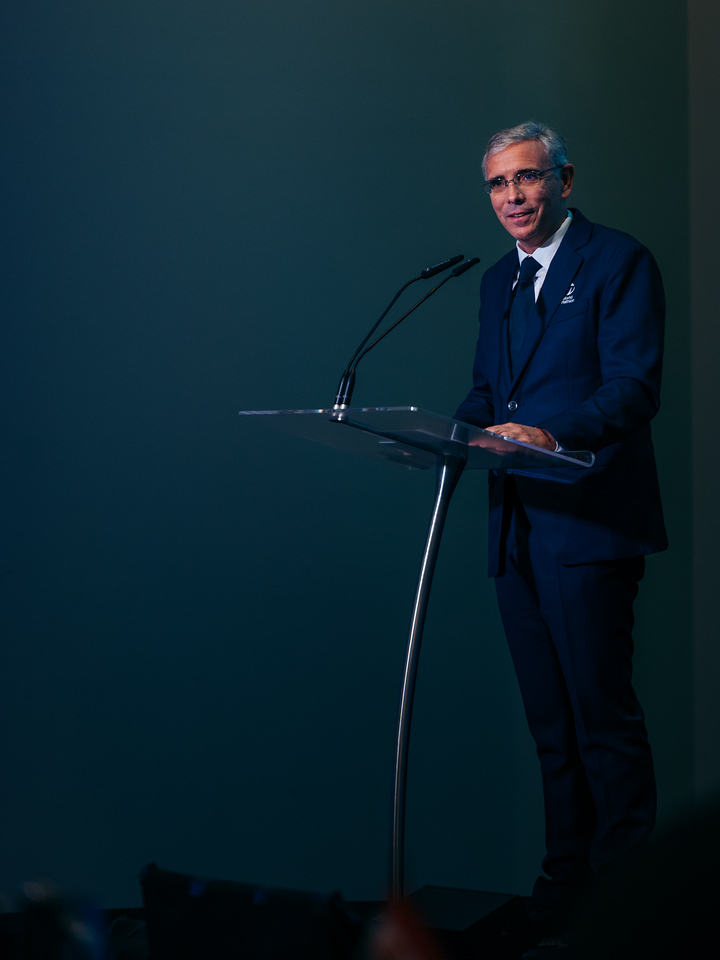
Under its President Antonio Arimany, who was appointed on 24 October 2024, it is betting the path to serious investment runs not through private capital directly, but through the private organisers who have been part of triathlon’s ecosystem since the very beginning.
It is a deliberate approach, and Arimany – who moved from Secretary General to President having spent years implementing the strategy of his predecessors – believes it is the correct one for a sport with a structural profile unlike almost any other at international level.
Understanding why requires some context about the sport’s commercial history, and the structural peculiarities that have long defined it.
Too many players, too little pull
When Arimany’s team commissioned an independent governance review on the state of Triathlon from Deloitte, the findings confirmed what Arimany, and those inside the sport, already suspected. Triathlon was fragmented in a way that made it structurally unattractive to the broadcasters, sponsors and investors it needed to reach the next level.
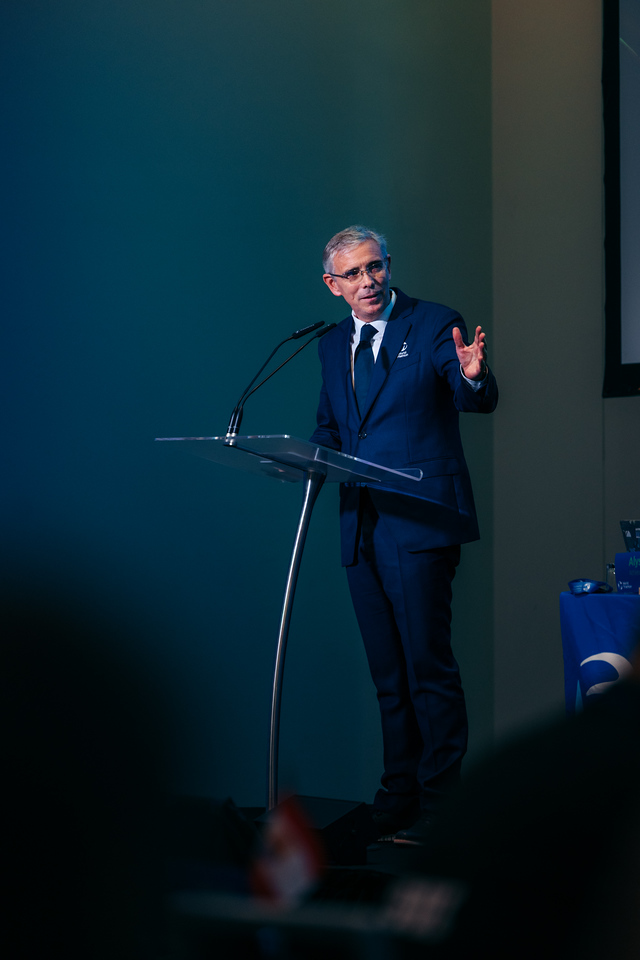
“There were too many players in the market,” Arimany explains to Insider Sport. “Private organisers were competing among each other, and when you spoke to private equity funds or sovereign funds about investing in triathlon, the conclusion was always the same: ‘we won’t invest in any one of you because independently, none of you are large enough to be worth it.’”
The report put numbers and analysis to what federation insiders instinctively felt about triathlon; a sport present at the Olympic Games, with athletes competing across all five continents, was failing to convert that global footprint into a commercially coherent proposition.
Triathlon’s calendar was fragmented across too many competing organisers, and without a unified product, the routes to television contracts and blue-chip sponsorship remained effectively closed.
The report’s willingness to criticise the federation itself was, Arimany says, intentional rather than incidental.
“Sometimes it is not easy to receive a report where there is criticism directed at your own organisation. But I decided to make it public, because that is the first step towards making real changes. You build on a strong base – not only on what you think, but on what others observe about how you are performing.”
A model built for Triathlon’s reality
The instinct in most sports facing fragmentation has been for the governing body to centralise, to absorb, regulate or outcompete the private event market and position itself as the single destination for serious investment.
That option was never really available to World Triathlon. Unlike football, athletics or swimming, triathlon was born into a market where private organisers had been running international events from the outset, and dismantling that structure would have meant creating a larger problem than the one it was trying to solve.
There was also a more principled objection to pursuing private equity investment directly. As Arimany explains: “When you attract a private equity fund, that fund exists with one primary purpose: to grow the value of the product they are investing in, and then to sell it.
“When you deal with a private organiser, their goal is not to grow a value and exit. Their goal is to keep organising events and working for the sport.
“The ownership of the company might change, but as an international federation, private organisers are people who understand triathlon, who are embedded in it, and who are not here simply to maximise a return and move on.”
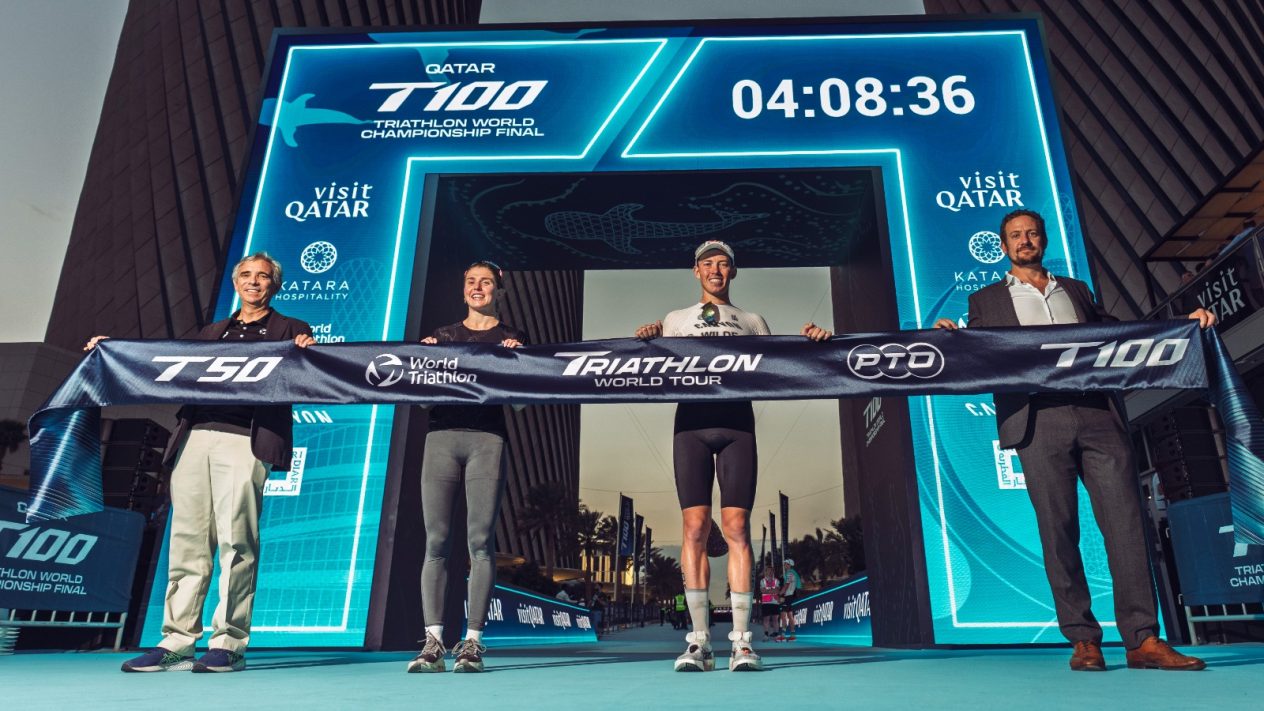
That thinking shaped the model Arimany and his board ultimately landed on – the World Triathlon Tour, a commercial structure built around a partnership between World Triathlon, the Professional Triathletes Organisation (PTO) and Challenge Family.
Behind those partners sit significant private investors, including sovereign funds and private equity, but the federation’s relationship is with the organisers rather than with the capital directly. It is, as Arimany notes, a model that has no real precedent in elite sport.
“We are implementing something different because triathlon is different,” he says. “I know other sports are attracting private equity funds directly. But because we do not have that monopoly structure that most federations enjoy, we have had to develop the sport in our own way.”
The commercial logic of coming together
The practical ambition behind the World Triathlon Tour is to create a product large and coherent enough to compete for the second tier of global sports sponsorship and broadcasting.
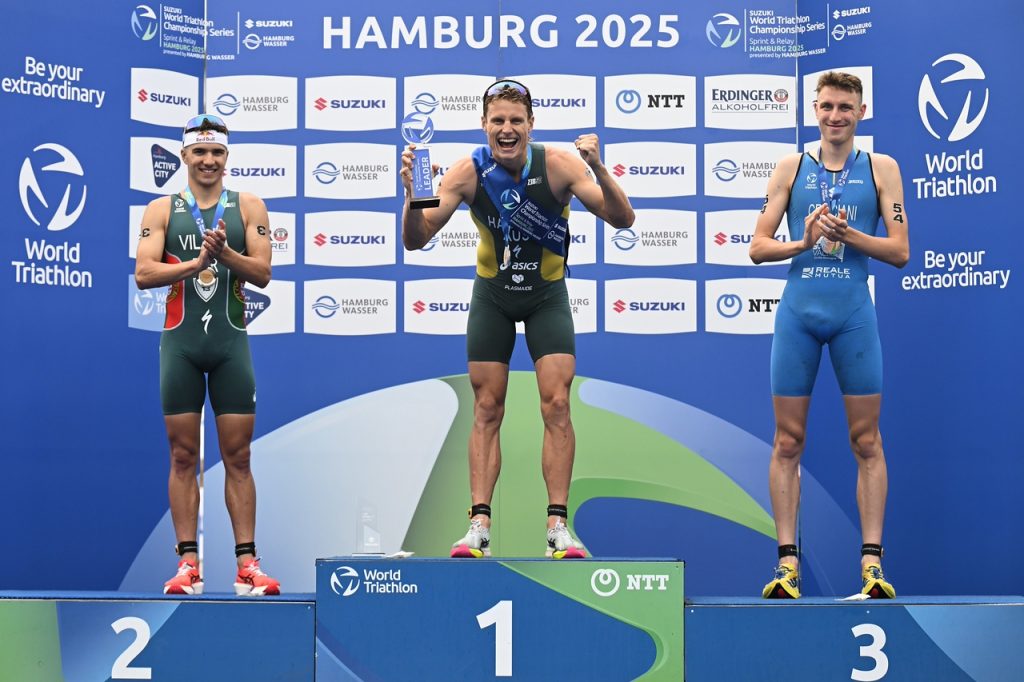
That means a substantial expansion of the event calendar – the Triathlon World Tour is targeting around 100 events per year from 2027. The goal is a unified commercial face, with one product to sell to broadcasters, sponsors and investors, rather than a collection of competing entities with separate logos, separate commercial propositions and separate audiences.
Part of that unification involves rebranding the existing World Triathlon Championship Series as the T50 World Championship Series to sit alongside the PTO’s already-established T100 long-distance brand. It was the PTO’s ability to build the T100 brand from nothing in under a year that persuaded Arimany that the partnership model was correct.
“How PTO created a brand within twelve months was, frankly, surprising to the whole triathlon market,” he says. “We had to accept that these people know how to market and create a brand. So rather than compete with that, we partner with it, and in doing so, we hand them the tools to commercialise our own world championship more effectively than we could alone.”
The integration of Challenge Family events under the same commercial umbrella serves a similar purpose. It concentrates the sport’s offering, giving sponsors a single entry point, and allowing broadcasters to programme around a structured season rather than individual one-off events.
As a non-profit organisation, World Triathlon’s share of any increased revenue flows back into development and athlete support rather than to shareholders.
New disciplines and the Hyrox question
Alongside the structural overhaul of how triathlon is packaged and sold, World Triathlon is making a deliberate push to formally recognise adjacent disciplines.
SwimRun, a format that aligns naturally with triathlon’s multi-discipline ethos, has already been recognised by the federation and its national members. More striking is the ongoing conversation with Hyrox, the functional fitness race series that has grown exponentially in recent years entirely outside the official sport structures.
Hyrox is a different kind of opportunity because it has built a large, commercially valuable community without any of the infrastructure or legitimacy that comes with national federation recognition, Olympic committee approval or government sport funding.
The discussions with World Triathlon are at an early stage, but the proposition being explored is that bringing Hyrox into its official structure could change that, potentially giving its athletes official competitive status and a pathway towards Olympic consideration. It would also offer World Triathlon access to a rapidly growing audience that currently sits entirely outside the mainstream sport ecosystem.
“Once we recognise a discipline,” Arimany explains, “the national federations recognise it, the governments recognise it through their national federations, and so does the International Olympic Committee.”
“That brings Hyrox into the official sport structure. And that matters for its long-term sustainability. The exponential growth it is experiencing now…making that sustainable over time is harder when you exist entirely in the private world.”
The potential benefits, he argues, could be mutual: Hyrox would gain legitimacy and the prospect of Olympic aspiration; World Triathlon would gain a community of athletes already committed to physical endeavour and who, with the right marketing, represent exactly the kind of general sports audience the federation is trying to reach. Whether those discussions ultimately lead to a formal partnership remains to be seen, but the direction of travel is clear.
That experience of working alongside private organisers is, Arimany believes, an advantage that federations in other disciplines are only now beginning to reckon with.
“In this new world of sport, where private organisers are entering every discipline, I think triathlon is ahead of the curve. We are used to this. And we are taking advantage of that.”
From niche to mainstream: The decade ahead
The ambition Arimany sets out for triathlon is clear. But translating a wholesale restructuring of how a global sport is governed, commercialised and presented into concrete results is a different matter entirely.
World Triathlon’s national federations, who are, as Arimany acknowledges, the federation’s key stakeholders, are navigating a period of substantial change, not all of which has been communicated as clearly as it might have been.
Agreements with private organisers take time and require sustained negotiation, and that is before the operational challenges are considered.
The technology infrastructure needed to present triathlon compellingly on television – conveying the physical demands of an endurance sport, the tactical decision-making mid-race, the data that makes athletic performance legible to a general audience – remains underdeveloped relative to where Arimany believes it needs to be.
But these are the building blocks, and the challenges triathlon must overcome to realise Arimany’s vision – a sport competing at the level of golf or tennis within a decade, drawing in general sports fans rather than only those already embedded in the triathlon community.
The 2028 Los Angeles Olympics, where triathlon at Venice Beach will award the first medal of the entire Games, offers a moment of exceptional visibility – the sport’s biggest platform since its Olympic debut in Sydney in 2000.
How World Triathlon converts that moment into sustained commercial momentum will be the real test of whether the partnership model it has spent the past several years constructing is, as its President believes, a genuine departure from the way other sports have approached the same problem.
For now, the strategy is set. Executing it is the next hurdle.
“The key changes have been made,” Arimany says. “Now we have to focus entirely on making them work. I am confident that if we stay on this path, it will be successful. But we have to earn that.”