


Lisbon hosts a one-night stadium show that aims to raise seven figures for frontline causes. Insider Sport goes behind the scenes on broadcast, ticketing, talent, and how the money moves.
“Camera six, clear. Gates in ten. Roll pre-show in ninety.”
The voices in the control room sound calm enough, but the room is all edges. On the pitch, volunteers place corner flags while a five-minute stage waits under the north stand. In a few hours the stadium will be full, and a charity match will need to look and feel like a top-flight fixture.
That is the brief.
What follows is the machine behind the romance. Twelve cameras and a worldfeed. A ticketing approach built for local families and late-decision makers. Player travel, image rights, insurance and warm-up windows, and a plan to account for funds raised and disbursed to the four charities.
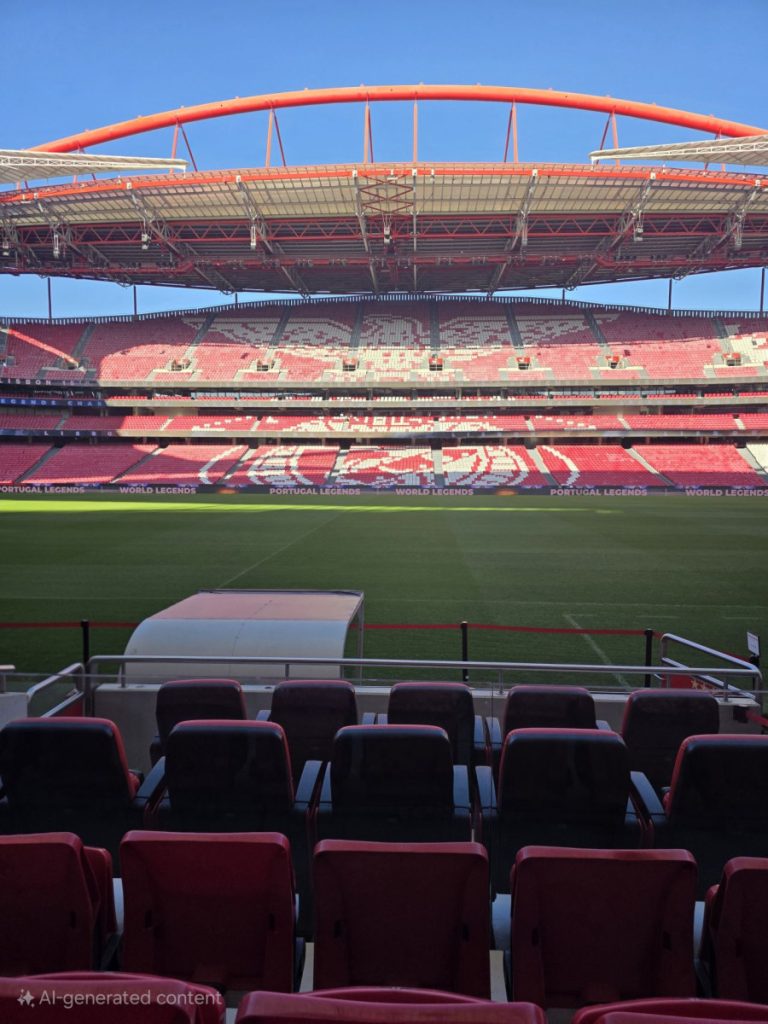
The Legends Charity Game is a one-night event at Estádio José Alvalade which brings a Portugal Legends side together against a World XI. It opens SBC Summit week in Lisbon and is built to look and feel like a European fixture, complete with a live half-time set and a free global stream on TrillerTV.
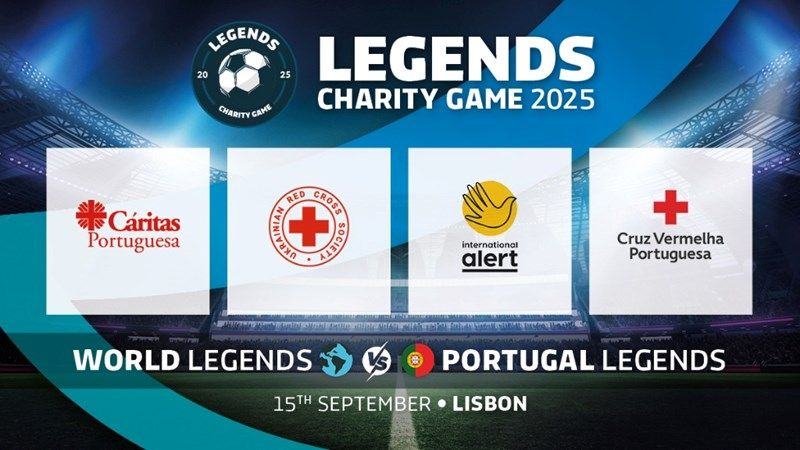
The purpose is straightforward: raise more than €1 million for four beneficiaries, including the Ukrainian Red Cross Society, the Portuguese Red Cross, International Alert and Caritas Portugal.
SBC Founder and CEO Rasmus Sojmark frames it as a celebration with intent. He argues the show has generational pull, with families sharing the stands, and says the target had to be “bold enough to matter.” In practice this means treating a charity match with the same production discipline as a league game, while ensuring the fundraising pathway is visible and accountable.
You can read Rasmus Sojmark’s full interview here.
The choice of Lisbon is symbolic, and not just a strategic alignment with SBC’s Summit. The city offers a stage big enough for a legends roster and a football audience who understand the stakes. Around the game sits a communications plan designed for speed and clarity – who is playing, where, when – and a broadcast plan that removes friction for viewers in the stadium and at home.
Insider Sport takes a look at how that plan holds together: the broadcast designed to travel, the marketing that builds reach in a crowded week, the operational decisions that protect the fan experience, and the route the money takes once the whistle goes.
Broadcast: built to travel
The TV build is produced by Russell Feingold, a specialist in live sport and charity events with nearly 20 years’ experience. He’s parachuted in on shows for Manchester United and most recently produced Soccer Aid 2025 at Old Trafford, a peak-time broadcast that raised over £15m for UNICEF.
“There’s only one standard, which is world-class,” he says, describing broadcast quality as the red line.
His team runs the show from an outside broadcast unit, essentially a mobile TV studio parked at the stadium. Every camera and microphone is cabled back into this hub, where the gallery cuts pictures and mixes sound in real time before sending the programme out to distribution partners.
To make the show travel cleanly across markets, Feingold is delivering three versions of the same programme.
- A domestic Portuguese feed carries local commentary and graphics for in-country viewers.
- An international clean feed strips out the studio elements and ships over SRT so takers can add their own commentators.
- Alongside that sits a full international English feed with presenter, English commentary and graphics, anchored on site by Kirsty Gallacher.
All three are built on a 12-camera 4K plan with super slow-mo so the pictures match a top-tier European fixture.
How people find the game is being kept simple. Broadcasters will trail it ahead of kick-off, and a central team will cut same-day clips for partners to repackage and push out fast. Feingold says the aim is easy discovery first, then deeper engagement as the highlights circulate.
The main stream runs on TrillerTV for reach and ease and crucially, there’s no paywall. “It is free to watch, it won’t sit behind the paywall,” says Feingold, aligning the distribution choice with the fundraising purpose. In the UK, ITV X will be broadcasting the game live.
Marketing: reach first, clarity always
Thomas Rasmussen has been brought in to oversee the marketing. After 12 years at PartyGaming (now a part of Entain) in director-level roles managing €100m-plus budgets, and previous time at Entain, Rasmussen has set the strategy, chosen the local media and creative partners, and kept the plan focused on outcomes rather than vanity metrics.
Speaking to Insider Sport, it is clear Rasmussen has come at the job with a simple hierarchy. The charity is the reason the match exists, but what persuades someone to buy is the promise of a great night out. That shapes everything from the first frame of the ads to the media plan underneath.
“Most advertising formats are viewed on average for around a second,” he says, which is why every execution has to land the basics at a glance: legends football, live event, where, when.
The channel mix follows the same consumer logic. If you want a city to know something fast, you do not whisper. You stack reach until the message is unavoidable, then you add precision. Television does the heaviest lift because it still puts moving pictures in front of large numbers of real people for sensible money.
“TV is still king in terms of getting your message out to a lot of people, very cost effectively,” Rasmussen says. Around that, radio and out-of-home give the campaign a local pulse, filling car journeys and street corners with reminders that the legends are in town on Monday night.
Digital marketing is equally important, working behind the big-reach channels to turn people’s interest into action. The team has been using platforms like YouTube, Facebook, and Instagram to capture the attention of those who have already seen the TV or outdoor ads. The goal is to get them to click through to the ticket page.
To make sure the budget was spent wisely, Rasmussen implemented programmatic buying to a small, pre-approved list of trustworthy Portuguese websites. This prevented money from being wasted on ads no one would ever see. The main job of the campaign, Rasmussen explained, was to “be seen by many”; that’s why the team tracked quality CPM (cost per mille/thousand) instead of less reliable metrics like total engagement.
The organic reach of the campaign has also been very successful. When it comes to influencers, Sojmark and Square in the Air agency have been the driving force.
Players, media partners, and industry voices have been sharing the content with their own followers, which has given the campaign a huge boost in reach and social proof without any extra cost. Rasmussen gives a lot of credit to these partners, noting their work has been “especially impactful” because they already have large, relevant audiences.
The target audience starts with people who live within an hour of the stadium and are already familiar with the players. The campaign also focuses on expats, tourists already in Lisbon, and attendees of the SBC conference. The performance by Calema at halftime is designed to attract a younger, local crowd
Building something special
When the Legends Charity Game was getting off the ground, it was clear the early partners were buying into the idea from the get go – a real project with “heart and purpose,” as Sojmark puts it. The goal was to use football for something much bigger than the game itself.
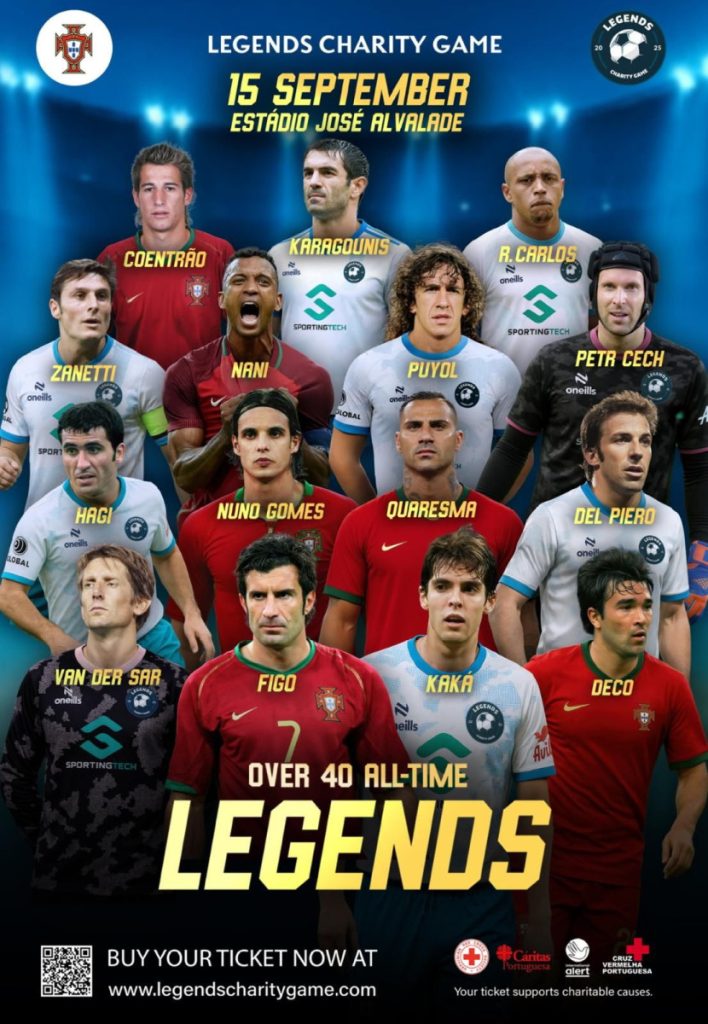
What sold them on it? Sojmark and his team showed them a lineup of true football legends and a clear, ambitious mission: to raise a million euros for four amazing charities. That’s why the first wave of sponsors – Soft2Bet, Sportingtech, YO Health, Spribe, Amusnet, among others – signed on.
In Sojmark’s words, “You didn’t just sponsor a match. You became part of the Legends Charity Game.”
The event’s reach has also been boosted by some big names in media, including A Bola, MARCA, and La Gazzetta dello Sport. On top of that, the initiative secured official backing from the Portuguese Football Federation and major clubs like Benfica and Sporting CP.
For Sojmark, the game is the perfect way to kick off SBC Summit week. It’s meant to open with “purpose, emotion, and meaning,” and the plan is to make it an annual event all the way through 2030.
The hope is to create something which brings generations together – a game a father, son, and grandfather will all want to watch, Sojmark says.