




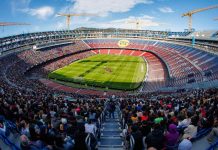




Matt Brittin’s case for a British “sovereign platform” between the BBC and Channel 4 rests on reach. Live sport is where the biggest free-to-air audiences still come from
BBC Director-General Matt Brittin told MPs on 8 July that the corporation has approached Channel 4 about carrying its programming on iPlayer, with Channel 4 staying ad-funded rather than drawing on the licence fee. He set the goal as a British “sovereign platform” with the reach to stand up to Netflix, YouTube and TikTok, warning of “a moment of real jeopardy” from the US and Chinese tech firms he expects to dominate content and its distribution.
Channel 4, he told Parliament’s Culture, Media and Sport Committee, “looks very sub-scale” beside a merging ITV and Sky: “All of these mergers are driven by the need to have scale.” With ITV’s commercial business heading into Comcast‘s ownership, Channel 4 is the odd one out among the public service broadcasters. It’s too small to compete alone, and short of an obvious commercial partner.
BBC: The World Cup numbers
England’s win over DR Congo on 1 July peaked at 16.3 million viewers on BBC One and iPlayer, the BBC’s biggest live audience of the year, and the World Cup took 34% of all iPlayer viewing hours during the final week of the group stage. Brittin told MPs the England–Mexico last-16 tie, a 1am UK kick-off, drew more than 9m viewers, a record for the slot. ITVX posted its biggest month on record off the same tournament. Nothing else on free-to-air pulls those numbers.
If Channel 4’s catalogue was put inside iPlayer and the BBC’s crown jewels — the World Cup, the Olympics, Wimbledon and the FA Cup — would sit next to Channel 4’s Formula 1 highlights and live British Grand Prix, the Paralympics, the Women’s FA Cup and the Boat Race. The broadcasters already share broadcasting through Freely; Channel 4 content on iPlayer would be the deeper step.
The listed-events reform
The Media Act 2024 is already tightening who can show the biggest sport for free, restricting the listed events regime to the public service broadcasters, with updated rules due in force this summer. On 23 June, the Department of Culture, Media and Sport (DCMS) went further, proposing in its “Watch this Space” green paper that on-demand and catch-up rights join the regime for the existing crown jewels. Today those “crown jewels” guarantee free live coverage only — a rights holder can still sell the catch-up window to a paywall.
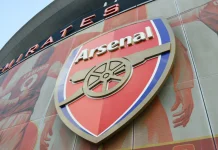
Arsenal‘s 2026 Champions League final against Paris Saint-Germain ran exclusively on TNT Sports, the first time the final had not been free-to-air in the UK since 1992. Keir Starmer‘s letter urging TNT to open it up had no legal impetus, because the final is not a listed event.
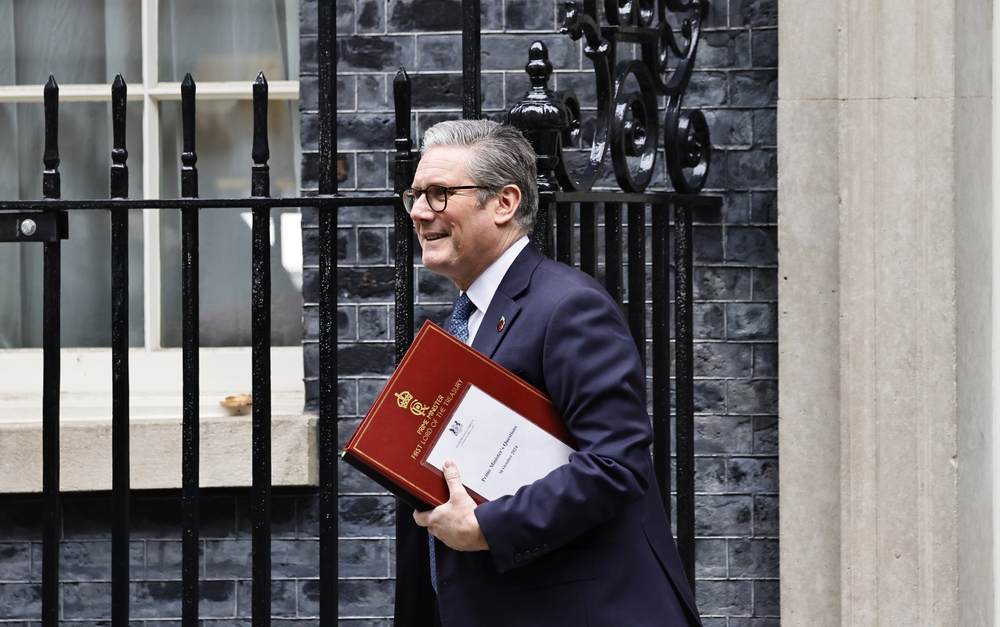
Kier Starmer calls on TNT Sports to air the UEFA Champions League Final for free. Image credit: Sean Aidan Calderbank/Shutterstock.
Sky is building the commercial counterweight, pledging “more free-to-air sport than ever before” through ITVX as the government hands the PSBs stronger digital rights. A combined iPlayer is, aruguably, the BBC’s public-service response to Sky’s ITV deal.
What isn’t settled
As of yet, Channel 4 has not confirmed Brittin’s account, and as recently as May 2026 Chief Executive Priya Dogra rejected merger talk at the Creative Cities Convention: “There are no mergers. There are only acquisitions… that’s the wrong answer for Channel 4.” Whether the Sky move altered her position is not established.
Three previous attempts to pool public service streaming, in 2007, 2017 and 2024, stalled, and Project Kangaroo, the BBC, ITV and Channel 4 video-on-demand venture — was blocked by the Competition Commission in 2009, a decision Brittin blamed on a regulator “looking in the rear-view mirror.” What is now available is content distribution, not a merged platform, with ownership, branding and revenue split all unresolved and no timeline beyond “as quickly as we are able.”
Channel 4’s free-to-air F1 arrangement, sub-licensed from Sky, runs only to 2026 and is up for renewal now.