



















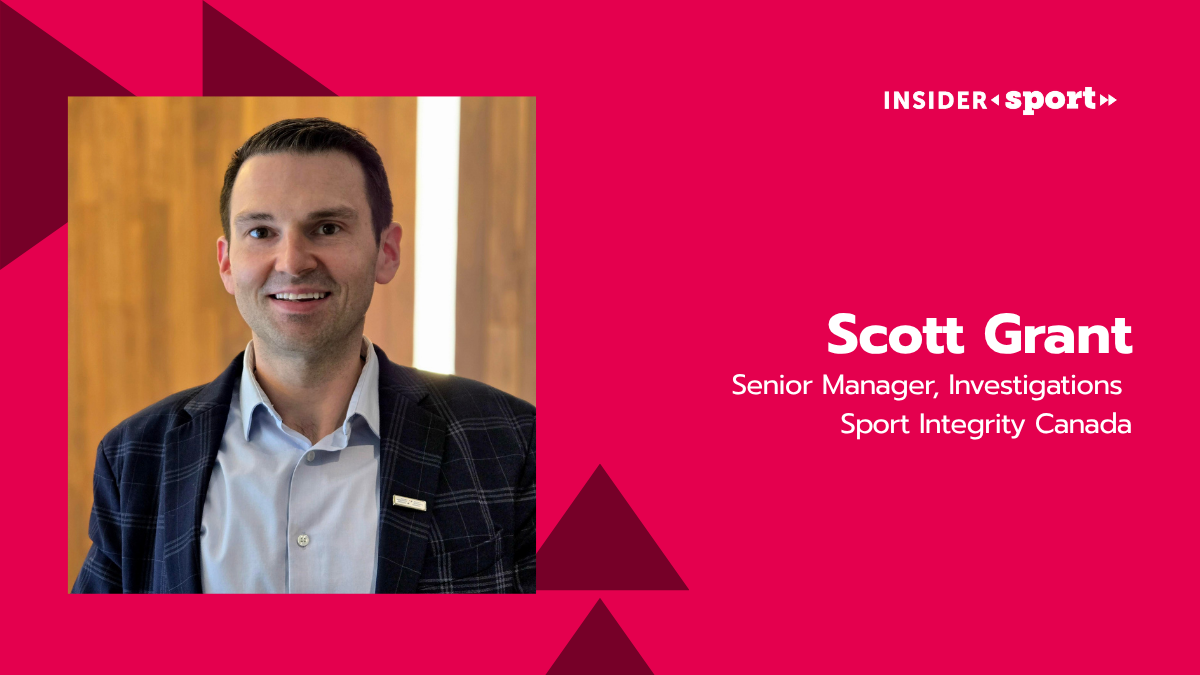
As sports betting becomes increasingly woven into the fan experience, Scott Grant discusses the growing risks around competition manipulation, the challenges facing Canada’s integrity framework, and why stronger coordination between sport and betting stakeholders is becoming more urgent.
Sports betting has become increasingly embedded within the way fans consume live sport. Odds now sit alongside broadcasts, leagues have signed commercial agreements with operators, and regulated sportsbooks have become part of the wider sports economy in Canada since the legalisation of single-event betting in 2021.
But as betting’s presence grows, so too does scrutiny around competition manipulation and the systems designed to detect it.
For integrity stakeholders, the issue stretches far beyond suspicious wagers alone. Manipulated competitions risk undermining the unpredictability that gives sport its value, threatening confidence among fans, sponsors, broadcasters, and betting markets alike. Lower-tier and underfunded competitions are often viewed as particularly exposed, especially where governance structures, monitoring capabilities, or reporting mechanisms remain inconsistent.
Ahead of SBC Summit Canada, Insider Sport spoke with Scott Grant of Sport Integrity Canada about the growing focus on competition manipulation, Canada’s evolving integrity framework, and why stronger coordination between sports bodies, betting operators, regulators, and law enforcement has become increasingly important.
The integrity risk extends beyond betting
Competition manipulation is frequently framed as a gambling issue, but Grant argues the implications are much broader for the wider sports ecosystem.
“The unpredictability of sport is what makes it compelling,” he explains. “When that unpredictability is called into question, it erodes trust and ultimately diminishes the credibility and value of sport itself.”
This concern has become more pressing as sports betting expands across Canada and internationally. According to Grant, betting-related risks are often amplified in environments where governance is fragmented or resources are limited.
Suspicious betting activity remains one of the clearest warning signs, particularly when paired with weak oversight structures, inconsistent policies, or limited intelligence sharing between organisations. Proposition betting markets can also create vulnerabilities because specific events within a game may be easier to influence without altering the overall result.
While awareness around integrity threats has increased in recent years, Grant notes that the maturity of prevention programs still varies significantly across sport.
Canada’s fragmented approach
One of the recurring themes in discussions around competition manipulation in Canada has been coordination. Grant points to the country’s historically fragmented approach, where responsibilities have often sat across separate organisations, regulators, and sporting bodies without a unified framework.
“The Macolin Convention establishes a coordinated, multi-stakeholder framework connecting sport, regulators, law enforcement, and betting operators,” he says. “It works because it connects the key partners required to protect the system.”
The Council of Europe’s Macolin Convention, formally known as the Convention on the Manipulation of Sports Competitions, is widely regarded as one of the leading international frameworks for addressing match-fixing and betting-related corruption. Among its central recommendations is the creation of ‘National Platforms’ designed to improve intelligence sharing and coordinated responses between stakeholders.
Canada has begun building its own response through the Canadian Program to Prevent Competition Manipulation (CPPCM), which focuses on monitoring, education, and independent oversight. However, Grant acknowledged there is still work to do before a fully harmonised national system exists.

Betting operators as frontline partners
As regulated sportsbooks continue to expand, operators are increasingly being viewed as key integrity partners rather than simply commercial stakeholders.
“Betting operators are critical frontline partners,” Grant says. “Their ability to detect irregular betting activity early and report it facilitates timely intervention.”
This role has become more significant as betting markets grow more sophisticated and integrated into mainstream sports consumption. Grant notes that fan expectations around fairness and transparency are also rising as wagering becomes more closely tied to the viewing experience itself.
For lower-tier and emerging sports, the challenge is often more acute. Grant highlighted independently administered policies, education programmes, coordinated monitoring systems, and meaningful sanctions as some of the foundational safeguards needed to reduce manipulation risks.
Still, he stresses no single organisation can manage the issue in isolation. “Competition manipulation must be addressed as a shared responsibility,” Grant concluded. “Effective prevention requires information sharing, clear roles, strong detection, and education.”
VIP Event and Expo+ Pass holders can join Scott Grant for a Fireside Chat on Protecting Sport Integrity, taking place on Thursday, May 21.
Operators and Affiliates are eligible for a complimentary VIP Event Pass, simply apply here.