




















The Premier League is open for business, but only if you follow PSR
Forget your club’s dream of winning trophies or climbing the Premier League table, financial stability and profit margins are what earn boardroom approval.
That is because, for several years now, Premier League clubs have spent more time balancing spreadsheets and brainstorming loopholes than focusing on football. The Profit & Sustainability Rules (PSR), have caused more headaches than progress.
Believe it or not, PSR came into effect over a decade ago, at the start of the 2013/14 season. You’d be forgiven for thinking it was a more recent introduction – the league seemingly has only just remembered it exists.
PSR was a response to Portsmouth’s administration and UEFA’s Financial Fair Play (FFP) rules, which allow for a far smaller $68.6m (€60m) loss across three years. It raises the question: why would the Premier League enforce a loss cap so stringent that even members of the fabled ‘big six’ are only just able to comply and still compete at the highest level?
Fast forward to today, and we have situations where Newcastle United and Aston Villa – clubs which earned Champions League qualification through smart recruitment – are now finding their ambitions restricted. Push for success in the transfer market, and you’re penalised if you can’t instantly replicate it.
In isolation… PSR is not bad. In fact, it’s a good thing that clubs now face some fiscal discipline. But the problem is PSR hasn’t been thoroughly reviewed or future-proofed – which is why clubs are exploiting unforeseen loopholes with ease.
Enter Chelsea Football Club.
The Chelsea PSR loophole
Say what you will about Todd Boehly and Clearlake Capital’s handling of Chelsea since taking over in May 2022; they are certainly shrewd businessmen. That cannot be denied.
Spending close to £1.5bn on player transfers may seem extremely risky in today’s financial landscape. But when there are loopholes to exploit, why would they stop?
The loophole Chelsea discovered – selling its women’s team to a separate legal entity under the same ownership – is now becoming a blueprint for other Premier League clubs to circumvent PSR.
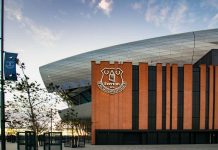
Aston Villa followed suit on the June 30 deadline, and more recently, Everton made the same move: selling its women’s team to the same parent company.
Some may call this cheating. Others, a smart financial strategy. But really, it exposes the Premier League’s lack of foresight and failure to consider all angles when positioning itself as a brand that promotes responsibility and sustainability.
And this wasn’t even the most damaging blow to PSR’s credibility.
Allow promoted clubs to thrive
The Premier League was left with egg on its face after an independent panel ruled in favour of Leicester City, following the league’s attempt to impose PSR charges against the club, despite its one-year stint in the EFL Championship.
While Leicester lost £129.4m ($171.4m) from 2020-2023, the club’s time in the Championship during the 2023/24 season did not fall under Premier League oversight. The two are separate legal entities, and Leicester were not given sufficient time to raise funds between their relegation in May 2023 and the PSR financial submission deadline of June 30, 2023.
Not only did the Premier League lose the case, but the independent board issued a damning indictment of PSR, stating the “rules are, in relevant parts, far from well drafted” and some parts being described as “confusing”.
The Premier League’s defence – that “common sense” should prevail – unsurprisingly did not hold up. But for ambitious Championship clubs eyeing promotion, it was a welcome win.
You only have to look at Nottingham Forest to see what investing in growth can achieve. In 2022/23, the club signed 29 players during its first season back in the Premier League.
Yes Forest were, rightfully, deducted four points for breaching PSR by over £34.5m ($45.7m). But the short term cost was outweighed by long term success. The club stayed up, grew its squad, and is now set to compete in the UEFA Europa League, bringing lucrative media rights income from UEFA in the process.
As I mentioned previously, I do not believe the PSR is a stain on the Premier League. The rules are a necessary tool to ensure smaller, less wealthy clubs can stay in business and survive.
However, with 12 Premier League clubs among the most valuable in world football and the league revenues at record highs, it is time to flip the model. The league should be incentivising growth from the bottom up, while imposing tighter financial controls on top clubs to keep the competitive balance.
There is only so long the Premier League can market itself as “the best league in the world” if PSR is:
- Incentivising Manchester City, Liverpool and Arsenal to remain at the top
- Stifling ambition from clubs like Newcastle and Aston Villa;
- And dampening the spirits of teams like Burnley and Sunderland.
Change is needed imminently.
September 15 will see SBC organise a ground breaking charity football event in Lisbon. Make sure you get the chance to see some of the most legendary names in football by securing your ticket today at https://www.legendscharitygame.com/