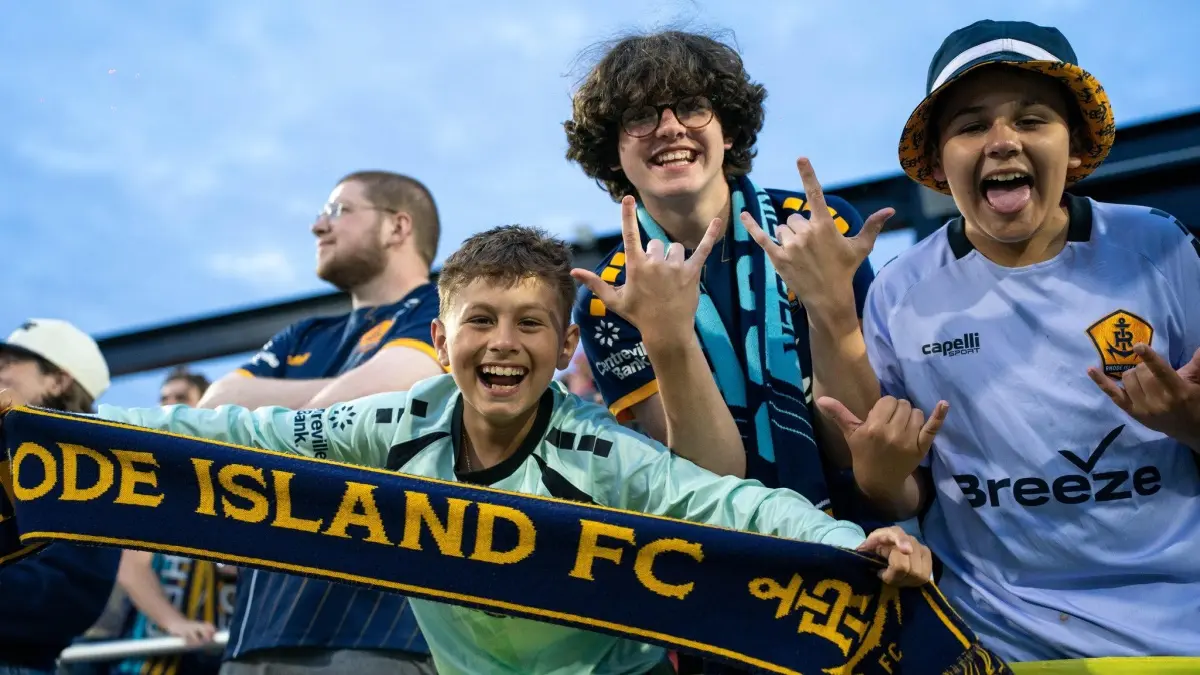




A new IBC-backed collaboration is using virtual assistants to customise live sports streams in real time, driven by viewer preferences and habits.
A coalition of media and technology companies is aiming to overhaul the fan viewing experience through an AI-powered virtual assistant that delivers personalised content in real time.
Developed through the International Broadcasting Convention’s Accelerator Media Innovation Programme, the ‘Changing the Game Again’ project brings together Verizon Business, AMD, Xansr Media and other partners to test a new model for sports broadcasting.
The initiative is designed to address a widening gap between the way live sport is produced and the way audiences want to consume it. As viewers become increasingly selective, time-poor and digitally connected, rights holders are under pressure to deliver a more tailored experience.
“This group is smashing the boundaries and redefining what we thought was possible in terms of real-time personalisation in sports,” said Muki Kulhan, IBC Innovation Co-Lead. “It’s a standout example of what the IBC Accelerator Media Innovation Programme is all about: no-wrong-answers R&D, big picture innovation, and dedicated teamwork.”
From pilot to progression
The roots of the project can be traced back to IBC’s 2024 Accelerator programme, where an earlier collaboration explored personalisation and fan engagement. According to John Canning, Director of Developer Relations at AMD, the success of that initiative laid the groundwork for a renewed focus.
“This current project originated from an IBC Accelerator in 2024, where a group of us came together around a shared interest and enthusiasm for exploring personalisation and fan engagement,” he said.
“The success of that initial collaboration, and the strong interest it generated across the industry, motivated us to continue developing the concept.”
Over the past year, the team has expanded its efforts, incorporating more partners and sharpening the use case. What began as an exploratory trial is now being positioned as a scalable solution for the live sports industry, with deployment trials already under way and a public demonstration planned for IBC2025 in September.
Addressing fan fatigue in a crowded content market
For many sports fans, keeping up with live fixtures across a full season is no longer realistic. Between competing platforms, time constraints and shorter attention spans, the traditional broadcast model is under strain.

“Today’s audiences are faced with an overwhelming volume of content, and it’s simply not feasible to watch everything,” said Erin Rose Widner, Global Head of Business Strategy for Emerging and Creative Technologies at Verizon Business. “Personalising the viewing experience offers a powerful solution.”
The virtual assistant is designed to respond to each viewer’s interests and habits, from team and player preferences to time availability. Rather than sifting through hours of footage, fans receive curated content that aligns with what matters to them.
“This not only makes their experience more engaging and relevant,” Widner added, “but also frees up their time to enjoy other content they’re interested in.”
How the technology works in real time
At the core of the project is an AI assistant that uses pre-set viewer profiles to customise the live experience. These profiles capture key information such as favourite teams, players and areas of interest. The system then delivers real-time updates, condensed replays or statistical overlays based on that input.
“In our current R&D setup, the live sports feed is streamed into Chyron Live and simultaneously ingested into Xansr’s Aiko platform,” explained Vaibhav Panchal, Board Director at Xansr Media. “For this incubator, Aiko has been optimised to run on AMD GPUs using Spectral Compute’s proprietary technology, allowing us to achieve high performance with lower production costs.”
While the stream plays, Aiko’s AI model analyses the action as it happens. This enables the assistant to generate personalised highlight reels or respond to fan prompts during the match. The team plans to demonstrate the full experience at IBC2025’s Accelerator Zone and during its final showcase in Hall 14.
Technical limits and live-stream complexity
Despite early progress, deploying generative AI in live environments remains complex. Canning pointed to content rights and metadata as two of the most persistent obstacles.
“One of the ongoing challenges in a project like this is navigating the complex landscape of content rights and access, which can vary widely depending on the sport, region, and platform,” Panchal said. “There is also the quality, consistency, and availability of metadata, which are critical.”

From a technical standpoint, scale is another issue. Panchal noted that serving millions of fans simultaneously, while keeping production costs down, has required significant optimisation.
“Balancing performance and efficiency, especially in real-time, live environments, has been a key part of our R&D focus,” he said.
Changing how fans engage with live events
For the project’s backers, the assistant marks a shift in how fans relate to live sport. Rather than passively consuming a linear feed, viewers are able to guide and shape the experience based on their interests.
“This kind of technology empowers fans to take control of their viewing experience,” said Canning. “Rather than passively watching a broad broadcast, fans can focus on what matters most to them.”
Widner added that many fans already use second screens to check stats or replays during matches. The goal is to integrate that behaviour more intelligently.
“What we’re aiming to do is enhance that second-screen experience in a more intelligent and personalised way,” she said. “Based on a viewer’s profile, the assistant can deliver the stats they care about, offer instant replays of moments they might’ve missed while grabbing a snack, or surface highlights tailored to their interests.”
According to Nielsen, 89% of sports fans now use a second screen while watching live events, typically to check stats, interact on social media or search for highlights. The aim here is to make that parallel experience more intelligent and integrated.
Early feedback and commercial potential
Initial feedback has highlighted a clear appetite for the service. Widner said trial users responded well to the idea of a personalised “sports companion,” capable of guiding, educating and curating content.
“It can surface team and player history, offer relevant stats, and curate an experience that feels seamless and tailored,” she said. “What’s even more exciting is how people are imagining the potential beyond sports.”
Beyond engagement, the assistant opens the door to more targeted monetisation. By collecting individual viewer data and usage trends, rights holders can deliver more relevant ads, personalise sponsor messages and experiment with new content formats.
“By enabling the creation of individual viewer profiles and delivering personalised content that truly resonates, broadcasters and rights holders gain deeper insights into their audiences,” Widner said.
KPIs and scalability
The team is currently tracking performance based on metrics like screen time, retention and repeat engagement.
“Engagement (screen time) is the most important KPI for us,” said Panchal. “The longer fans stay engaged, the more opportunities there are to create value across the board.”
He added that personalised features could help bring fans into the experience even before kick-off, through AI-generated pre-match summaries delivered via email or social media.
On scalability, Canning noted that the concept is highly adaptable, though dependent on access to rights and high-quality metadata.
“When those elements are in place, the potential for scalability is significant,” he said.
The project will be demoed in person at IBC2025 in September.