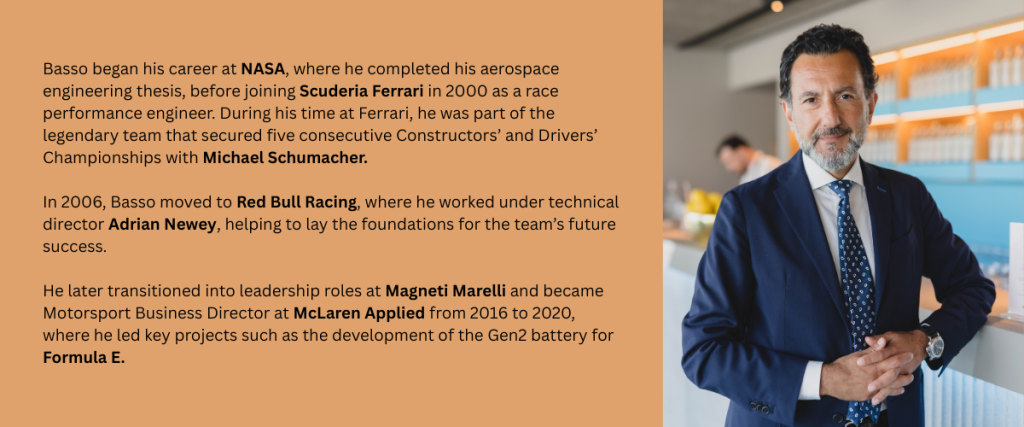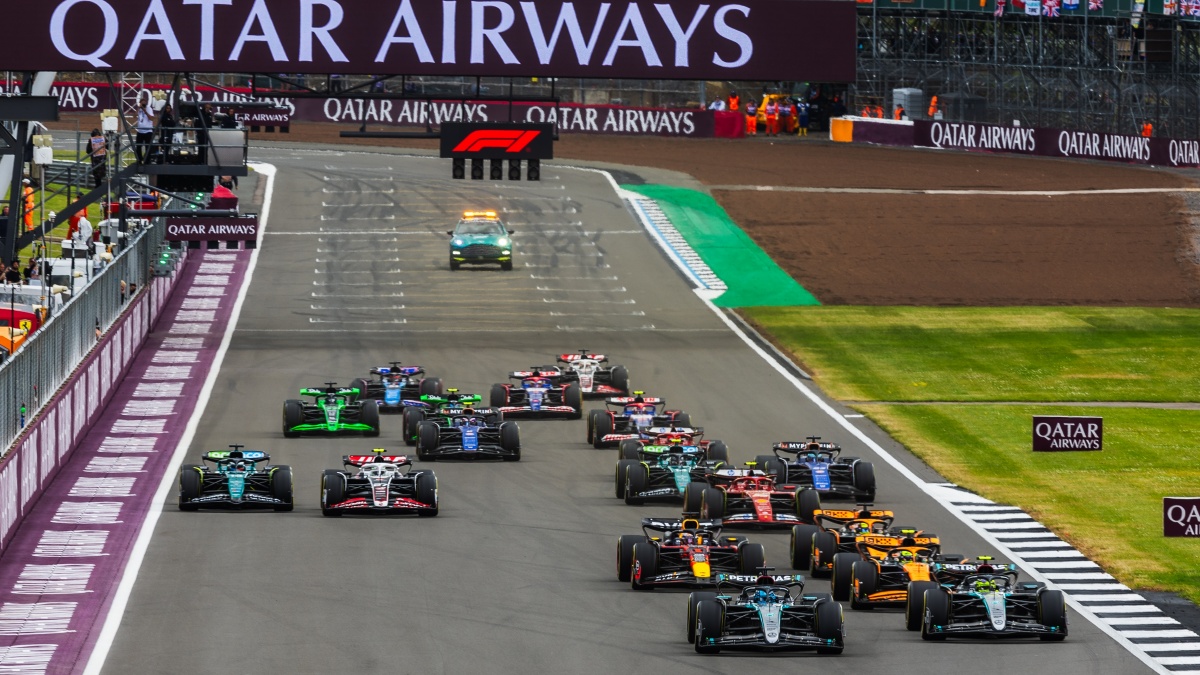
What makes someone walk away from a career at the pinnacle of Formula 1 and aerospace engineering to launch a marine motorsport no one’s heard of?
For Rodi Basso, the answer lies in a quiet but decisive moment during his time as an F1 race engineer. “When I stopped focusing on my keyboard and turned around,” he recalls, “I saw what was really happening behind the scenes.” What really shaped the sport’s long-term value wasn’t the cars or the drivers, but everything built around them – the hospitality, the sponsorship deals, the investor interest.
Now, as co-founder and CEO of the UIM E1 World Championship, Basso is applying that insight to water. Developed with Formula E and Extreme E founder Alejandro Agag, E1 is pitched as the world’s first all-electric powerboat racing series: a sport which sits somewhere between Formula E, SailGP and Netflix-era franchise sport, blending sustainability, celebrity ownership and B2B hospitality in coastal cities around the world.
But can a sport built from scratch, with centralised technology and a controlled media strategy, grow into a commercially sustainable property? And will its messaging on environmental impact hold up to scrutiny as it scales?
This is the bet Basso and his backers are making. And after just over a year on the water, it’s a story still being written.
A blank sheet — and a business plan
E1 didn’t begin with a tech prototype or a race calendar. It started with two people asking a deceptively simple question: if you could build a sport from scratch, what should it look like?
“We’ve been all around the world in racetracks,” Basso explains, “but what if we were near the sea, nearby the lakes, the rivers, and we celebrated and protected the future of these coastlines?” It’s an almost romantic origin story, but one that quickly turned practical. Drawing on more than two decades of combined experience across motorsport, tech and business strategy, Basso and Agag set about designing a model which was commercially self-aware.
This meant borrowing from both motorsport and beyond, from ATP tennis to American football, to design a format which could be both tightly controlled and scalable. The early insight has been that host cities and governments would be more important than broadcasters or even sponsors.
“We are the best ally of governments and businesses, especially real estate and hotel chains,” Basso says. The value proposition for cities is somewhat obvious: prestige, high-net-worth visibility, and a sustainability-led narrative. “In Doha, we had 30,000 people in the fan zone and 15,000 in Jeddah,” he claims. “Hospitality numbers are more contained, between 300 and 500 people, but that’s where B2B happens.”
This early focus on place rather than platform sets E1 apart from the traditional rights-holder model, and arguably closer to a sport-led events business. Yet it also raises questions about long-term value creation. If the tech, talent and teams are centrally managed, what happens when the novelty wears off?
Basso points to ownership value as a core metric. One unnamed team, he says, has already sold a stake in its licence for five times its original valuation; a claim that’s difficult to independently verify, but indicative of internal optimism. “We’re heading very firmly towards a half-a-billion valuation in three years,” he says.
Whether the wider sports investment market shares that vision remains to be seen. But the playbook — part Formula E, part SailGP, part Davos-on-water — is ambitious.
Owning the platform
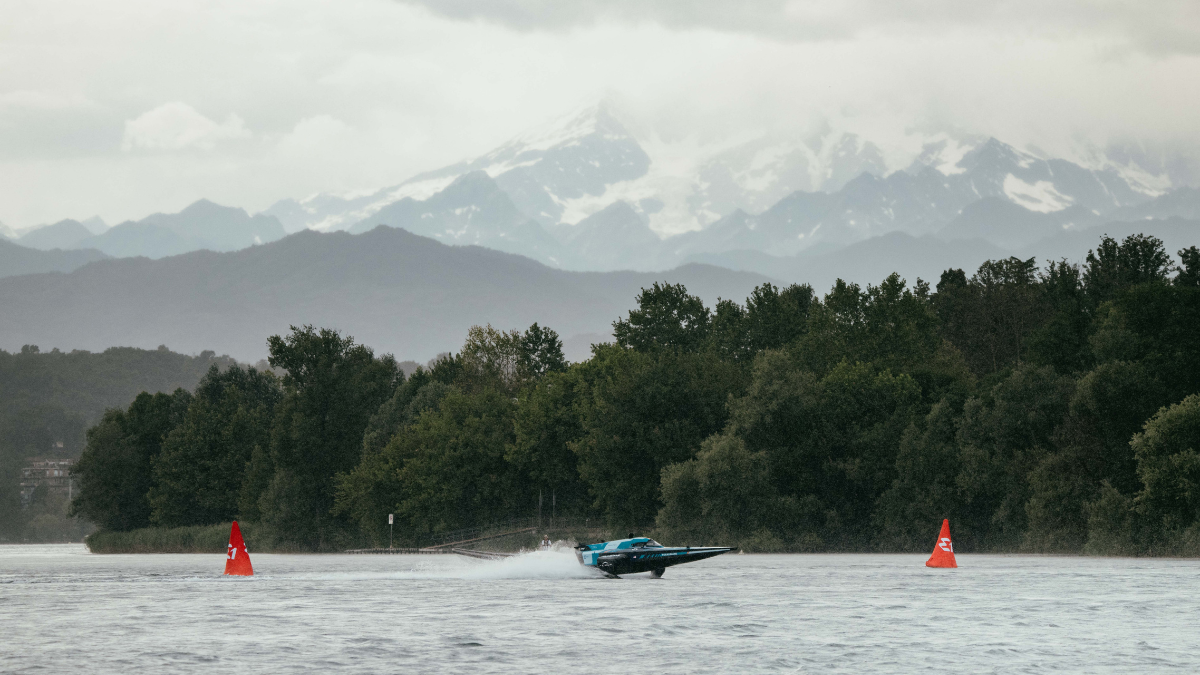
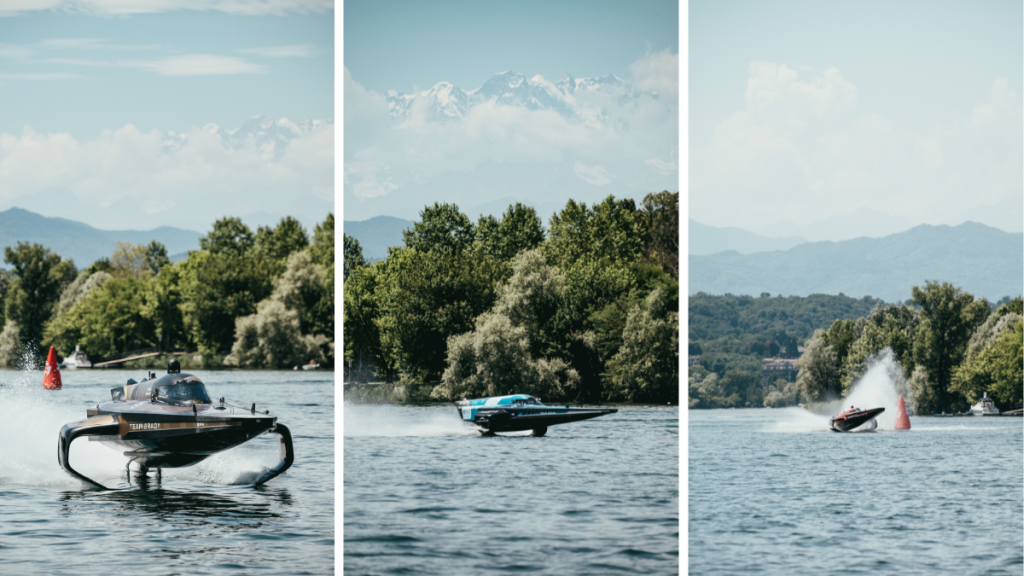
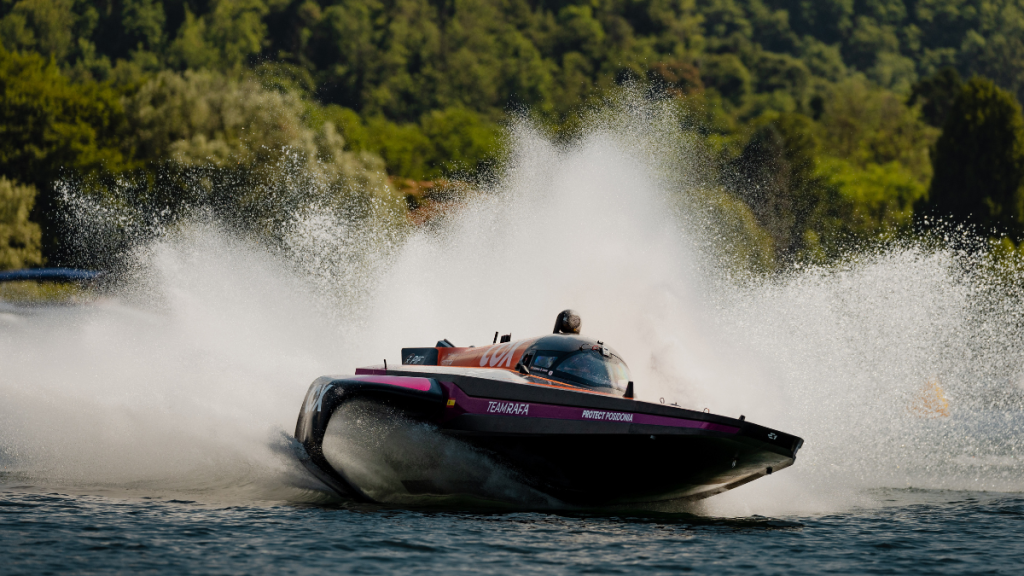
Central to E1’s strategy is control. While many motorsports thrive on open competition and manufacturer rivalry, E1 has opted for a spec-series approach.Every team uses the same boat, the all-electric, hydrofoiling RaceBird, which was originally conceived by Norwegian designer Sophi Horne, developed through her startup SeaBird, and later engineered by Basso and his selected pool of partners.
The design, inspired by birds skimming water, was created to marry aesthetics with efficiency. The result is a 7.5-metre craft powered by a 150kW electric outboard motor and stabilised by three fixed foils. At racing speed, the boat lifts clear of the water to reduce drag and extend range — critical for electric propulsion.For Basso, this decision was as much about financial feasibility as it was about sporting integrity.
“If I had to ask completely new teams in a completely new sport to build their own battery, their own boat and everything… oh my God,” he says. Instead, the series supplies a turnkey solution, with logistics, maintenance and technology all managed centrally. This may limit technical innovation in the short term, but Basso believes it is essential to ensure close racing and predictable costs.
“Sport is successful if there is a good element of geography and a good element of unpredictability,” he says.
The challenge now, he adds, is to ensure the pilot and team still make the critical difference. “We don’t say enough about how much teamwork goes into winning a race weekend.”
There is a longer-term roadmap to introduce more competitive variables. Basso is particularly interested in propeller innovation and energy transfer systems, areas where efficiency gains could benefit the wider marine industry. But he draws a line at battery development, warning that unequal resources could create a two-tier competition.
The question is whether this closed-architecture model can support long-term competitive interest, particularly for fans used to the technological arms race of Formula 1 or the branding stakes of Formula E.
Star power and team narratives
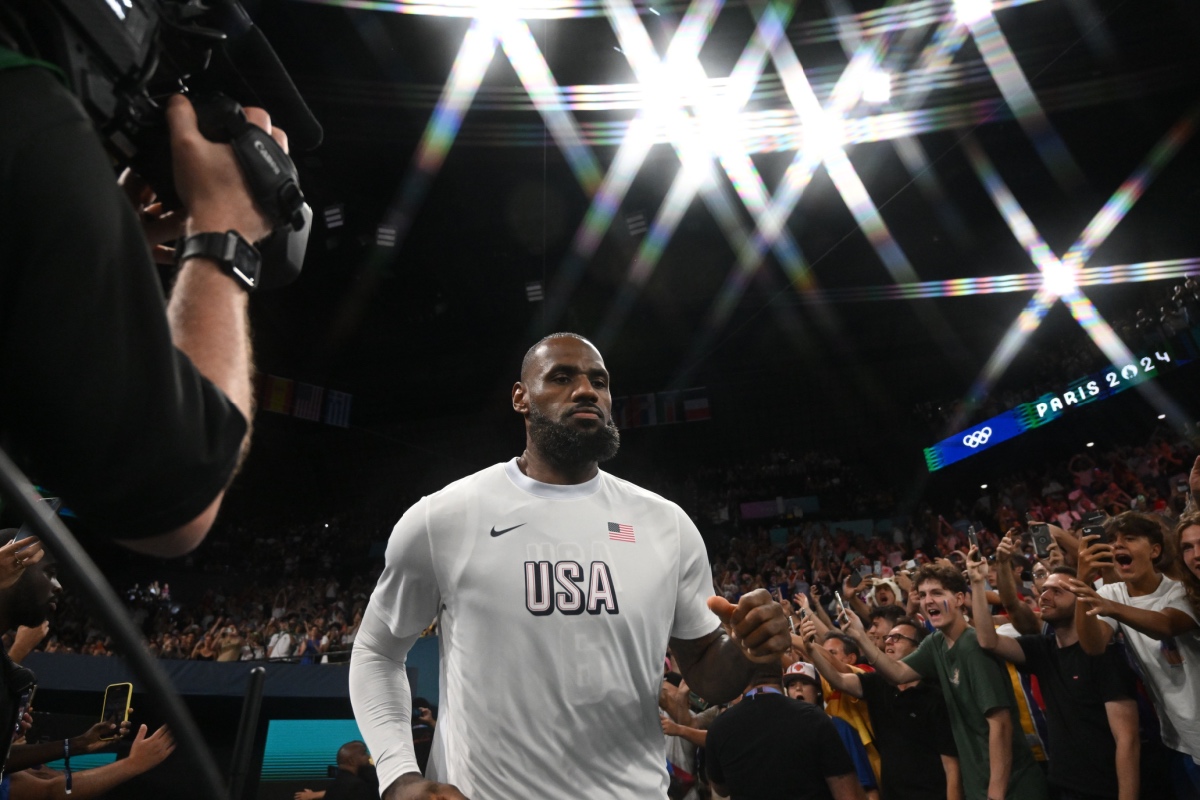
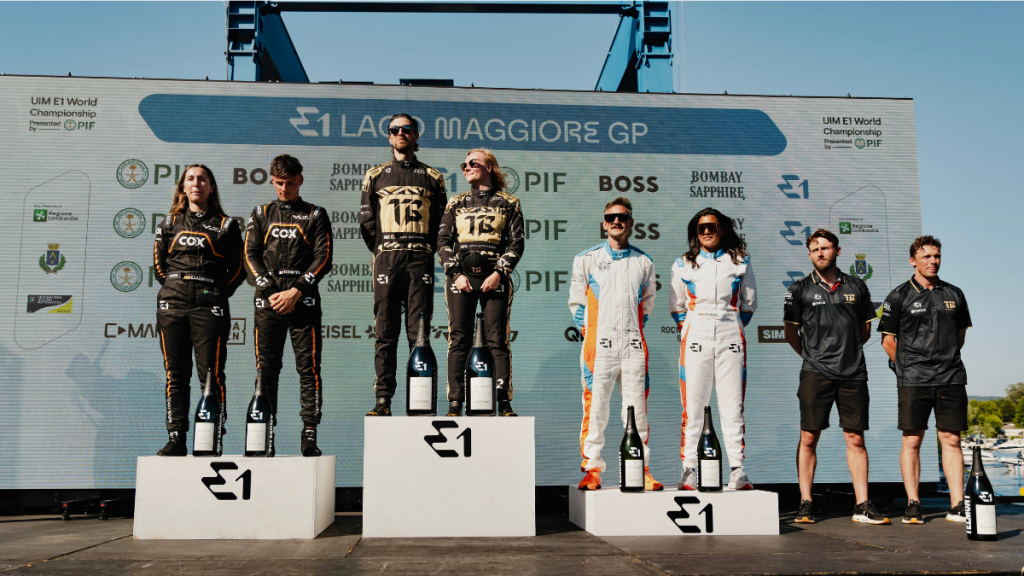
While the RaceBirds may be identical on the water, the identities behind the teams are anything but. E1’s early visibility owes much to the high-profile owners behind its franchises; a roster that includes Will Smith, Rafael Nadal, Tom Brady, Steve Aoki, and LeBron James. Their presence is more than a marketing tactic; it’s a cornerstone of E1’s growth strategy.
“These owners are joining because of their passion about the water […] they wanted to be part of an impactful project at the peak of their career,” Basso says. “The next step would have been to be something meaningful. And they see a financial upside in the investment.”
But it’s the pilots who must turn the branding into performance. Many come from elite motorsport or powerboat backgrounds, including former F1 test driver Dani Clos (Team Aoki), rally star Catie Munnings (Team AlUla), and world jet ski champion Anna Glennon (Team Miami). Others, like Jamaica’s Sara Misir or Saudi Arabia’s Mashael Alobaidan, bring a pioneering edge to gender and geographic representation.
The athlete-owner dynamic has already begun to shape fan engagement. Glennon, for instance, credits owner Marc Anthony’s involvement with amplifying support, but notes that she and her teammate have also built their own followings within watersport circles.
And while the series is still in its infancy, E1 appears to be cultivating the kind of personal allegiances, to teams, to pilots, to personalities, that are critical for long-term fan retention.
Sustainability: principle or platform?
E1 positions sustainability not as a selling point but as a foundational methodology. The series is aiming to be ISO-certified as a net-zero event from next season, and Basso describes sustainability as “a way to drive the process and make decisions.”
But there are contradictions. E1 is, after all, a sport with a global freight footprint and centralised equipment which travels between continents. Its hospitality offering targets high-income guests, and the RaceBird itself, while zero-emission on water, relies on energy infrastructure that is still being developed.
To Basso’s credit, he does not sidestep these tensions. “There is an easy solution to impact, don’t do an event,” he says. “But I don’t think it’s really what we want.”
His argument is that the sport can act as a testbed for technologies and behaviours that have broader use cases, from battery systems to clean energy storage and on-site charging infrastructure. Whether that carries through in execution remains to be seen.
There is also a social impact ambition. E1 hosts educational visits, engages local schools, and, in markets like Nigeria and Saudi Arabia, aims to use the event as a platform for youth engagement and STEM awareness. “We like to go around and talk to schools, universities, foundations,” Basso says. “It’s an inspirational moment.”
Media ambitions with measured expectations
Unlike many emerging sports properties, E1 is not relying on broadcast revenue to balance the books. At least not yet.
“Broadcast is a priority, but not a commercial priority,” Basso says. “If you build the product just to satisfy the media, it becomes very risky.” He notes that media partners traditionally demand changes to format or structure that can dilute the sporting experience without delivering meaningful financial returns.
That said, E1 is on air across several major markets, including with CBS Sports, ITV and DAZN. According to Basso, the series has averaged 75 million video views per race weekend across its digital platforms, though it is not clear how that figure is calculated. A more transformative broadcast deal is, he suggests, in the works.
E1’s approach to media is clearly hybrid. Traditional broadcast provides reach and legitimacy, but digital engagement, driven by the pilots and teams themselves, is central to the strategy. “Our pilots are not just athletes, they are creators,” Basso says. This reflects a wider trend in sport, where fans increasingly connect with individuals rather than institutions.
A race to establish value
E1’s franchise model draws clear inspiration from Formula E. Teams buy licences, build equity, and hope to realise value as the series matures. According to Basso, there is already interest in expanding beyond the current nine teams, and early internal sales suggest the valuation curve is steep.
But with growth comes scrutiny. Can the series maintain competitive integrity while keeping costs under control? Will cities continue to pay hosting fees once the novelty wears off? And can it deliver a media product that captures attention beyond coastal VIP zones?
Basso remains confident. “Everything is going in the right direction,” he says. The calendar is expanding, interest from sponsors is growing, and the pilot base is becoming more recognisable. He is especially focused on the US market, where five of the celebrity team owners are based and where the leisure boating industry is enormous.
Miami is expected to be a key test, both commercially and culturally. “It’s the starting point of a journey where I want to expand,” Basso says.
Experiment or evolution?
At its core, E1 is a commercial experiment dressed as a sporting competition. Its model borrows from a range of sectors – motorsport, hospitality, destination marketing – and tries to unify them under a sustainability-led brand.
It is still early days. The product is visually striking, the ambition is clear, and the leadership has pedigree. But the real test will come not in the number of celebrities it can attract or views it can generate, but in whether it can build long-term loyalty; from fans, cities, and investors alike.
E1 is not just racing to prove itself but racing to prove that a new model of sport is possible.