


Local businesses across Queensland and Australia are being given the chance to play a central role in delivering the Olympic and Paralympic Games
The organisers of the Brisbane 2032 Olympic and Paralympic Games have launched a new $1.64bn (AUD 2.5bn) procurement strategy designed to put local businesses at the centre of the Games’ delivery and long-term legacy.
Unveiled on October 10, the approach aims to create what officials describe as a “Games for Queensland, by Queensland”, embedding sustainable economic value across the supply chain and opening opportunities for small and medium-sized enterprises (SMEs) across Australia.
With seven years to go until the Olympic flame arrives in Brisbane, the Organising Committee has already directed more than 80% of supplier spending to domestic firms (44% of which are SMEs) and has now set out a framework to expand that participation as planning intensifies.
“Procuring the right goods, services and people will be critical to our success in 2032,” said Andrew Liveris, President of the Brisbane 2032 Organising Committee. “I’m determined to ensure our local Queensland and Australian businesses get a healthy slice of the procurement pie.”
The plan is supported by a new Supplier Portal that allows companies to register their interest, demonstrate expertise and receive updates on upcoming tenders. More than 50 expressions of interest are already live, spanning industries from advanced technology and infrastructure to event management, logistics and market research.
A “Meet the Brisbane 2032 Buyer” roadshow will begin in Cairns on November 13 before extending across Queensland and the rest of the country, helping regional firms understand the procurement process and identify opportunities to supply goods and services for the Games.
Queensland’s Minister for Sport and Racing and Minister for the Olympic and Paralympic Games, Tim Mander, said the initiative underlined the state’s ambition to ensure the event delivers meaningful benefits beyond the competition venues.
“We want these to be Games for Queensland, by Queensland,” Mander said. “That means helping local companies to understand the procurement process and making sure they have the best chance to share in the benefits of hosting the Games.”
The announcement follows a similar model to Paris 2024, where 90% of suppliers were based in France and 80% were SMEs – a record level of local engagement that has since become a reference point for future host cities.
For the International Olympic Committee (IOC), Brisbane’s approach represents a continuation of its focus on legacy-led Games planning under its “Beyond the Games” and Olympic Agenda 2020+5 strategies. These reforms seek to align major sporting events with local development goals, sustainability standards and transparent public spending.
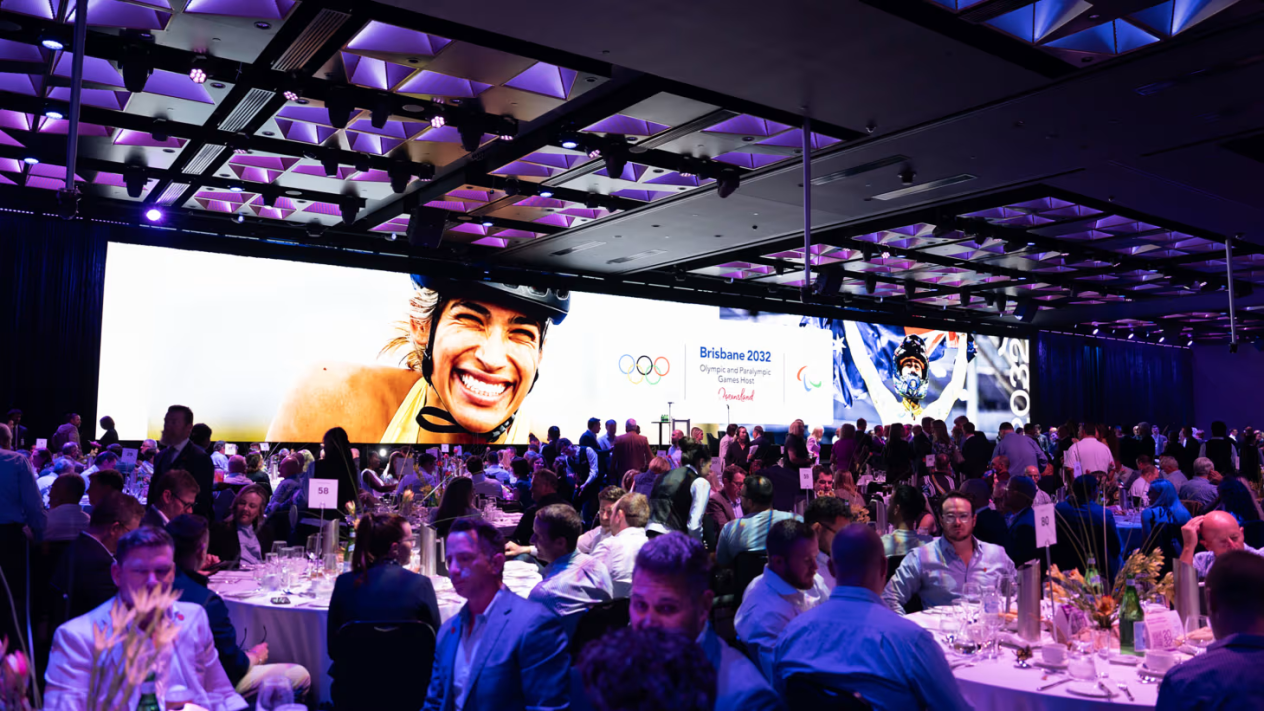
More than 1,500 participants joined the official launch of the procurement plan either in person or online.
Mander said hosting the Olympic and Paralympic Games would provide “an ideal opportunity to drive economic growth through contracts and jobs”, adding that the state government was “determined to ensure Queensland people and businesses are front and centre of this economic opportunity”.
Beyond procurement, the Brisbane 2032 Organising Committee is expected to release further operational milestones in 2026 as venue design, infrastructure planning and volunteer recruitment begin to accelerate. The Olympic Games will take place from July 23 to August 8 2032, followed by the Paralympic Games from August 24 to September 5.