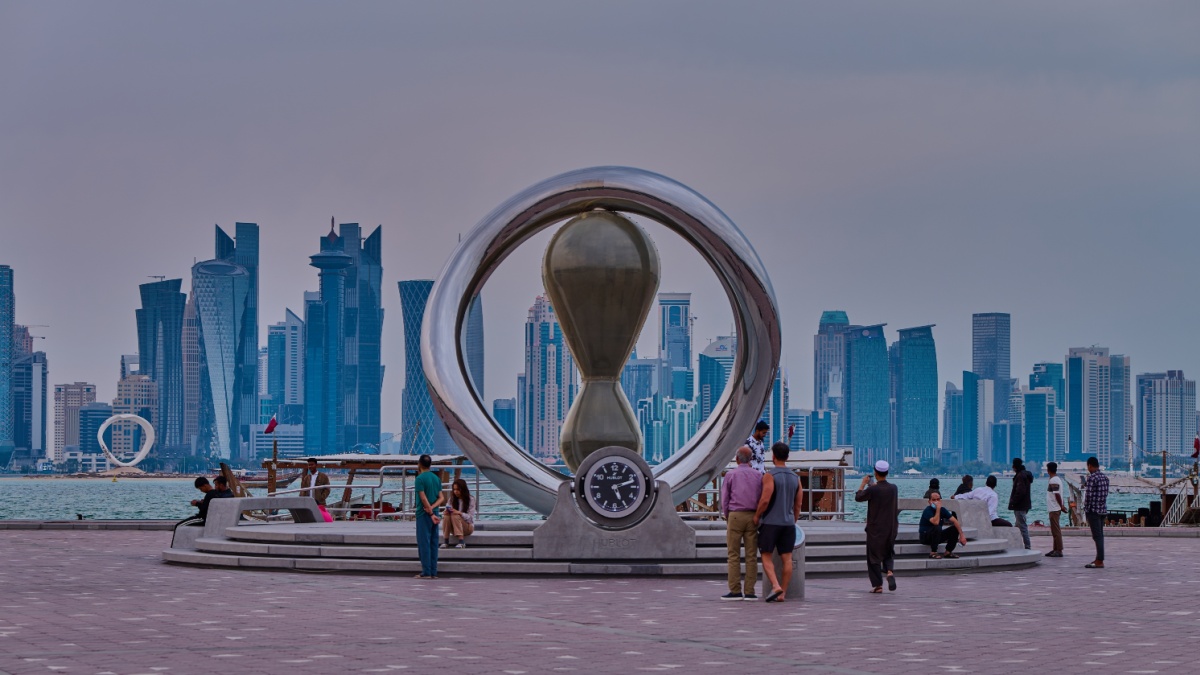




While the 2026 Spanish Super Cup is underway in Saudi Arabia, next year’s competition will be held in Qatar due to a scheduling conflict.
The 2027 Spanish Super Cup is reportedly set to take place in Qatar due to a scheduling clash in its usual host country, Saudi Arabia.
Diario AS revealed on January 6, that due to the AFC Asian Cup (held between January 7 – February 6, 2027) taking place in Saudi Arabia, the country would be unable to accommodate the Spanish Super Cup during the same time period.
In response to this, the Royal Spanish Football Federation (RFEF) has come to an agreement with Saudi Arabian ministers to allow next year’s edition of the competition to be held in Qatar’s capital Doha.
RFEF signed a multi-year deal with Saudi Arabia which included an agreement the middle eastern nation would host the Spanish Super Cup under its new format. They extended the deal to last until 2029.
Instead of the La Liga and Copa del Rey winners competing against each other before the start of the league season, the teams which place inside the top four will qualify for the Spanish Super Cup. First place competes against fourth place, while second faces third in the semi-finals, with the winners meeting each other in the final.
Saudi Arabia has hosted the five Super Cups (2020, 2022-2025). The 2021 Super Cup was held in Seville due to Covid restrictions.
The current 2026 Spanish Super Cup is being held in Jeddah, as FC Barcelona qualified for the January 11 final after beating Athletic Bilbao 5-0. The La Liga champions will play either Real Madrid or Atletico Madrid who play their semi-final match today (January 8).
Why is the Spanish Super Cup hosted outside Spain?
The Spanish Super Cup has undergone a series of changes in its bid to increase viewership and perhaps more importantly, bring in additional revenue.
The competition moved to Tangiers, Morocco in 2018 when FC Barcelona beat Sevilla 2-1 which was a standalone game instead of its usual two-legged format.
But once RFEF inked the Saudi Arabia deal, the competition morphed into a four-team competition. Ahead of the first Saudi Arabia-hosted Super Cup in January 2020, reports from BBC revealed the deal was worth $46.6m (£34m) per year, with Spanish sports outlet Marca reporting the winners would receive $26.8m (£19.9m) in prize money.
It is unclear if the deal renewal has resulted in an increase in revenue for RFEF and prize money, but Diario AS believes under its current format, the Spanish Super Cup generates $31.6m per year via sponsorship, $12.9m in broadcast rights, $11.7m from other services and $3.5m in travel and accommodation.
Hosting the Spanish Super Cup also aligns with Saudi Arabia’s strategy to become a leading sports nation, focused on heavily investing in football, as well as golf, boxing, esports and more, to support its Saudi Vision 2030.
While the RFEF and other sporting associations have worked alongside Saudi Arabia to earn significant amounts of money, Amnesty International has called out the country and participating entities in its “sportswashing” attempts to cover human rights violations.
Prior to the 2022 Spanish Super Cup, Amnesty called on competing Spanish clubs to use the platform to raise awareness of human rights violations occurring in Saudi Arabia, such as wearing a rainbow coloured captain’s armband in response to the banning of homosexuality in the country.