


CAF’s decision is already creating betting disruption and leading to new questions over the governance and credibility of African football’s flagship tournament.
The Confédération Africaine de Football (CAF) has overturned Senegal’s Africa Cup of Nations (AFCON) final victory, awarding a 3–0 win to Morocco.
In a statement, CAF confirmed its Appeal Board had ruled “in application of Article 84” of the tournament regulations that Senegal forfeited the match, with the result officially recorded in Morocco’s favour.
The decision follows an appeal lodged by Morocco and sees the original ruling by the CAF Disciplinary Board set aside.
The outcome is being discussed as one of the most extraordinary reversals in international football, coming two months after Senegal defeated the host nation 1–0 after extra-time on 18 January to lift the trophy.
Senegal players briefly left the pitch in protest when Morocco were awarded a stoppage-time penalty during the final. The interruption delayed the match by 17 minutes before play resumed, with Brahim Diaz missing the spot-kick and Pape Gueye later scoring the winner in extra-time.
CAF’s Appeal Board found Senegal’s conduct fell within the scope of Articles 82 and 84, determining the Fédération Sénégalaise de Football (FSF), “through the conduct of its team, infringed Article 82,” ultimately leading to the forfeiture ruling.
Alongside the headline decision, CAF also issued amended sanctions relating to incidents during the match, including a reduced fine for Morocco over crowd-related matters and a partially suspended ban for player Ismaël Saibari.

Morocco and Senegal respond
In its initial response, the Fédération Royale Marocaine de Football (FRMF) said its appeal was not meant to challenge the result on the pitch, but to ensure the rules were applied correctly.
“The Federation wishes to recall that its approach has never been intended to challenge the sporting performance of the teams… but solely to request the application of the competition’s regulations,” the statement read.
Morocco’s governing body added it is committed to “respecting the rules” and ensuring “clarity in the competitive framework,” and said a further statement would follow after internal discussions.
The Fédération Sénégalaise de Football (FSF), however, strongly rejected the ruling, calling it “an unfair, unprecedented and unacceptable decision that discredits African football.”
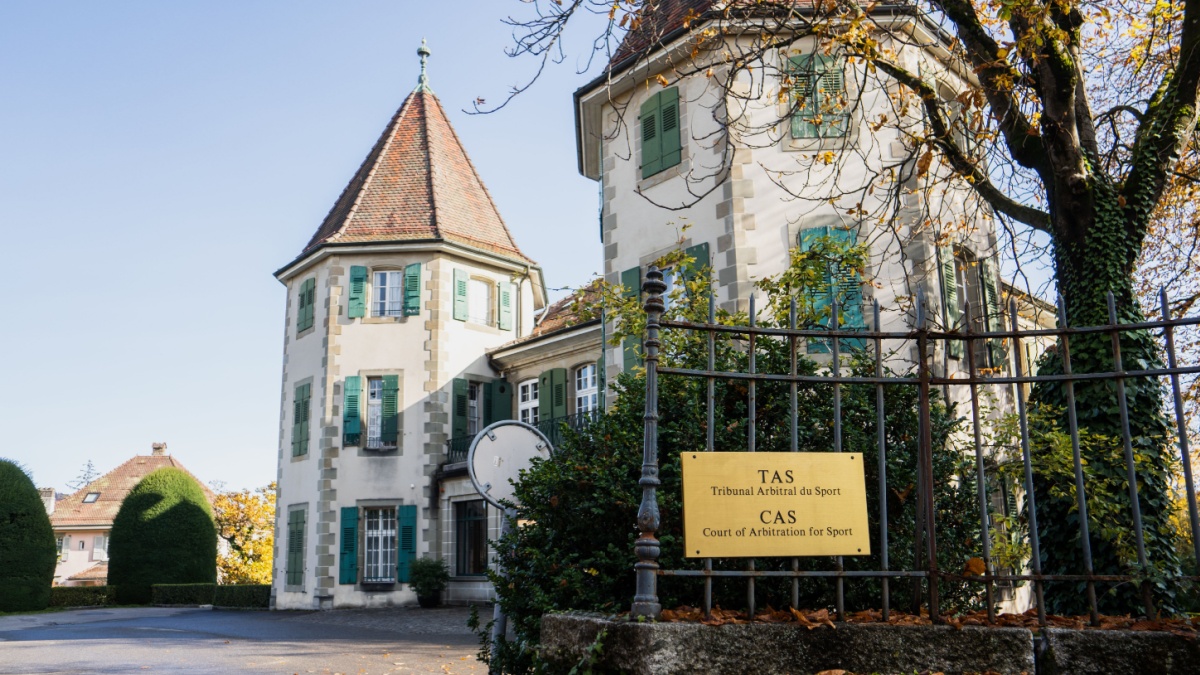
Senegal’s federation confirmed it will take the case to the Court of Arbitration for Sport (CAS) in Lausanne, saying it will “initiate, as soon as possible, an appeal procedure” to defend its position.
A final decision from CAS is unlikely before next year, with most appeals typically taking between six and 12 months to be resolved.
Betting reversals add to AFCON scrutiny
The gambling industry is among the first to feel the impact of CAF’s ruling. Shortly after the decision was announced, bettors turned to bookmakers to ask whether wagers on Morocco would now be paid out.
Several operators have chosen to do so, with Paddy Power labelling it a “Justice Payout.” Another example is Betclic, which confirmed it will pay out on all bets placed on Morocco to win both the tournament and the final.
However, many bookmakers have already paid out bets on Senegal to win AFCON and are unlikely to recover those losses. There is also further uncertainty, with Senegal planning to appeal the decision, raising the possibility that Morocco could still be stripped of the title.
Questions also remain over other areas, including whether players would be required to return medals, how prize money would be handled and what happens to the trophy itself.
The decision also raises new concerns about the reputation of AFCON as a competition, especially when industry experts feel it has so much commercial potential.
The tournament is known in the footballing world for producing unusual and unpredictable moments.
During a 2010 match between Mali and Angola, a team official ran onto the pitch to remove a curse placed near the goal, with security chasing him for over a minute as players watched on.
In 2021, during a match between Tunisia and Mali, the referee blew for full time in the 85th minute. He later restarted the game, only to end it again in the 89th minute without adding stoppage time.
The referee claimed heatstroke, but the situation led to confusion, with Tunisia refusing to return for a forced restart.
While some incidents, such as the witchdoctor moment, can be seen as part of the tournament’s character and appeal, others, like this latest decision, raise more serious concerns around its integrity.