


Chris Canetti offers a glimpse into Houston’s 39-day World Cup operation, which managed huge crowds and extreme heat to transform EaDo and target future events
When FIFA announced the 2026 World Cup would be staged across North America, there was plenty of apprehension that football’s biggest tournament would be ‘Americanised’.
Some of those fears proved true, with dynamic ticket pricing, hydration breaks dividing matches into quarters, and, for the first time, a halftime show during the final.
It’s safe to say some of these additions by FIFA weren’t best received by all football fans. However, if there was one part of the tournament that was free game to put an American stamp on, it was the fan festivals set up in host cities.
These festivals were used by travelling supporters who didn’t have a ticket to watch a match, as well as local communities that had caught World Cup fever.
Few countries are perhaps more equipped to embrace sporting spectacle quite like the US, where entertainment, sponsor activations and production can make the game feel like an afterthought.
Look at the Super Bowl, a global event where the half-time show, advertisements and which celebrities are in attendance have become almost as important as the final result.
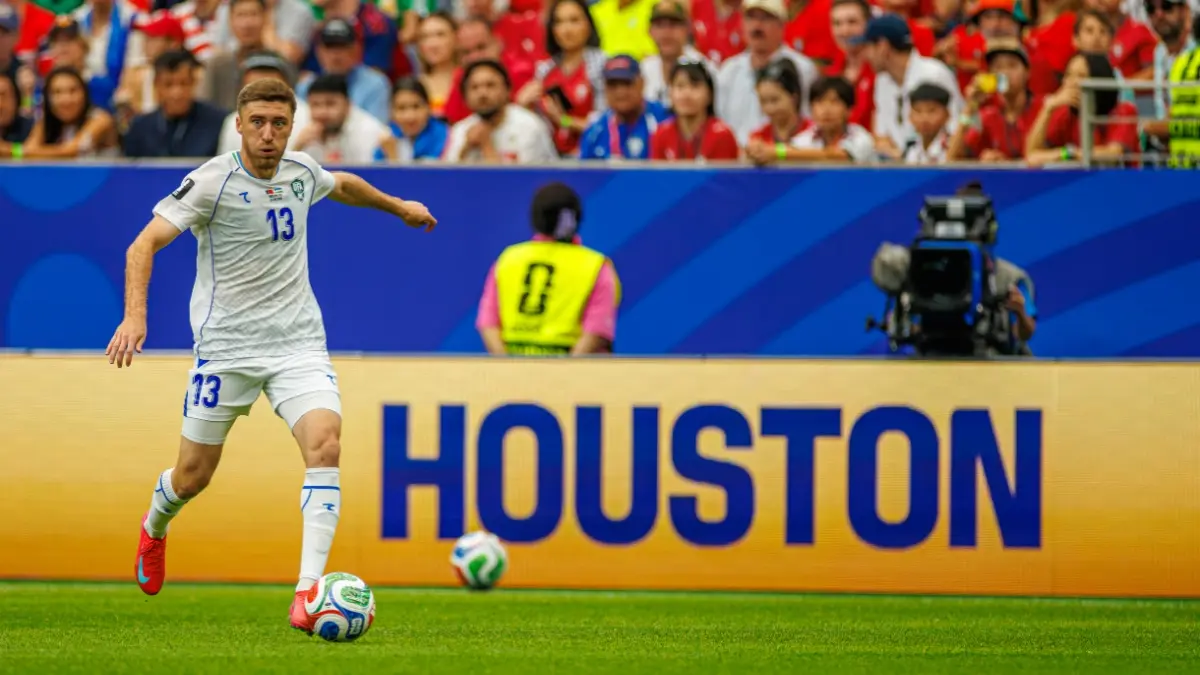
Houston hosted seven matches over 21 days, while its FIFA Fan Festival ran for 39 days. Factor in five weeks of setup and a week of packing it all away, and one neighbourhood was living inside the tournament for nearly three months.
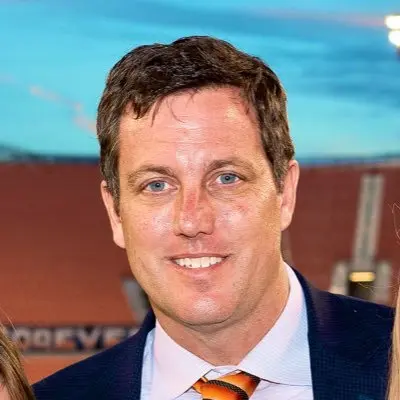
Chris Canetti, President of the Houston Host Committee, tells Insider Sport that this difference influenced nearly every decision.
“If you host a Super Bowl or a Final Four, those events take place over a weekend and you can disrupt the main part of the city for a couple of days,” Canetti explains. Houston didn’t have that luxury.
More than 1.08 million people attended official World Cup events in the city. In addition to entertaining those crowds, Houston had to move them safely through a blistering Texas summer, which a lot of European fans weren’t used to.
Canetti says organisers went to “great lengths” to mitigate the heat, building shaded and air-conditioned spaces into the Fan Festival. “We knew that people would get sick,” he admits.
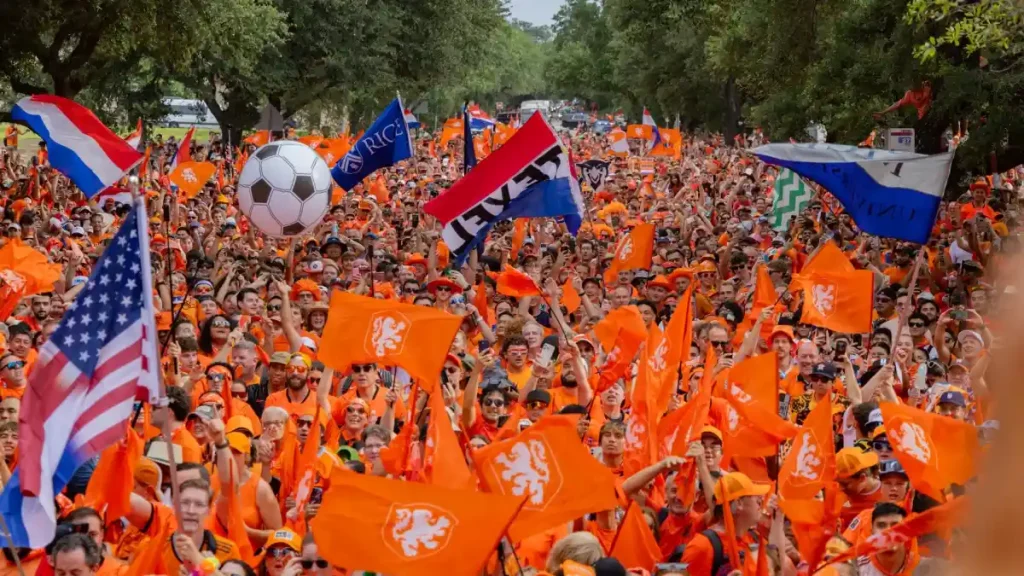
Planning was put to the test when 40,000 Dutch supporters marched two miles through the city on one of the hottest days of the summer. Canetti recalls concern about the heat, the crowd size and pre-match drinking.
“The Dutch were like, ‘Should we cancel this? Are people gonna die?’ You’re not gonna die. But you need to make sure you hydrate,” Canetti recalls saying.
The march doubled as a mobile cooling operation, with air-conditioned city buses lining the route, fire trucks spraying supporters with water and hydration stations positioned throughout the two miles.
Turning a neighbourhood into a World Cup venue
Houston’s answer to sustaining this level of activity for 39 days was surprisingly un-American. It decided against building the biggest Fan Festival possible, opting to keep the site compact and let the surrounding neighbourhood do some of the work.
The Host Committee placed the Fan Festival in East Downtown, known locally as EaDo, creating a smaller area adjacent to the Shell Energy Stadium and surrounded by local businesses.
“We wanted to put it into this neighbourhood and make the neighbourhood the destination of football fans around Houston,” Canetti says.
As a result, The Fan Festival became part a wider ecosystem, with crowds spilling into the nearby bars and restaurants through Houston’s ‘Football Fiesta’ initiative.
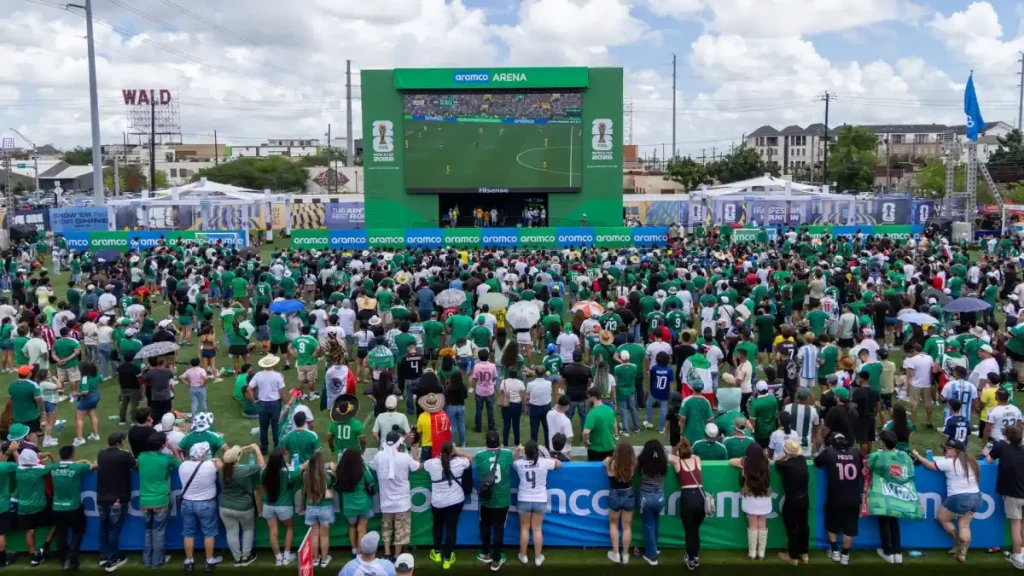
Inside the grounds, organisers built an itinerary to give locals reasons to return over 39 days. A temporary pitch hosted more than 200 hours of grassroots football, while live music, sponsor activations and local food vendors filled out the programme.
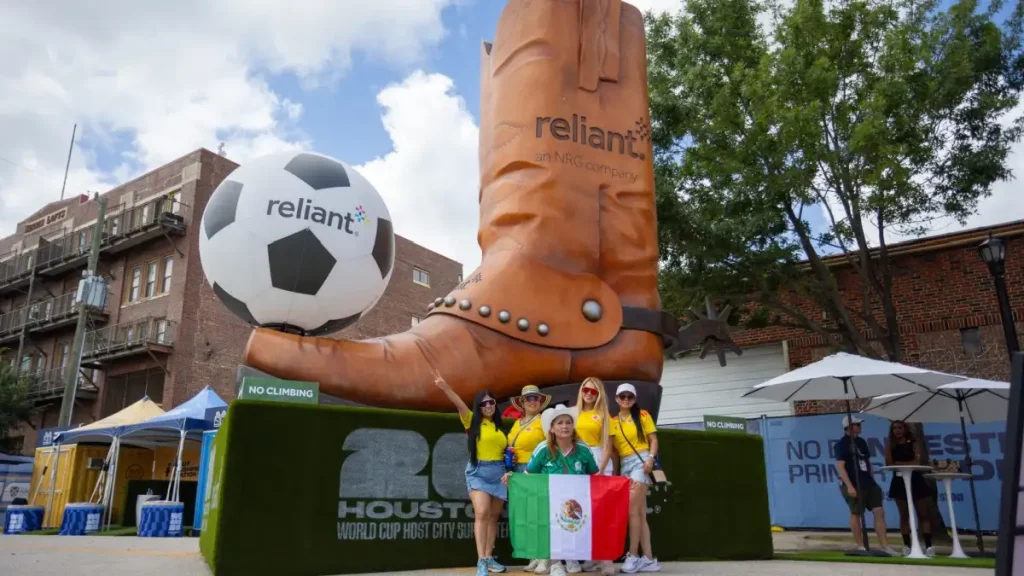
The festival also changed with the tournament as Houston welcomed teams from 13 different countries, and each new arrival gave organisers another theme to work with. Cultural programming was designed around supporters from Brazil, the Netherlands, Cape Verde and others.
There was still room to showcase Houston. Canetti says organisers used the Fan Festival to highlight the city’s rodeo culture and NASA heritage, helping give the event a local identity.
He says organisers knew almost immediately that the localised strategy was working.
“We had some projections, but you know, the first couple of days when we were reaching capacity day in and day out, and the lines at times were around the corner to get in,” he says.
By the end of the tournament, nearly one million people had visited EaDo, with 551,313 passing through the gates of the Fan Festival and the Houston Dynamo Soccer Celebration.
The economic impact on the surrounding streets was significant, as district foot traffic surged by more than 225% compared to 2025 and 280% over 2024. Every bar, restaurant and bakery surrounding the site recorded year-on-year revenue growth between 33% and 1,600%.
Canetti tells Insider Sport this commercial return is particularly notable because the Fan Festival was not built as a profit centre. He describes the operation as a “cost zone”, explaining while corporate activations and hospitality helped offset expenses, a free public event running for over a month was never expected to cover its overhead.
“It drove a lot of foot traffic into the businesses and drove the revenues up,” Canetti says.
What does a temporary city leave behind?
When Spain added a second star to its badge after beating Argentina in the final, the infrastructure of the fan festival disappeared almost as quickly as it arrived.
The Fan Festival was dismantled, temporary structures came down and EaDo returned to normal life. However, Canetti says that judging the tournament by what remained inside the festival area would miss much of its long term impact.
More than 200 organisations invested over $500m into Houston ahead of the World Cup, with money going towards roads, drainage, flood mitigation, parks, shade and other public infrastructure.
Downtown projects were also pushed forward in time for the tournament, including the $17m Main Street Promenade and improvements connecting Downtown with East Downtown.
Those upgrades weren’t created for the World Cup, but the tournament provided a deadline and a reason to accelerate work that will remain in place long after the sea of orange Dutch supporters had gone home.
“All of those things are great. They made a difference on the visitors’ experience around the World Cup. But now they are there for Houstonians to benefit from for years to come,” he says.
There is also a football legacy, with the Host Committee working on plans to build 23 full-size pitches around Harris County, with the aim of creating more opportunities for organised football and giving underserved young people greater access to the beautiful game.
One part of the Fan Festival itself could also return permanently, with Canetti saying organisers were impressed enough by the temporary pitch to begin working on plans to rebuild it in the neighbourhood.
“The legacy from this World Cup will go on for decades and bring value to our community, which is probably what I am most proud of,” he states.
The next test
Houston’s World Cup legacy will also be measured by what the tournament does for the city’s reputation when the next major international event comes up for grabs.
Canetti states that Houston was already established as a regular host of major sporting events but lacked the same recognition as cities such as Los Angeles, New York, Miami or Dallas.
During the World Cup bidding process, he viewed Houston as being closer to the group of cities fighting to prove they belonged than those FIFA was always expected to select.
“We’ve never done this before. Seven matches over 21 days, a fan festival over 39 days, you know, a million plus people attending,” Canetti explains.
This experience has given Houston a much stronger case to make next time, with Canetti arguing that the tournament has now “cemented us as a major sports city” and shown organisers what the market can handle at the highest level.
He points to the lack of major public safety incidents, the success of the Fan Festival and Houston’s performance across areas such as sustainability, human rights and legacy as evidence that the city delivered on the promises made during the bid.
“Our track record is proven,” Canetti says. “We know we’ve shown what we can do as a host city, how we can mobilise and come together to make big things happen.”
Houston now intends to use this success as proof when future opportunities emerge, with Canetti saying the city plans to be aggressive in pursuing the Women’s World Cup once the next US-hosted edition is awarded.
Having spent years trying to convince FIFA that Houston belonged alongside the world’s established host cities, Canetti believes the argument has changed.
“There’s no stronger proof than that of what we did in 2026,” he says.