




















As the Seahawks and Patriots prepare for Santa Clara, the Super Bowl’s influence stretches far beyond the field, reshaping global broadcasting, hospitality, advertising and the business of sport itself.
Editorial contributions from Callum Williams, Jyoti Ramhai, Kieran O’Connor and Rachael Kennedy
Super Bowl LX will take place in Santa Clara on Sunday (February 8, though the location is largely incidental). The NFL’s annual showcase has evolved into a test of the systems that now underpin modern sport: international media distribution, streaming economics, hospitality infrastructure, betting markets, and the increasingly complex plumbing of payments.
The teams involved — Seattle seeking momentum, New England attempting to reassert relevance — matter chiefly because they anchor a broadcast watched across continents. Around them, the familiar apparatus has already taken shape: temporary broadcast cities, premium hospitality zones, and a global advertising market willing to pay record sums for 30 seconds of attention.
This year’s edition arrives at a moment when the NFL is expanding internationally, streaming platforms are fighting for live‑sport dominance, advertisers are recalibrating their strategies for a fragmented audience, and betting operators are adapting to a broader, more casual customer base. Payments providers, meanwhile, are preparing for the annual surge in high‑velocity transactions that accompanies the event.
Insider Sport brings you the details.
The Super Bowl in the age of infinite screens
Super Bowl LX will be nationally broadcast by NBC, its 21st in network history, and on Telemundo, a subsidiary of NBCUniversal, for Spanish-speaking US audiences.
NBC’s streaming platform, Peacock, will live-stream the Seahawks–Patriots game, as well as on NFL+. For US listeners, Westwood One is the national radio broadcaster. It is NBC’s first Super Bowl since the 2022 Super Bowl LVI in Los Angeles. The network is also scheduled to nationally broadcast Super Bowl LXIV (2030) and Super Bowl LXVIII (2034).
As part of the NFL’s 11-year national broadcast deal with NBC, ESPN/ABC, FOX and CBS, the four networks rotate the Super Bowl each year. NBC will be tasked with continuing a record-breaking run of the last three Super Bowl’s which broke the average viewership of the most-watched US broadcasts of all time, according to Nielsen.
Super Bowl LVII first broke the record in 2023 with an average viewership of 115 million, followed by Super Bowl LVIII in 2024 with 123.7 million viewers, and then Super Bowl LIX in 2025 with 127.7 million viewers.
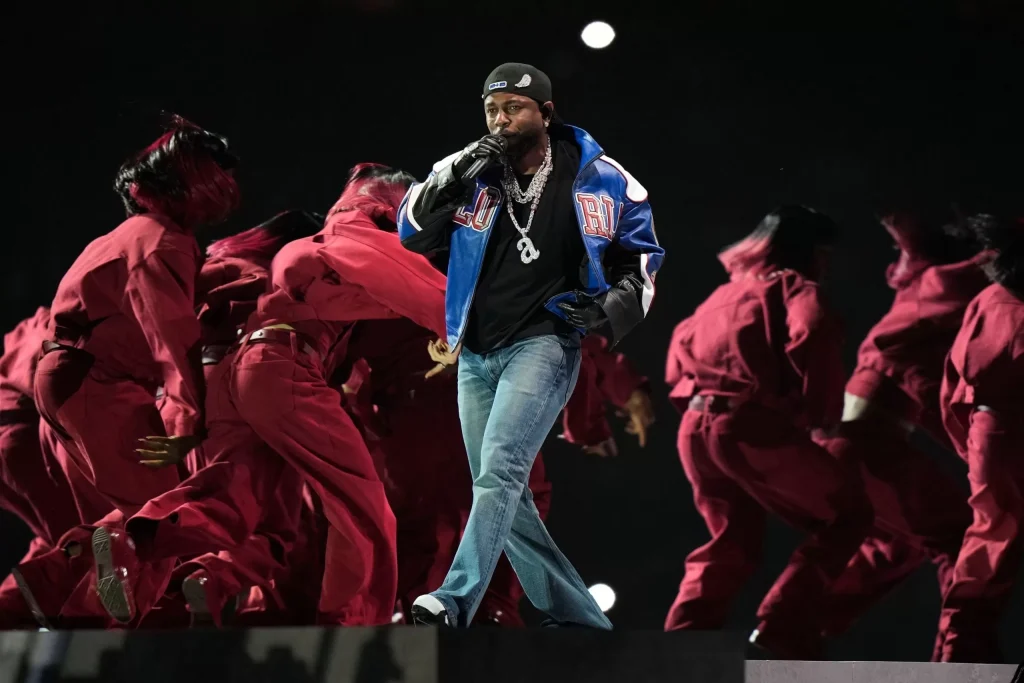
While the last three Super Bowl’s featured the Patrick Mahomes-led Kansas City Chiefs dynasty, as well as half-time performances from the likes of Rihanna, Usher and Kendrick Lamar, the surge in subscribers to streaming platforms is a major contributing factor to the record-breaking run.
Last year, Nielsen updated its records of viewership for streaming figures from digital devices. Starting with last year’s Super Bowl, Nielsen now covers 100% of out-of-home (OHH) figures, up from 66%, for all viewing figures on terrestrial and digital networks at homes, bars, restaurants, hotels, etc. Within its announcement of the shift to 100% OHH, Nielsen said this was “critical for sports and live event programming”, which is becoming popular destinations for Super Bowl parties, for instance.
The key international markets
With the NFL set to host a record-breaking nine international games for the 2026-27 season, there are several markets across the globe the league will be hoping to increase its Super Bowl viewership. The most recent country to receive a regular-season game as part of the NFL’s International Series is France. The Super Bowl will be broadcast in the country by beIN Sports and free-to-air network M6.
Remaining in Europe, Germany has been a key market of interest to the league and will return to the country for its fifth consecutive game next season. RTL will broadcast Super Bowl LX in Germany, as well as in Austria and Switzerland. Arguably the NFL’s most successful international market, the UK’s coverage of the Super Bowl will be carried once again by Sky Sports. The sports broadcaster signed a new rights deal in August 2025 to continue broadcasting the Super Bowl until 2028 in the UK

“The NFL’s season long global audiences are rising year-on-year, as efforts to grow our fandom continues at pace,” says Laura Louisy, Senior Director, International Media Strategy and Business Development at the NFL.
“We now have eight offices around the world (Australia, Brazil, Canada, China, Germany, Spain, Mexico, and the UK) with teams dedicated to growing the NFL’s presence in those markets year-round. Those teams work with our media partners in those markets, such as Sky Sports and Paramount in the UK, and Virgin Media in Ireland, to make watching NFL games live, including the Super Bowl, more accessible than ever before.”
In Australia, which will host regular games next season in Melbourne, viewers can watch the Super Bowl on the Seven Network via NBC’s US feed or alternatively, watch on Disney+ or ESPN. Brazil, another country hosting a regular season game next year in Rio de Janeiro, will broadcast the Super Bowl across the Globo Network; Globo, SporTV and GETV.
“Playing seven regular season international games in 2025 – the most on record – in five countries, will contribute to a growth in Super Bowl audiences as a result, the biggest moment of the NFL season that engages new fans,” adds Louisy.
And for the Spanish-speaking markets, there is a certain international superstar performing at half-time who is expected to drive viewership in these countries to new heights.
Bad Bunny to unlock viewership for Spanish audiences?
Bad Bunny will become the first solo Spanish-speaking Super Bowl half-time performer in the show’s history, having the decorations and the global appeal to achieve this feat.
The Puerto Rican artist, who just recently won the Grammy Award for Best Album with ‘Debí Tirar Más Fotos’, will play a significant role in driving viewership from predominantly Spanish-speaking countries such as Mexico and Spain. With the NFL having already held regular season games in Mexico City and Madrid in the past, Bad Bunny brings an international appeal to not only grow Super Bowl viewership in these countries, but untapped Spanish-speaking markets such as Argentina, Panama and Colombia.
With 19.8 billion Spotify streams in 2025 – the most-streamed artist for 2025 on the platform – Bad Bunny streams are mostly dominated, unsurprisingly, in Latin American countries, the US, Spain and countries in the Caribbean, according to ChartMasters.
But not only does Bad Bunny bring a seismic Latin American following to the Super Bowl this Sunday, he will also bring the key gen Z demographic the NFL is constantly aiming to capture. Spotify revealed during the ‘Bad Bunny Residency’ in September 2025, 61% of global streams of the event were aged 13-27. Some of the highest-streaming countries came from Bad Bunny’s native Puerto Rico, Mexico, as well as the US, Peru and Colombia.
The stadium within the stadium
You may have heard of the phrase “southern hospitality”, which refers to the welcoming behaviour stereotypically associated with the American South.
At the Super Bowl, hospitality has taken on a very different meaning, focused on access, immersion and experience at the biggest single-day event in global sport. American sports have influenced how leagues around the world think about commercial growth, and few areas have been more impacted than hospitality.
In European football, this change has not always been embraced. Premier League clubs have faced criticism for removing general admission seats to make space for higher-priced hospitality products. At the Super Bowl, however, premium access is the event itself, taken to its commercial extreme.
The economics of access
Around 10,000 Super Bowl tickets are reportedly allocated to hospitality providers. With Super Bowl LX being staged at Levi’s Stadium, which holds roughly 75,000 fans, more than 13% of capacity is reserved for hospitality.
According to TicketData.com, as of February 4, the average cheapest resale ticket is around $4,626. Hospitality packages begin at roughly $5,750 and can exceed $50,000 per person, depending on access and add‑ons. Face‑value tickets are extremely limited, with the participating teams, the Seattle Seahawks and New England Patriots, each receiving 17.5% of the allocation for players, staff, and some fans.
The host San Francisco 49ers receive 5%, and the remaining 29 teams receive about 1.2% each. The league retains 25.2%, with a portion going to On Location, the NFL’s official hospitality partner, which leaves just over 11,500 tickets potentially available to fans at face value. This scarcity pushes many buyers toward hospitality simply to secure entry.
“The hospitality programmes are extremely important. The average cost per head is significantly higher than standard tickets,” says Karl Wesson, Co‑founder of Vision4Sport.
“This does allow the organisation to support the loyal fans with standard ticket pricing. Without the hospitality part of the business, I would fear that the general ticket pricing would increase to fill the gap, and exclude the fans who could not financially afford this increase.”
Hospitality might be a route into the stadium, whereas for others it is the core product. Packages are built around entertainment, social spaces and premium comfort.
“The style of hospitality has certainly changed from the days of meat and two veg before a sporting fixture,” Wesson says. “Super Bowl hospitality generates high‑energy spaces, coupled with great entertainment and suitable food and drink for the environment.”
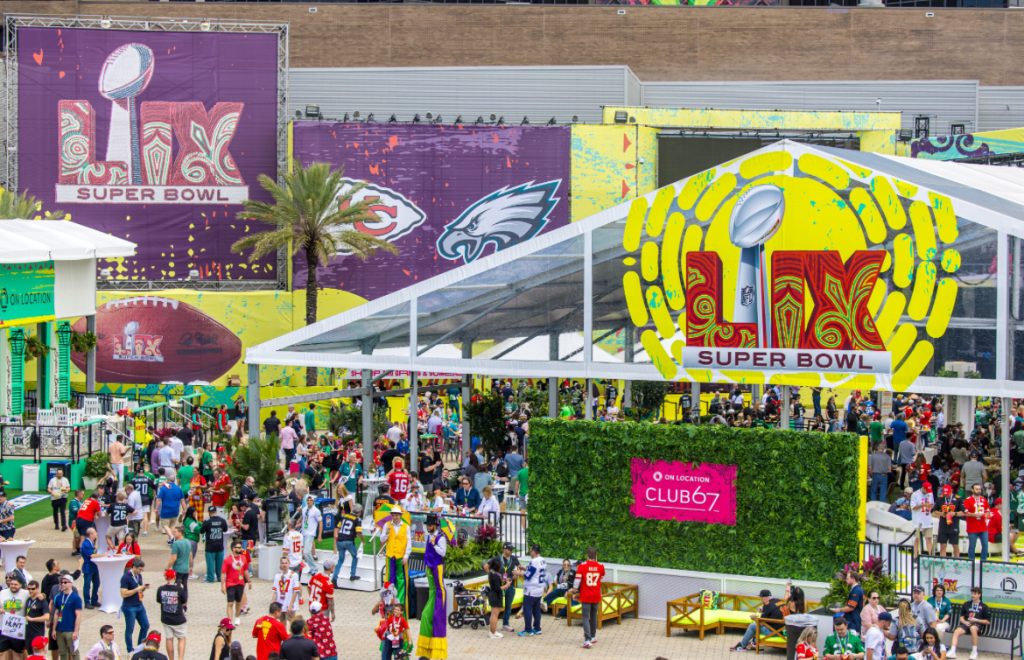
Packages typically include game tickets, pre-game food and drink, live music and appearances from NFL Legends, as well as merchandise exclusives and interactive elements which are used to build a sense of immersion. “These packages should focus on the interactive nature of the package… having some purchase options that are only available with the hospitality space would be popular and exclusive,” Wesson adds.
Deanna Forgione Carey, General Manager of On Location’s NFL business, says Super Bowl hospitality is about “creating immersive, end-to-end experiences”, with guests offered access to player tunnels, post-game field moments and curated destination experiences including vineyard tastings and championship golf.
This year’s programme includes Super Bowl LX Studio 60, a two-day live music experience featuring Sting and The Killers, alongside premium lounges, food and beverage and personalised excursions across the Bay Area.
“Fans and corporate groups alike are no longer just looking for a seat – they’re seeking a holistic, once-in-a-lifetime celebration of football and the host city, which Super Bowl hospitality guarantees in abundance,” says Carey.
Setting the standard
The Super Bowl is often seen as the pinnacle of sports hospitality, with packages mixing premium seating with entertainment, interactivity and exclusive access. Many major events adapt elements of this model, even if the execution is sometimes watered down or changed depending on the audience or culture.
It is also a great way for hospitality providers to take the pulse of consumer preferences. According to On Location, demand is starting earlier and faster, with buyers committing well before teams are known.
“The market is evolving quickly,” says Carey. “We’ve introduced priority access deposit programmes that allow buyers to secure packages early, which has fundamentally changed purchasing habits. Our Champions Club package sold out before public on-sale.”
It is models like this that are likely to influence preparations for the 2026 FIFA World Cup, which will span 16 host cities across the US, Canada and Mexico, creating logistical challenges but also major economic opportunities.
On Location says hospitality drives spending across host cities, including luxury hotels, dining and curated experiences. In the Bay Area, hospitality accounted for a 20% higher share of total event revenue than last year’s host city, according to the company. Even with Super Bowl LX still to be played, Carey says preparations for the World Cup are already underway, with the tournament expected to “set new records for hospitality”.
The true cost of advertising at the Super Bowl
The Super Bowl has become a key cultural moment in advertisers’ calendar each year. Despite the excessive yet rising costs, coupled with a volatile digital landscape, brands still come back, willing to pay the premium to have a spot on this stage.
NBC is reportedly charging $8m for a single 30-second national ad spot during the game, with some advertisers being charged up to $10m, according to eMarketer data. For context, an equivalent 30-second ad slot cost just $4.5m 10 years ago and $5.5m five years ago – that’s a 77.8% increase and 45% increase in price, respectively.
“The cost of entry has undeniably reached a new level, but the real question isn’t the price of the spot – it’s how value is being measured,” says Jay Prasad, CEO at Relo Metrics. “If brands are judging ROI purely on a 30-second TV placement, the math can look challenging.
“Broader campaign analysis shows that usually the strongest returns are typically driven by the ecosystem around the ad rather than the 30-second spot alone,” he explains, adding that the accumulation of repeated exposure across multiple touchpoints including broadcast, streaming, social media and in-venue “still delivers scale and impact that few platforms can match”.

Super Bowl LIX (2025) averaged 127.7 million viewers across TV and streaming, with a peak of audience of 137.3 million in the second quarter, according to Nielsen. That’s the largest average audience in Super Bowl history and was a 3% increase on the previous year.
The half-time performance by Kendrick Lamar became the most-watched ever with 133.5 million, surpassing the previous record set by Michael Jackson in 1993 of 133.4 million. Those figures matter and account for why premium ad placements have such a steep price tag.
“The number of prime time spots you would have to buy to get the same amount of reach and eyeballs as a Super Bowl commercial is ridiculous,” says Kate Scott-Dawkins, Global President, Business Intelligence of WPP Media.
The network agency did some analysis on this a few years ago. To match the reach of a Super Bowl ad in 2023, which cost roughly $7m for a 30-second slot, an advertiser would have to buy more than 400 primetime spots at over three times the cost of one Super Bowl ad. Based on those figures, it’s not surprising that NBC reported ad inventory for Super Bowl LX was sold out by September 2025 – months earlier than in previous years. Coupled with this, there is now even more competition. It’s not just global automotive and FMCG brands, it’s tech, AI, travel, food and drink, health, beauty, and even delivery apps.
“There is definitely an ROI (return on investment) to it,” Scott-Dawkins adds, “and this is where the effectiveness of the creative becomes very important. That’s what gets the buzz, gets people saying, ‘did you see that Super Bowl commercial with x celebrity or by x brand?’.”
The ‘phygital’ experience
Ben Cleaver, Founder of marketing shop BigSmall, believes there’s been a mindset shift to how brands are approaching the Super Bowl. “It’s no longer just about making a TV ad, it’s about how we show up on the biggest stage on the planet. It’s about a moment of shared experience, a moment in time to make a statement,” he says.
Cleaver describes the 30-second spot on match day as like the “beacon” or the “central piece” to a bigger puzzle. Just like any big sporting event now, advertisers need to build momentum pre-game, and maintain engagement post-match.
“Nowadays, it’s story over stunt,” he states. “Making people laugh with a big celebrity isn’t enough. The ads have to form part of a wider story with multiple touchpoints.”
Prasad echoes Cleaver’s point, adding that the Super Bowl has become a “fully phygital moment” – a live physical event that plays out simultaneously across digital platforms. “Consumers are watching on multiple screens, engaging on social media in real time, and interacting with brands before and after kickoff,” he explains.
For example: Snickers launched an interactive augmented reality (AR) experience for the Super Bowl LVIII in 2024. The campaign, called Rookie Mistake, saw users on devices such as the Apple Vision Pro be able to practice kicking virtual field goals in their own physical environment or interact with an AR version of TJ Watt.
This year, Snapchat has launched several AR lenses in partnership with the NFL, which allows fans to virtually try on official Super Bowl shirts.
Prasad says: “What’s changed is that brands no longer rely on a single moment to drive impact. They’re building campaigns with multiple entry points – broadcast, social, experiential, retail, and digital extensions – all reinforcing the same story. From a measurement standpoint, this is critical because value is created through repetition and context, not just reach. The brands that understand this are the ones extracting the most value from the Super Bowl ecosystem.”
Linear TV vs streaming
It’s not just the brands that stand to gain value from the Super Bowl ecosystem – it’s the networks too.
Last year, the game was televised across Fox, Telemundo and Fox Deportes; and streamed for free on Tubi. Fox corporation generated more than $800m in gross advertising revenue, with what was then record pricing for the game. That figure is a “significant jump” compared to previous years, says Scott-Dawkins, who also predicts NBC Universal to generate a similar amount of revenue from adspend.
Against the backdrop of declining advertising revenue from traditional linear TV, particularly in the US as many users transition to streaming platforms, this also accounts for the substantial increase in ad prices.
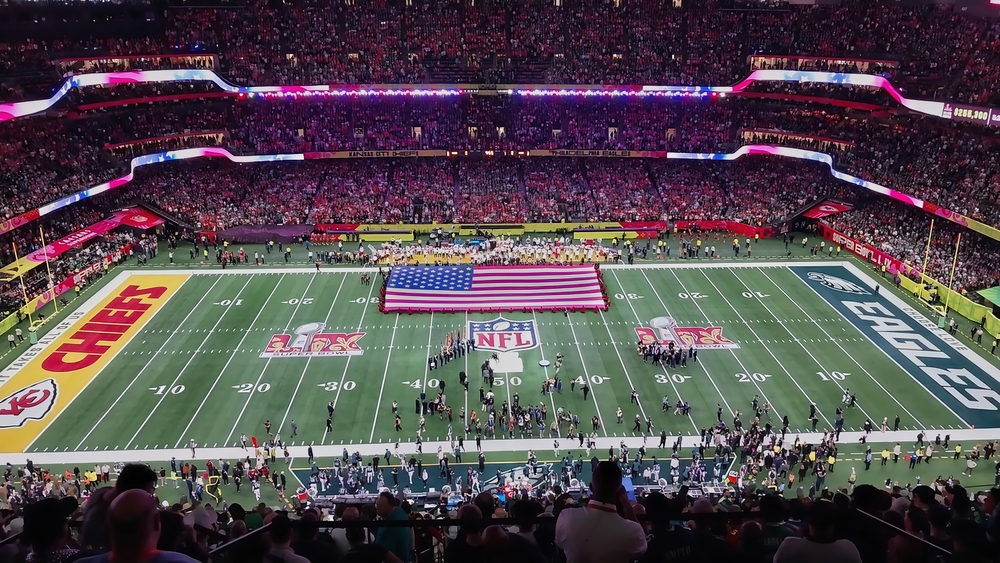
“Fox did well last year with broadcasting the game on Tubi and this year, NBC is looking to do the same with streaming it on Peacock,” she explains. “It’s become about balancing that growth of viewership and revenue on streaming channels, while also making sure you have enough revenue to keep the linear lights on.”
And that challenge will continue as less than 50% of households in the US now pay for cable TV. But where it will get interesting, Scott-Dawkings highlights, is when the next round of rights discussion comes up, whether new players like Amazon Prime and Netflix get in among the mix.
Betting but not as we know it
The Super Bowl has always been a betting event. What has changed is who is betting, how they are doing it, and what they are betting on.
The American Gaming Association estimates that Americans will wager a record $1.76bn legally on Super Bowl LX, a figure which reflects both the scale of the game and the continued expansion of state and tribal-regulated sports betting across the US.
Super Bowl betting is no longer driven solely by seasoned football fans weighing up spreads and matchups. It is increasingly shaped by casual viewers, social settings and moments that are understood instantly by everyone in the room.
“No single event brings fans together like the Super Bowl,” says AGA president and CEO Bill Miller, framing betting as part of the shared experience rather than a specialist pursuit. That framing mirrors how sportsbooks now design their Super Bowl products.
The most visible change in Super Bowl betting has been the rise of proposition and novelty markets. Bets on the coin toss, the colour of the Gatorade poured on the winning coach, or the length of the national anthem require no understanding of playbooks or player statistics. They are simple, time-bound and inherently social.
These markets lower the barrier to entry. At a watch party, everyone can follow the same moment and react together, regardless of whether they follow the NFL season. For operators, that makes props less of a novelty and more of a gateway.

“The Super Bowl has long been an effective customer-acquisition moment, attracting people who might not otherwise place a bet at any other point in the year,” says Bill O’Brien, Sportsbook Product Manager at PowerPlay.
“Novelty and prop markets have lowered the barrier to entry even further, as first-time bettors no longer need detailed NFL or betting knowledge to participate.” O’Brien adds that rather than understanding point spreads or team matchups, casual bettors can “engage with familiar and entertaining moments, such as the first song performed during the halftime show”.
“Collectively, these markets have made the Super Bowl even more accessible and appealing to casual audiences.”
The halftime show has further accelerated that shift. What was once a mid-game pause is now treated as a second main event, complete with its own betting ecosystem. Performance details, opening songs and setlist-related markets translate pop culture into participation, blurring the line between sports betting and entertainment without losing the sense of occasion.
“Operators have rightly recognised the opportunity created by the growing prominence of the halftime show and other performance-led elements of the Super Bowl,” O’Brien says. He notes these markets “provide a natural entry point for non-football bettors and allow engagement to begin even before kickoff”.
The result is a Super Bowl betting landscape built around accessibility. Not every wager is about the final score. Increasingly, it is about being part of the night.
Regulation draws the line
As betting becomes more mainstream, regulators and leagues have become more sensitive to how it is framed.
Research from the AGA suggests prediction markets are creating confusion by promoting sports-related trading as an investment rather than entertainment. Sports event contract bettors are three times more likely than sportsbook users to describe their activity as investing, and many report seeing platform messaging that explicitly compares trading outcomes to financial returns.
That confusion extends to oversight. A majority of sports event contract bettors believe state regulators could intervene in disputes on their platforms, despite those markets operating outside state sports betting frameworks.
The NFL has taken a clear position. Prediction markets are included on the league’s prohibited advertising list for the Super Bowl, alongside categories such as tobacco and firearms, reflecting concerns around integrity and consumer safeguards. Regulated sports betting, by contrast, remains permitted, albeit with limits on volume and placement.
As operators compete for mass audiences around the Super Bowl, clarity around what betting is – and what it is not – has become a regulatory and reputational issue.
Speed changes everything
If props have reshaped who bets on the Super Bowl, payments technology has reshaped how those bets are placed.
In markets like the UK, where Super Bowl viewing has grown into a late-night social ritual, betting is increasingly defined by speed: deposits clear instantly, in-play markets refresh continuously, decisions are made in seconds and often in emotionally charged moments.
From an operational perspective, the Super Bowl now creates a very different set of demands for sportsbooks.
“The operational landscape has changed drastically in general,” says Matthew Greenman, Global Head of Payments and Fraud at Boyle Sports. “In an oversaturated, competitive landscape, ensuring that a customer can navigate easily on site and transact seamlessly is key.”
Greenman adds that customer experience has become the priority, with operators investing heavily to offer “as near a real-time withdrawal experience as possible”, while safeguarding platforms with “technology enhancements fit for scale”.
The challenge is compounded by the changing makeup of the Super Bowl betting audience. “Major sporting events capture the imagination of recreational bettors and become an acquisition driver for new customers,” Greenman says.
He adds the focus for operators is to “embed trust from the outset by removing friction points at critical stages of the onboarding, payments and verification journeys, whilst also maintaining robust controls”.
Chargebacks911 Founder and CEO Monica Eaton describes a familiar post-event pattern. “People don’t make careful financial decisions in emotional moments,” she says. “They act on excitement, pressure, and impulse. Then the emotion drops and reality kicks in.”
From an operational perspective, the Super Bowl does not end when the final whistle blows. The days and weeks that follow bring disputes, chargebacks and customer reassessment, particularly where instant payments have removed the natural pause that once existed. As a result, for operators, handling Super Bowl-scale betting is now as much a payment challenge as a trading one.
Research from payments platform Paysafe shows brand trust and seamless payouts rank above odds, user experience and promotions when bettors choose a sportsbook for the Super Bowl. In regulated markets, 84% of bettors say they would switch brands if the payment experience went wrong during the game.
Preferences are also fragmenting; debit cards remain popular, but digital wallets, pay-by-bank solutions and local payment methods are increasingly expected at the cashier. For operators, this means building flexible, resilient payment stacks capable of handling intense short-term volume without failure.
“I do not believe there is one single silver bullet,” Greenman says. “It is a combination of technology, process and operational readiness.”
Drawing on experience from other high-volume events, Greenman says operators accustomed to spikes around key moments, such as major fixtures in the horse racing calendar, are better prepared for the load Super Bowl betting places on payments and platform infrastructure. “Operational readiness and key event planning is key to success during such events.”
A stress test in plain sight
Taken together, Super Bowl LX is a live demonstration of how modern sport now functions.
What unfolds on the field still matters, but it sits within a far larger machine. Broadcasting is no longer confined to a single screen or territory, but distributed across platforms, time zones and social contexts. Hospitality has evolved from access to immersion, turning scarcity into a premium product. Advertising has shifted from a one-off television moment to a fully integrated, phygital campaign cycle. Betting, meanwhile, has moved from the margins to the mainstream, reshaped by casual audiences, instant payments and heightened regulatory scrutiny.
The common thread is infrastructure. Each layer of the Super Bowl economy relies on systems that must perform flawlessly under extreme, short-term pressure. When they do, the event delivers unmatched reach, engagement, and commercial upside. When they do not, the consequences surface quickly, whether through frustrated viewers, operational strain, or financial fallout that lingers long after the game ends.
That is why the Super Bowl has become such a valuable reference point for the wider sports industry. It concentrates trends that are playing out more gradually elsewhere, from the rise of streaming and experience-led hospitality to the growing importance of payments, trust and clarity in fan engagement.
As the NFL continues to push into new international markets, and as other rights holders prepare for global tournaments of similar scale, the lessons of Super Bowl LX will travel well beyond Santa Clara. The game may last four quarters, but its impact on how sport is packaged, monetised and experienced now stretches across the entire calendar.