














Charlotte Peyraud, Director and Co-Head of Sustainability Advisory Services at Houlihan Lokey, explores sustainability’s role in sports investment.
The era of global sports franchise ownership is moving from primarily “vanity projects” to increasingly mainstream investment opportunities.

Over the past decade, the influx of institutional private equity, sovereign wealth, and multi-club ownership models has transformed sports teams into an established, institutional-grade alternative asset class.
But as the investor base broadens, so does the rigour of due diligence. In this new, and in some ways, more demanding landscape, environmental performance and wider societal impact are no longer minor public relations exercises but have emerged as levers for commercial arbitrage, operational resilience, and sustained value creation.
Climate change is physically and financially rewiring the sports industry. Sports are inherently physical events inextricably tied to physical infrastructure.
Extreme heat, drought, deteriorating air quality, unpredictable weather patterns, and flooding now pose direct operational risks. These factors threaten match schedules, escalate insurance premiums for coastal or ageing stadiums, disrupt global merchandising supply chains, and jeopardise the health and performance of the athletes themselves, the very core assets of the business.
In the UK alone, adverse weather already costs community sports an estimated £320m a year in lost income and maintenance, according to a report by the World Economic Forum (Sports for People and Planet 2026).
Cancellations and reschedules erode ticket sales, can cut broadcast value, reduce sponsor exposure, and push up insurance premiums, sometimes to the point where cover is not available at all.
Investors now recognise that robust environmental strategies are a vital form of risk mitigation. Aligning with global frameworks like the UNFCCC Sports for Climate Action or the British Association for Sustainable Sport is not merely about virtue signalling; it is about future-proofing cash flows.
Franchises that invest in climate-resilient stadium infrastructure, energy-efficient operations, and sustainable supply chains effectively lower their long-term operational volatility. This may also provide an opportunity to reduce the cost of capital when turning to green financing.
Sustainability at scale
The Indian Premier League (IPL) serves as an interesting example of the opportunity for sustainability to scale alongside exponential commercial growth.
Following the 2026 season, Houlihan Lokey reported the league’s business value at an unprecedented $20.6bn. As the IPL’s global visibility has grown, reaching 1.2 billion viewers across television and digital in 2025, it has become one of the most commercially powerful sporting properties in the world.
This widespread visibility, however, means the league’s operational footprint has grown directly with its audience.
While an early 2010 emissions audit estimated 42,000 tons of carbon dioxide equivalent (CO₂e) within direct operations and 358,000 tons from TV viewership, current industry estimates put a full season’s total emissions (Scope 1, 2, and 3) at 750,000 to 900,000 tons of CO₂e, including emissions associated with international streaming.
With the growth in popularity and visibility, the league recognises its opportunity to educate fans, encourage action, and support inclusivity activities.
Initiatives such as the Board of Control for Cricket in India’s partnership with the UN Environment Programme and its highly visible “Green Dot Ball” campaign with Tata demonstrate how Indian cricket is leveraging its immense cultural platform to normalise climate action.
When the league adopts carbon-neutral matches and renewable energy partnerships, it encourages its entire commercial supply chain to elevate its own standards, creating a ripple effect of sustainable action.
With a valuation exceeding $20bn, this also naturally attracts a globally diversified institutional investor base bound by strict fiduciary duties and responsible investment mandates.
Many leading private market fund managers active in the sports investment space are signatories to the UN Principles for Responsible Investment (PRI). These signatories commit to integrating ESG issues across investment analysis, decision-making, and ongoing ownership.
In this environment, leagues and franchises unable to demonstrate credible sustainability practices risk being viewed as less attractive investments, which may directly impact pricing and exit multiples.
The social side of value creation
Crucially, the commercial advantage of sustainability extends equally into the social dimension. Sports teams possess an unparalleled ability to mobilise communities. By integrating authentic strategic partnerships with global entities like Laureus Sport for Good, alongside community-facing programmes such as fan education and local employment and inclusion initiatives, franchises significantly deepen their stakeholder integration.
In financial terms, this translates directly to the balance Sheet. In a heavily fragmented media landscape, capturing and retaining fan attention is increasingly expensive.
Authentic social impact programmes can make fans “sticky,” which can drastically lower customer acquisition costs and maximise customer lifetime value.
For institutional investors, a deeply engaged, emotionally and socially invested fanbase acts as the ultimate financial hedge, providing a stable revenue floor through merchandise and ticket sales even during periods of cyclical on-field Underperformance.
How sustainability alters sponsorship economics
Furthermore, the convergence of private capital and sustainability is fundamentally rewiring sponsorship economics. The traditional sponsorship model is evolving. Today’s blue-chip corporate sponsors – particularly in technology, finance, and automotive – face growing scrutiny over the brands and properties with which they choose to associate.
They increasingly need partnerships that are not only commercially compelling but also aligned with their values and capable of delivering positive community impact and enhanced goodwill.
Franchises that proactively embed sustainability into their commercial strategy can offer more “brand-safe,” forward-looking environments, strengthening the value of the sponsorship proposition.
The same dynamic is increasingly evident at the athlete level, with talent seeking partnerships that align with their personal values and areas such as health, wellness, and inclusivity.
As a result, properties and athletes that can demonstrate genuine alignment with sponsor values are increasingly well positioned to command a premium, creating a distinct commercial advantage over slower-moving competitors.
FIFA’s July proposal to sell a 20% stake in a new commercial entity, FIFA Forward Enterprise, at a proposed $20bn valuation, is an interesting counterexample to aligned capital.
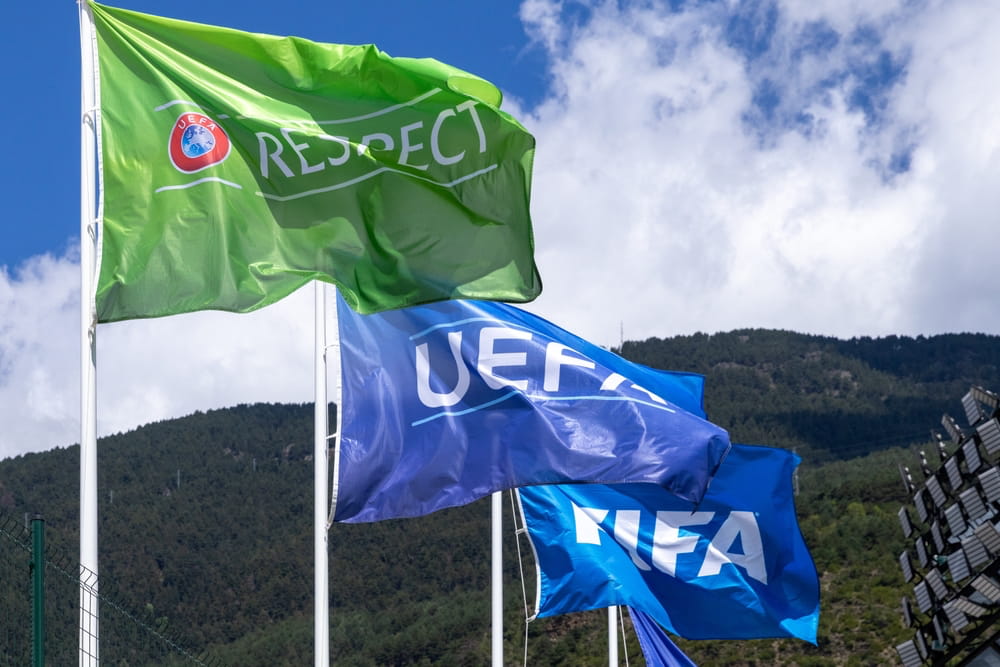
The plan proposed bringing in outside investors, including a fund linked to Joshua Kushner, and was met with significant pushback. Within days, UEFA’s 55 member federations voted to boycott FIFA competitions rather than accept the investment proposal. UEFA’s statement clearly stated the World Cup “cannot be treated as an investment product.”
This is a lesson that private capital investment in a sports asset that does not meet the governance expectations of a sport’s stakeholders may not be successful, irrespective of the investment size.
Contrasted with the capital that has been more readily welcomed in building up teams, leagues, and adjacent businesses, many large private equity players active in sport are increasingly PRI signatories, recognising the benefits of addressing ESG considerations rather than treating the asset purely as an extraction vehicle.
The global sports industry has entered a new era of financial maturity. Both private capital and the wider industry are placing unprecedented emphasis on governance, transparent sustainability reporting, community engagement, and climate resilience when evaluating these scarce, high-profile assets.
The franchises that will command the highest valuation multiples of tomorrow are those that recognise environmental and social stewardship as inextricably linked to financial outperformance.
For investors, executives, and franchise owners alike, the message is unequivocal: Embedding sustainability into your core commercial strategy is the ultimate competitive advantage, both on the balance sheet and on the field.
Charlotte Peyraud is Director and Co-Head of Sustainability Advisory Services at Houlihan Lokey, a global investment bank advising corporations, financial sponsors and governments across mergers and acquisitions, capital solutions, financial restructuring, and financial and valuation advisory.