


The English, Scottish, Welsh and Irish FAs have submitted the only bid to host the FIFA Women’s World Cup 2035, linking a 22-stadium tournament to long-term growth of the women’s game in the UK.
The four UK football associations have formally submitted a joint bid to host the FIFA Women’s World Cup 2035, positioning the tournament as both the biggest single-sport event ever staged in the country and a cornerstone of long-term commercial growth for the women’s game.
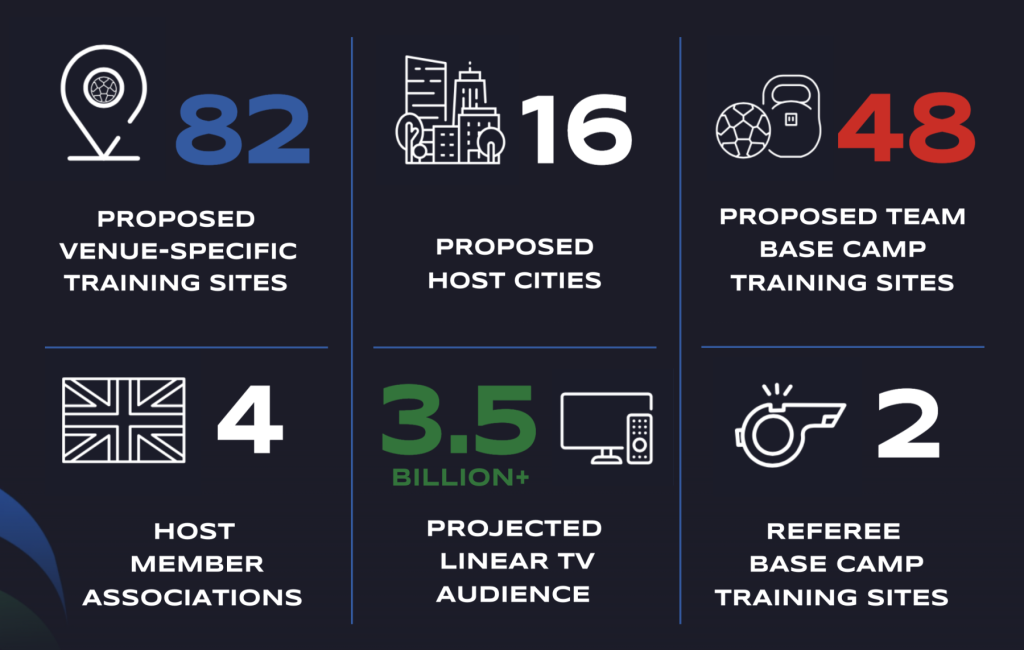
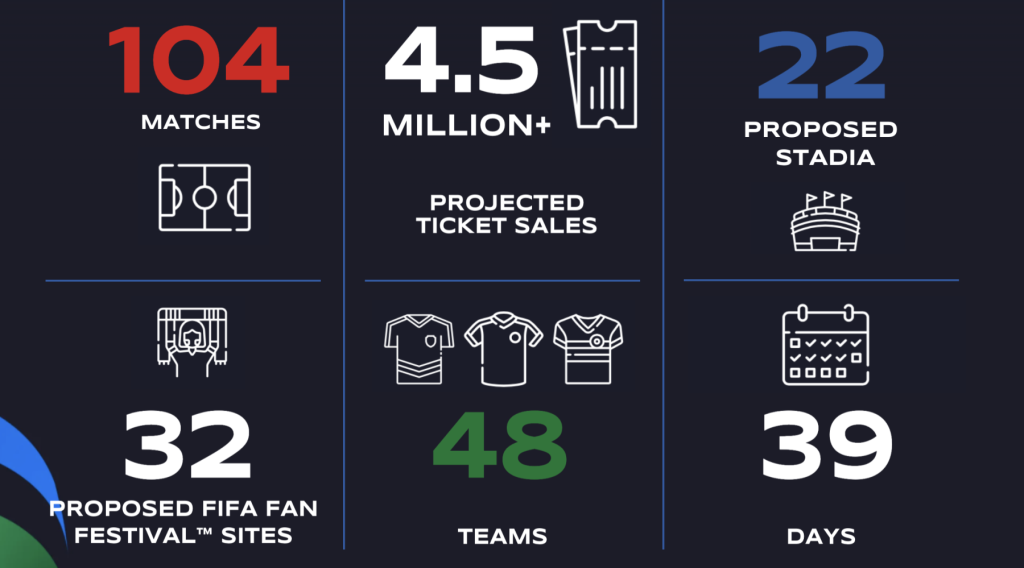
The English FA, Irish FA, Scottish FA and FA of Wales confirmed the bid under the “All Together” banner on November 28, with a 22-stadium plan across 16 host cities and a projected 4.5 million tickets available.
The bid book sets out a 48-team tournament featuring 104 matches over 39 days, underpinned by 48 team base camps, 82 venue-specific training sites and 32 FIFA Fan Festival locations. Organisers estimate a global TV audience of 3.5 billion, with 63 million people in the UK living within two hours of a proposed venue.
If successful, it would be the first World Cup of any kind staged in the UK since 1966.
Sole bid raises stakes on delivery rather than competition
From a bidding perspective, the UK proposal is unusual in one respect in that there is no rival for 2035.
FIFA has confirmed that it received a single bid for the 2031 Women’s World Cup, from a joint US-Mexico-Jamaica-Costa Rica project, and a single “valid” bid for 2035, from the home nations. The hosts for both tournaments are due to be decided at the FIFA Congress in Vancouver on 30 April 2026.
The March 2025 decision by the FIFA Council to recommend that the 2035 edition be staged in Europe or Africa effectively cleared the path for a UK candidacy, which has since hardened from an expression of interest to a fully fledged bid book.
That leaves the focus less on political lobbying against rival bidders and more on whether the four associations, clubs and host cities can convince FIFA of the robustness of their infrastructure pipeline, commercial model and legacy delivery.
“We strongly believe that we could organise a fantastic tournament, building on the success of the UEFA Women’s EURO in 2022 and the subsequent rapid growth of the women’s game in England,” says Mark Bullingham, CEO of the English FA.
@We’re excited about the opportunity to welcome the world, and hosting participating nations and fans in sold-out stadiums. There is outstanding support for the women’s game in this country and we want to maximise this, not only for women’s and girls’ football here but also for the benefit of the global game.”
Stadium pipeline ties World Cup to UK football’s capital projects
The proposed venue list blends established arenas with planned or ongoing redevelopments. Wembley, the Emirates Stadium, Tottenham Hotspur Stadium, the Etihad and Hampden Park all feature, alongside venues such as the Principality Stadium in Cardiff and St James’ Park in Newcastle.
Crucially, the bid also leans into several major capital projects. Birmingham’s new 62,000-capacity Powerhouse Stadium, part of a wider urban development, is included under its working title of Sports Quarter Stadium. Old Trafford appears in its current form, but the bid acknowledges Manchester United’s intention to deliver a new stadium on the site and envisages that scheme being submitted to FIFA for consideration once plans are sufficiently advanced.
Chelsea’s future home is also treated as a live variable, with the bid noting that Stamford Bridge does not meet FIFA technical specifications and that any inclusion would depend on the outcome of the club’s ongoing stadium consultation. Wrexham’s Racecourse Ground is listed subject to capacity increases already in the pipeline.
Several existing venues, including Villa Park, the Amex Stadium and the Etihad, are either under redevelopment or have projects planned before 2035.
Building on EURO 2028’s economic blueprint
The bid lands as the UK and Ireland prepare to co-host UEFA EURO 2028, providing a near-term test case for the economic and social upside of major multi-host tournaments in the region. An independent assessment commissioned for EURO 2028 projects £3.6 billion in socio-economic benefits between 2028 and 2031, including job creation, regional prosperity and visitor spend, with more than three million visitors expected across the five host nations.
UEFA describes the European Championship as the third-largest sporting event in the world by scale, and the 2028 edition will run to 51 matches in 10 venues over 31 days. By contrast, the Women’s World Cup 2035 proposal is larger in every dimension, with 104 matches and 22 candidate stadiums.
For local governments and venue operators, that scale translates into a second major opportunity within a decade to monetise hospitality, tourism and event-driven regeneration strategies built around football.
Women’s football rights market enters a new phase
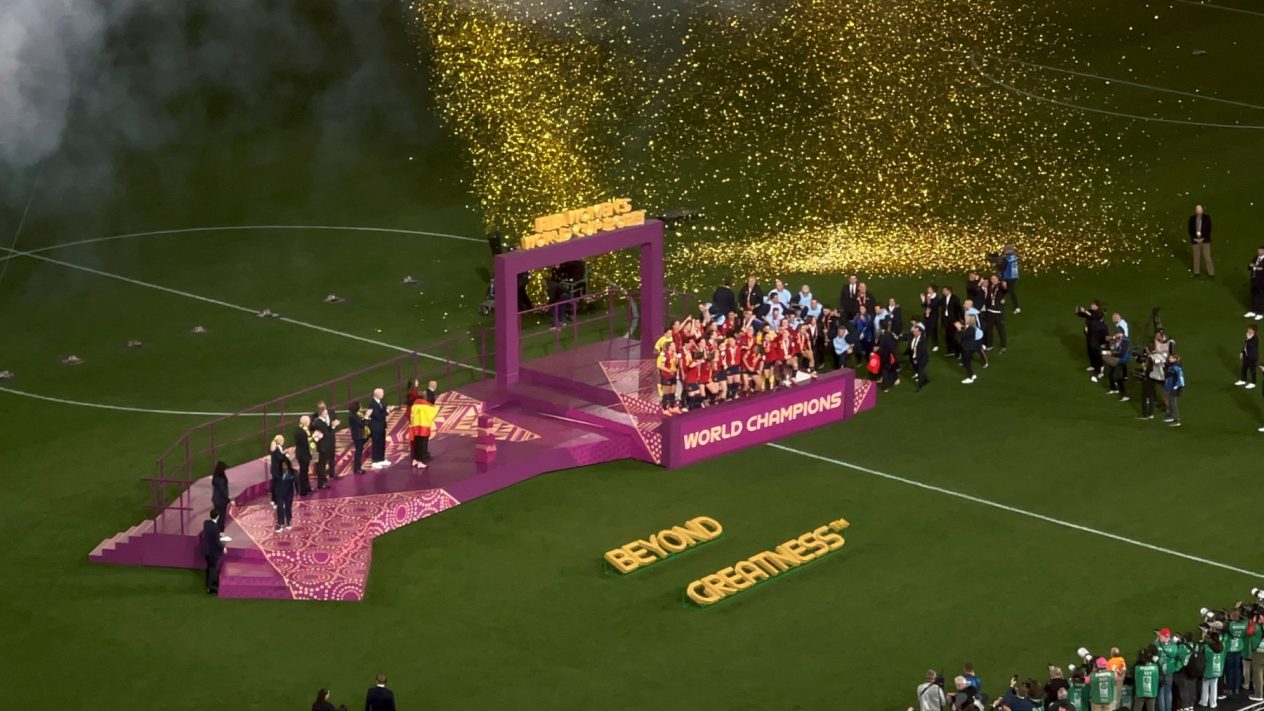
The commercial backdrop is markedly different to the last time the UK staged a major women’s tournament at scale. The UEFA Women’s EURO 2022 in England set new attendance and audience records, and the 2023 FIFA Women’s World Cup in Australia and New Zealand became the most attended Women’s World Cup in history, with nearly two million tickets sold and broadcast and merchandise revenues surging past previous editions.
On the media side, Netflix’s deal for exclusive US broadcast rights to the 2027 and 2031 Women’s World Cups signalled that global streaming platforms now see the tournament as a top-tier property. FIFA described the arrangement as its most significant streaming agreement to date and framed it as part of a broader push to narrow the commercial gap with the men’s World Cup.
Domestically, the English women’s game is now operating under a very different rights economy. In October 2024, the Women’s Super League secured a five-year domestic broadcast deal with Sky Sports and the BBC worth around £65 million, with additional production spend taking total investment in the women’s game above £100 million. The agreement, managed by Women’s Professional Leagues Limited, was a step change from the previous arrangement and was explicitly designed to offer longer-term financial stability and more predictable revenue flows.
At a macro level, Deloitte projects that women’s elite sport will generate more than $2.35 billion in global revenues in 2025, up from $1.88 billion in 2024, with football expected to account for around 35% of the total. Commercial income is forecast to represent more than half of that revenue.
Political and strategic backing across the UK
The bid carries explicit political support. Prime Minister Sir Keir Starmer has framed hosting the tournament as a “monumental moment” in the UK’s sporting history, citing the economic uplift from past events and the role of the Lionesses’ success in driving participation.
UK Sport has also made clear that landing the Women’s World Cup has been a long-standing ambition within its major events strategy.
Within the “All Together” framework, the four associations set out three core legacy pillars: boosting participation, particularly in under-represented communities; increasing female leadership and doubling the number of women officials by 2035; and accelerating commercial growth of the women’s game for the benefit of the wider FIFA membership.
Read the full bid here: https://alltogether.football/