

















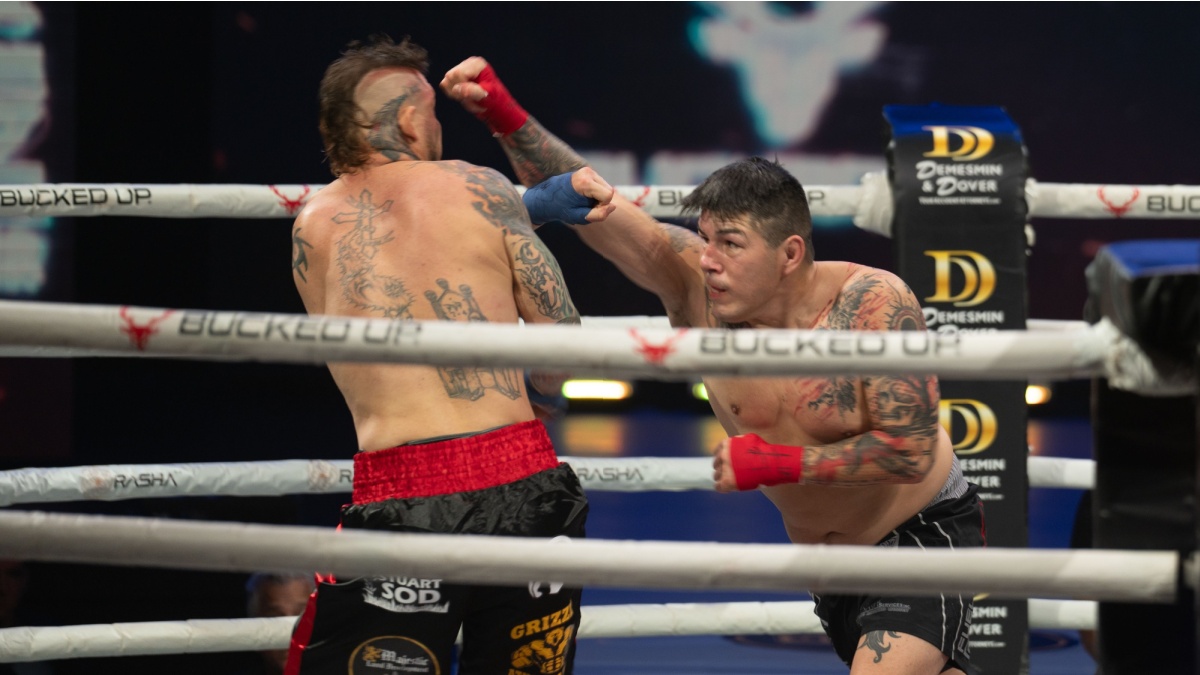
The UFC was underestimated for years before exploding into the mainstream, and bare knuckle boxing (BKB) is now following that same underdog trajectory, with surging audiences, major new investments, arena-scale events, and rapid global expansion. CEO of BKB, David Tetreault, explores why bare-knuckle boxing is the fastest-growing combat sport right now.
When people first get exposed to bare-knuckle boxing, it’s usually from a highlight reel online. They’re drawn in, or pushed away, by the blood, the brutality – the shock of it all. Most assume it’s a throwback to a much darker era of fighting. Either way, they’re watching. Bare-knuckle boxing is a sport built around consequences and urgency. It’s a stand-up fight where there is nowhere to hide and no time to waste. It’s exploding because it fits what the modern audience actually want. And contrary to how it appears, it’s safer than boxing.
Combat sports have never been more available, but they have also never been more fragmented. Traditional boxing can still deliver brilliance, but too many nights become long strategic contests that casual fans do not have the patience to follow. Mixed martial arts is dynamic, but many bouts inevitably slow down into extended grappling sequences that lose the viewers who came for action.
This generation does not consume entertainment the way previous generations have. They reward intensity. They want a reason to pay attention right now, not in round eleven. They want moments that travel. They want fights that feel real. Bare knuckle delivers that in a way that is hard to replicate with gloves. The sport appears more violent than it is because superficial cuts happen easily when bare skin meets bone. Those cuts can be dramatic on camera. But every experienced fight fan knows the hardest damage is often invisible. The long-term concern in every striking sport is cumulative head trauma.
Gloves changed boxing forever. They reduced some forms of injury, especially to the hands, but they also enabled higher volume and longer exchanges to the head over longer bouts. Bare knuckle changes those incentives again. Fighters are more selective with shots. They cannot throw the same volume with the same abandon. The pace is urgent, and the margin for error is smaller, which is a big reason many fights end earlier.
None of this is an argument that bare knuckle is risk-free. There is no such thing as a safe fight. It is rather an acknowledgement that the sport has a different rhythm and a different injury profile than most people assume from a highlight clip. That matters for how regulators approach it, for how athletes prepare for it, and for how audiences experience it.
My own journey in combat sports informs why I believe bare-knuckle is the future. With more than 30 years in media and entertainment, including senior roles at FOX, Warner Bros., and Sony, and leadership experience at Golden Boy Promotions, I have seen the fight business from the inside out. At Golden Boy, I worked on major events and talent platforms involving Canelo Alvarez, Ryan Garcia, Gennady Golovkin known to fans as GGG, David Lemieux, and Bernard Hopkins. I have also negotiated landmark distribution deals across platforms like ESPN, HBO, and DAZN. I have seen and analysed audience behaviour in real time for decades. I know which formats break through when attention is the scarcest commodity in sports.
What I see now is a shift in category. Bare Knuckle is moving from curiosity to a real professional product with structure, regulation, and distribution. At BKB, we are building for that reality. We brought together the American BYB Extreme platform and the historic United Kingdom BKB promotion to unify traditions and modernise the presentation. Our championship lineage includes the Police Gazette Diamond Belt, and our events are contested in our patented ‘trigon’, a triangular ring that creates a faster, more continuous style of fighting. The fighting surface is smaller than a traditional ring, and that changes everything. Less stalling. Less retreating. More engagement. More urgency.
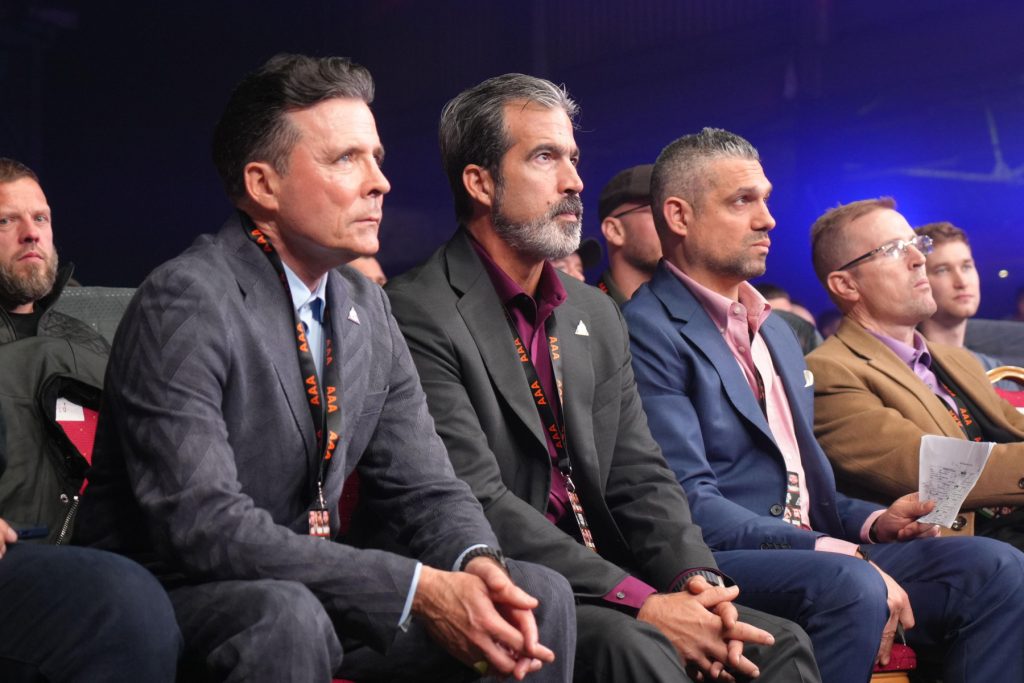
In a world of constant distraction, retention is everything. At BKB, we prioritise balanced matchups because we know parity is what creates suspense. When both athletes have a legitimate path to victory, viewers lean in earlier and they stay longer. In a world of constant distraction, retention is everything.
Distribution has followed the audience. In the US and Canada, we air on VICE TV. In the UK and Ireland, we work with talkSPORT. For Spanish-speaking audiences across the Americas, we partner with Telemundo Deportes. The point is not the list of logos. The fact is that bare knuckle is now a real part of the linear television ecosystem, not just a streaming curiosity.
It’s not just the audiences that are turning their heads to BKB; it’s household fight names. When a recognised name crosses over from gloved boxing into bare knuckle, it tells you something about where the market is going. Lucas ‘Big Daddy’ Browne brought heavyweight credibility. Paulie Malignaggi brought world championship experience to the sport to prove that it is based on skill, not stunt. Other former champions will follow, and so will their audience base.
The audience growth is not just down to the violence. It’s the clarity it brings. A bare-knuckle fight has a simple promise. Two athletes. High-stakes exchanges. Fast conclusions. Fans do not have to be experts to understand what is happening, and they do not have to wait long to feel the stakes. That’s why highlight reels go viral. It’s why sponsors are paying closer attention to integrations that reward engagement rather than just impressions. That’s why the sport is becoming a real platform for live event entertainment, not just a niche for hardcore fans.
In 2026, we are pushing that momentum forward with a larger global calendar and a greater ambition for what this category can become. We are planning our 50th show in Miami at the James L. Knight Centre and working toward major events in the UK at iconic venues. The goal is not simply to put on more fights. The goal is to raise the standard of presentation, athlete development, and consumer experience so bare knuckle is treated like the major combat sport it is becoming.
Bare-knuckle boxing is not a step backward. It is a return to the simplest form of fighting, rebuilt for the modern era. It honours history, but it is growing because it aligns with how audiences live now. That is why it is the fastest-growing combat sport. And it is why it will be one of the defining live fight products of the next decade.
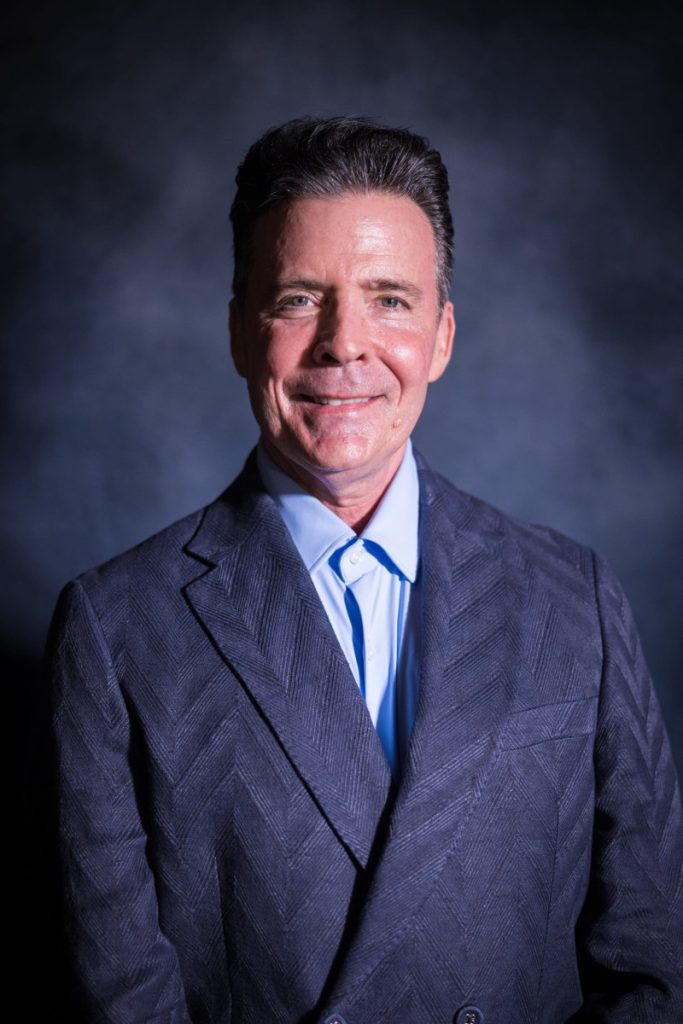
David Tetreault is the Chief Executive Officer (CEO) of BKB (Bare Knuckle Boxing) and President of its parent company, Lights Out Productions, a veteran media executive involved in expanding the bare-knuckle combat sport into mainstream entertainment, focusing on digital, sports betting, and live events. He oversees BKB’s media division and content creation, aiming to integrate it with major promoters.