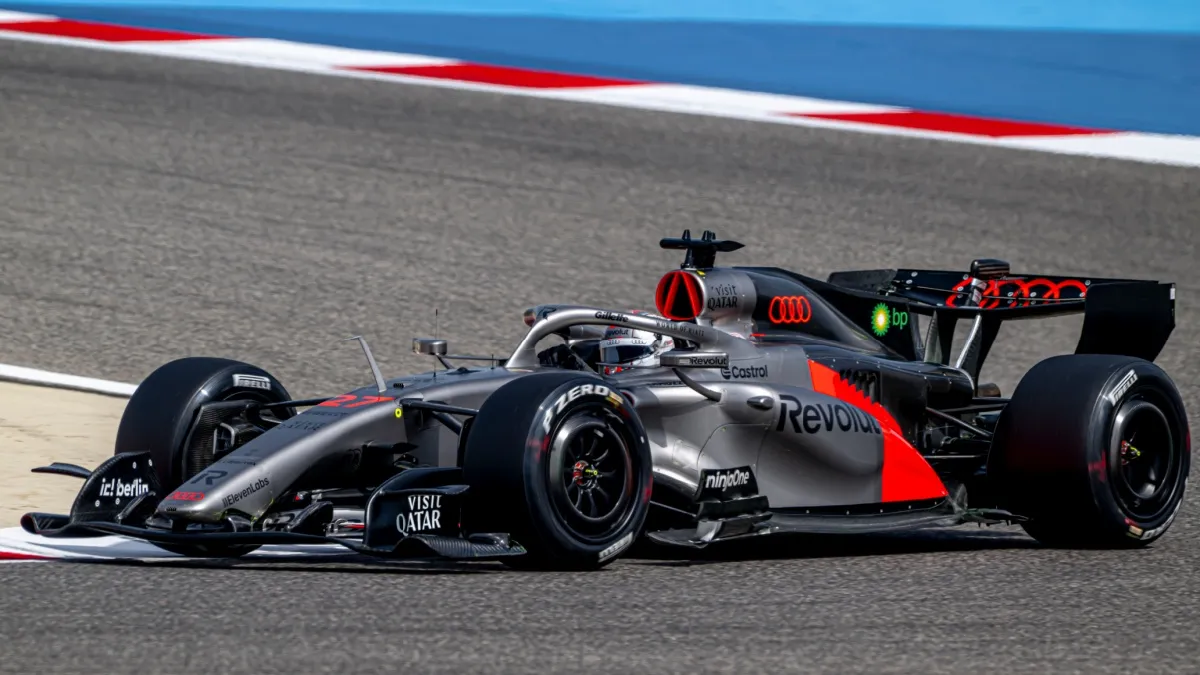



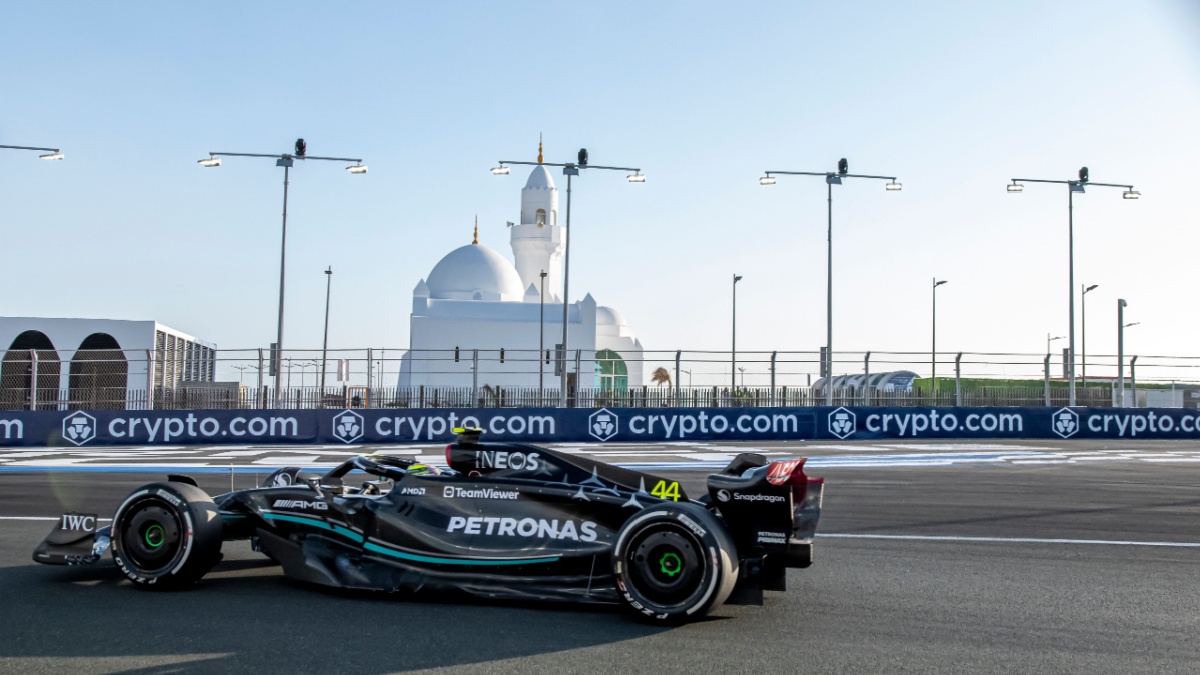
Oriana Morrison, CEO of ECNMX, reveals how the loss of Bahrain and Saudi Arabian Grands Prix signals a deeper shift in Formula 1, where certainty is fast becoming the sport’s most valuable currency.

Formula 1 (F1) is built on certainty, operating as one of the most tightly structured commercial systems in global sport. Each race is scheduled years in advance, and every contract and sponsorship is priced against a fixed calendar. It is precise engineering, both on and off the track.
The recent cancellation of the Bahrain and Saudi Arabian Grand Prix is not a sporting decision but a geopolitical one. Escalating conflict between the United States, Israel, and Iran has destabilised the region, forcing key aviation hubs, including Dubai, Doha, and Bahrain, to close their airspace and disrupt one of the most critical logistical corridors in global sport.
Guggenheim now estimates that removing Bahrain and Saudi Arabia from the 2026 season has already resulted in a $190–200 million revenue loss for F1 at the organisational level. That figure, however, captures only the top layer of the system. The economic impact spans across the entire Formula 1 ecosystem, from driver earnings and sponsorship exposure to the temporary workforce and service economies built around each race weekend.
As a tax adviser to F1 drivers and teams, I am already seeing that impact materialise in real time, particularly in earnings, career progression, and contractual frameworks built on the assumption of a full season. The headline number is $200 million, but the true cost extends far beyond that figure.
The financial architecture of a race weekend
F1 is not a fixed-salary sport. A significant portion of a driver’s income is variable and directly tied to race outcomes, which means the financial impact of a shortened season can only be understood by examining how drivers are actually paid.
Each Grand Prix operates under a performance-based bonus structure, in which finishing in the top ten triggers additional earnings. This ranges from approximately $10,000–$20,000 for tenth place to well over $1 million for a race win, depending on the team, driver, and contract. In this context, a race is not just a competitive event, but a revenue-generating opportunity.
Remove Bahrain and Saudi Arabia from the calendar, and those earning opportunities disappear entirely, equating to more than $2 million in lost winning bonuses at the top end alone across two races.
Race results and associated bonuses feed directly into the Drivers’ Championship standings through the points allocation system, which includes a performance-based financial incentive at the end of the season. Depending on the final classification, payouts can range from approximately $100,000 for lower positions to upwards of $3 million for the overall champion, with amounts varying by team, driver, and contractual structure. When races are removed, the points-scoring opportunities which underpin those outcomes compress, reducing both championship mobility and earning potential across the grid.
Fewer races, fewer breakthroughs
The financial impact of a shortened season is not distributed evenly. For established drivers, fewer races result in fewer earning opportunities; for those earlier in their careers, the consequences are more structural.
Drivers who have already recorded DNFs – races where they did not finish – lose critical opportunities to recover points across the season. Now that there are fewer races available, the probability of improving championship position declines, as well as the likelihood of accessing end-of-season bonuses. The result is a shorter, more volatile earning window, particularly for those at the very beginning of their careers.

For rookies, each race is more than a competitive outing. This is their opportunity to shine, secure their standing with the teams and secure valuable experience that will inform and determine their future performance and earnings. With the loss of the Bahrain and Saudi Arabia Grand Prixes, momentum is lost, and career progression is constrained at a formative stage.
The impact does not stop at the driver level. Formula 1 operates as an engineering-led sport, with teams and investors deploying significant capital into car development and performance technology ahead of each season. Each race serves as a live testing environment to evaluate whether those investments are translating into performance; with fewer races, that data set contracts, limiting both technical insight and the ability to optimise performance.
The consequences are not evenly distributed: for drivers at the top, the impact is primarily financial; for those at the bottom, it is structural. For teams, it is both.
The repricing of risk in F1
F1 is a global sport, but it is also a capital-intensive system, dependent on long-term investment and the ability to operate across borders without disruption. When that stability is compromised, decision-making shifts accordingly.
There is a fundamental distinction between business risk and political risk. Business risk can be managed, while political risk cannot. What the cancellations of Bahrain and Saudi Arabia expose is not simply a disruption to the calendar, but a shift in how risk will be evaluated across the sport over the next decade. The question is no longer whether a race can generate revenue, but whether it can take place at all – and once that uncertainty enters the equation, capital begins to move.
Investors accept risk, but not instability. As a result, capital will increasingly be reallocated toward countries and environments that offer geopolitical certainty. The United States, with its scale and existing investment in the sport, is suitably positioned to benefit, but it will not be the only one. Europe, parts of Asia, and select emerging markets that combine growth with political stability will become increasingly attractive partners, with cities such as Singapore and Shanghai, as well as regions like South Africa and South America, standing to gain.
The new currency: Certainty
The immediate losses are measurable: $200 million in revenue, and millions more across driver earnings, sponsorship opportunities, and host economies. The longer-term consequences, however, are structural. These cancellations are not incidental; they signal a change in investor sentiment that will reshape how capital is deployed across the sport.
F1 will continue to grow. Demand is established, the global audience is expanding, and the commercial upside is still significant. But growth is no longer the only variable. Increasingly, capital will favour environments that deliver stability and the capacity to operate without interruption. This is not a threat to Formula 1’s future, but a recalibration of the conditions under which that growth will occur.
Oriana Morrison advises elite performers, teams, and governing bodies across sport and entertainment on complex cross-border tax and financial matters through her firm, ECNMX. She is currently supporting preparations for the 2026 World Cup and the 2028 Los Angeles Olympics.