


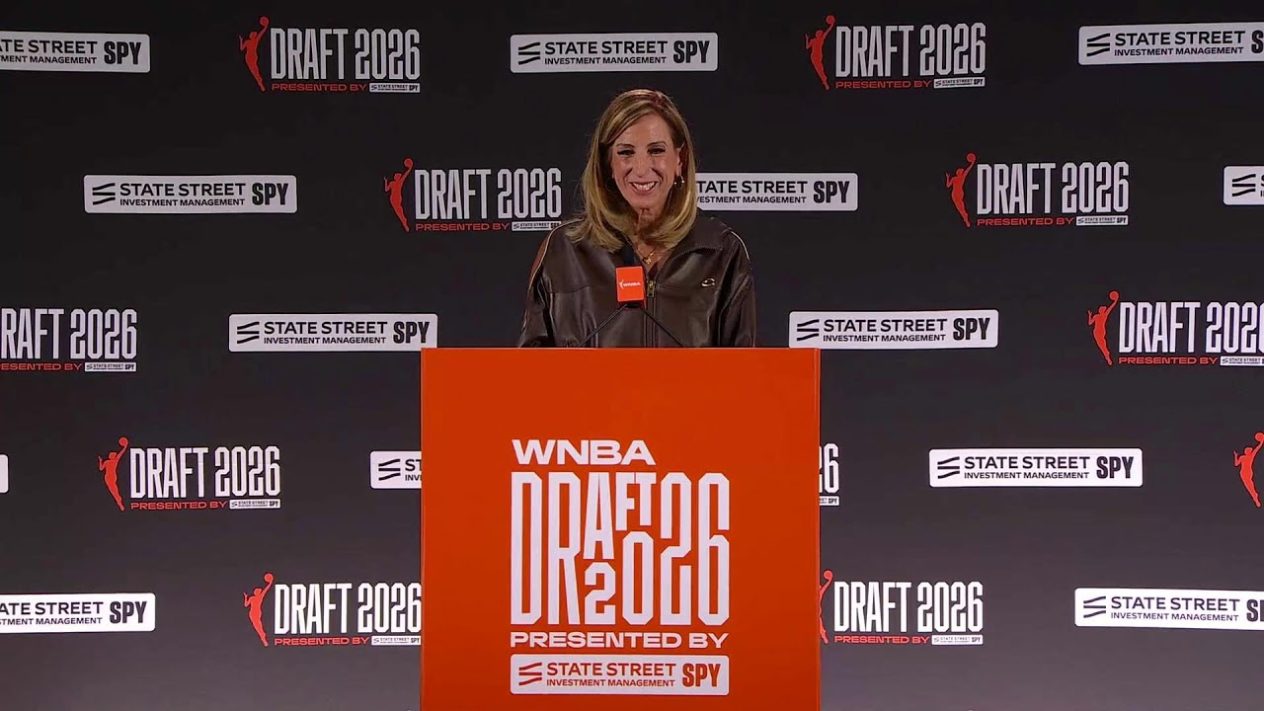
Commissioner Cathy Engelbert outlined plans to expand the regular season, deepen player pathways and explore global games, as the league enters its 30th campaign following a landmark collective bargaining agreement.
The WNBA is targeting a schedule expansion to as many as 52 games per team by 2029, as part of a new collective bargaining agreement designed to support the league’s next phase of growth.
Speaking at the league’s draft press conference in New York on April 13, commissioner Cathy Engelbert positioned the increase in games as one element of a broader structural shift, stating that “fans can see more WNBA basketball because eventually we can… have the potential to grow up to 52 games by 2029.”
The expanded schedule sits within what Engelbert described as a “historic” Collective Bargaining Agreement, which she said delivers “the single largest pay increase in the history of sport” following months of negotiations with players and team owners.
Beyond salaries, Engelbert highlighted the introduction of a revenue-sharing model, the first of its kind in women’s professional basketball, allowing players to benefit directly from league and team revenues.
“For the first time, players will share in league and team revenues and directly benefit from the continued growth of the WNBA,” she said.
She added that the agreement was built around several core principles, including increasing player compensation, improving the overall player experience and positioning the league for long-term sustainability.
One area that emerged during negotiations was player housing, which Engelbert admitted had been underestimated by the league.
“They made it very clear it was very important to them. It was an emotional issue,” she said, describing it as a key learning moment during discussions.
Expanding the talent pipeline
Alongside the increase in games, the league will introduce two additional developmental roster spots per team, creating 30 new opportunities for players.
Engelbert said the move is intended to give franchises “greater flexibility to develop talent and build deeper rosters,” particularly as the league expands into new markets.
The commissioner also addressed concerns about talent dilution as the league grows, noting that recent drafts have seen “elite players at the college level… not making a roster,” suggesting there is sufficient depth to support expansion.
Engelbert linked the new CBA to increased confidence among commercial partners, pointing to long-term labour stability and media rights agreements as key factors.
“The confidence in the league and its growth prospects are very high,” she said, adding that the WNBA remains in “hypergrowth mode” as it seeks further investment.
The league has recently finalised additional media partnerships, including agreements with CBS, Scripps, Ion and USA Network, while also securing new marketing deals with brands such as Procter & Gamble and Mars. Engelbert emphasised these partnerships are central to the league’s strategy, noting that they enable continued investment in both player compensation and fan engagement.
Global ambitions take shape
Looking beyond North America, Engelbert confirmed that the league is actively exploring international expansion, with early plans focused on staging preseason games overseas.
“That will likely begin with some international preseason games with the long-term goal of bringing regular season games to fans around the world,” she said.
She added that the WNBA is assessing potential markets across Europe, Asia and Africa, with the aim of building on its existing broadcast reach in more than 200 countries.
The commissioner also outlined steps being taken to refine the on-court product, including the creation of an officiating task force. The group reviewed “hours and hours” of game footage to assess physicality and consistency in officiating, with Engelbert indicating that changes will be introduced this season.
“You’ll see some changes in the officiating around that physicality this year,” she said.
A league entering its next phase
Engelbert framed the developments as part of a broader transition for the WNBA as it enters its 30th season, following what she described as a “record” 2025 campaign.
“The past 30 years have been about building the foundation. The next 30 are about scaling the game,” she said.
With a new labour agreement in place, expanded commercial partnerships and plans to grow both its schedule and international footprint, the league is now focused on converting that foundation into sustained growth.