


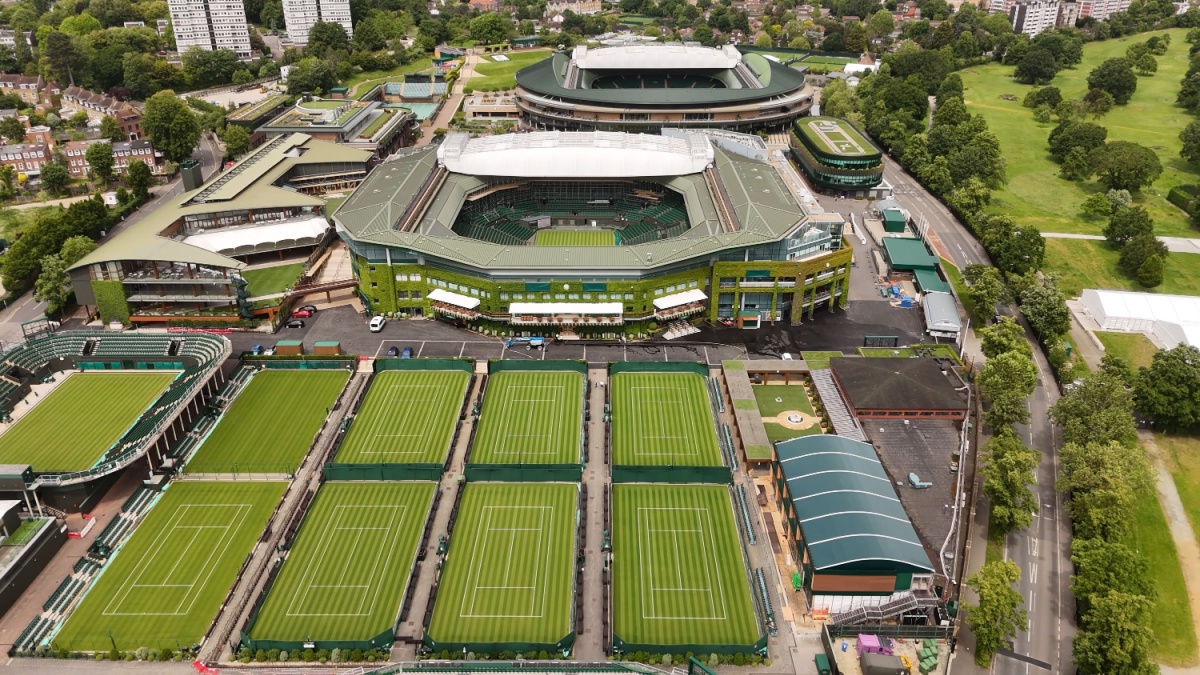
From strawberries to Rolex, we take a look back at how commercial partnerships shaped the world’s most traditional tournament.
When the first Wimbledon Championship took place in 1877, there was little suggestion it would become a commercial powerhouse.
Organised by the All England Croquet and Lawn Tennis Club, the competition was intended to raise funds for equipment repairs. There were no official sponsors, no courtside advertisements, and no financial prizes.
Even as tennis grew in popularity through the early 20th century, Wimbledon retained a resolutely amateur ethos. The All England Club resisted external commercial influence, prioritising the tournament’s image and traditions. This approach contrasted sharply with sports in the USs, where commercial sponsorship and stadium advertising were already commonplace.
The longest-running sponsorship in sport
Wimbledon’s first formal sponsorship came in 1902 when Slazenger was appointed as the official supplier of tennis balls. The deal was likely influenced by Archdale Palmer, then Secretary of the All England Club, who later became Managing Director at Slazenger.The partnership continues today and is considered the longest-running in sports history.
Yet even this arrangement was intentionally low-profile, consistent with the Club’s cautious commercial posture. Balls were supplied without any courtside branding, and the company remained largely out of the public spotlight. Over time, Slazenger introduced several technical innovations tailored specifically for Wimbledon, including a vulcanised felt in 1929 and the switch to fluorescent yellow balls for television visibility in the 1980s.
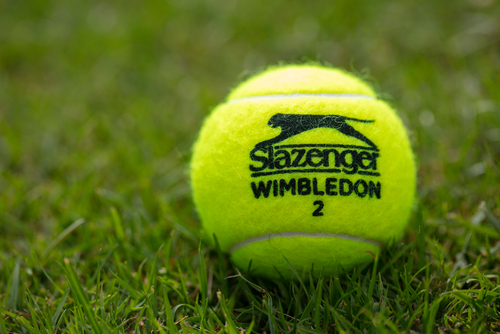
Today, Slazenger produces over 50,000 balls each year for the tournament, with each batch undergoing rigorous quality control and global shipping logistics.
Throughout the 20th century, Wimbledon limited sponsor visibility, often preferring to refer to brands as “official suppliers” rather than naming them as sponsors. Corporate partners were largely kept out of view of the on-court experience. This approach helped preserve the tournament’s visual identity but limited its early commercial potential.
In 1968, tennis entered the Open Era, allowing professionals to compete with amateurs. This led to growing demands for higher prize money and greater media exposure. Wimbledon faced pressure to modernise while maintaining its image.
The BBC’s longstanding relationship with Wimbledon gave the tournament a valuable broadcasting platform. However, international broadcasting rights and sponsorship opportunities began to play a larger role in funding. Despite this, the All England Club remained selective. Sponsorships were permitted, but branding was kept discreet and largely off-court.
During this period, other tournaments adopted a more aggressive approach. The US Open, for example, embraced courtside advertising and built a large sponsor portfolio. Wimbledon, by contrast, prioritised brand alignment over volume.
Tennis on the telly
Wimbledon was first televised by the BBC in 1937, making it one of the earliest sporting events to be broadcast live in the UK. Initial coverage involved just two cameras on Centre Court, with limited daily programming. Regular daily coverage resumed after the Second World War, and by 1967, Wimbledon became the first programme in the UK to be broadcast in colour.
While ITV shared rights briefly between 1956 and 1968, the BBC has held primary domestic rights for most of the tournament’s televised history. In recent years, Wimbledon Broadcasting Services has taken over some production responsibilities, including 4K broadcasts and digital streaming.
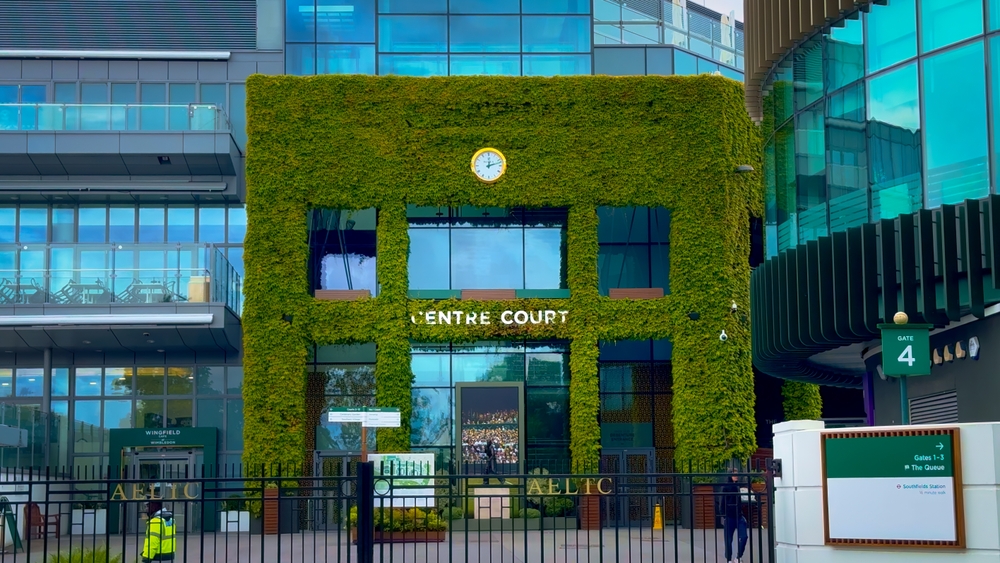
In 2024, Eurosport secured rights to show the men’s and women’s finals and a nightly highlights programme in the UK, marking the first time since 1937 that key coverage was aired outside the BBC. As of 2025, TNT Sports is broadcasting elements of the tournament following its acquisition of Eurosport.
The curated brand approach
Rolex became Wimbledon’s official timekeeper in 1978, marking a shift. The Swiss watchmaker was a natural fit: established, understated, and aligned with the Club’s values. Rolex’s logo was never displayed courtside, but its branding appeared subtly on official scoreboards and broadcast graphics, setting a tone for future sponsor integration.
“Our clean court philosophy is at the heart of our brand and is respected and appreciated by our global partners…limiting the number of partners to ensure we are able to maximise each relationship on its own terms and objectives is also important,” Mick Desmond, Commercial & Media Director at the All England Club, commented to Forbes in 2018.
IBM joined as official technology partner in 1990, initially providing basic match statistics and later expanding into real-time data analytics, AI commentary, and digital engagement platforms.The partnership was instrumental in helping Wimbledon enhance its global media offering without altering the aesthetic or in-venue experience.
By the early 2000s, Wimbledon had established a model based on exclusivity. Rather than maximise the number of sponsors, the Club focused on a small number of premium brands. These included Evian, Lanson, and Ralph Lauren. Branding remained restricted to areas outside of match courts, often in hospitality zones or digital campaigns.
This strategy contrasted with Formula 1 or Premier League football, where sponsor visibility was central to commercial success. Wimbledon’s limited inventory and selective partnerships enhanced the value of association, allowing the Club to command high fees.
Sponsorship in the digital age
In recent years, Wimbledon has adapted its model to suit digital and international audiences. IBM’s role has expanded to include AI-driven match predictions and fan engagement tools. Other sponsors, including Vodafone and Barclays, have supported initiatives related to connectivity and youth participation.
Sustainability has also shaped brand involvement. Evian, for example, has promoted refillable bottle schemes and engaged ambassadors like Emma Raducanu and Carlos Alcaraz.
“Evian is an iconic brand and a champion of tennis and the younger generation – that’s why I’m proud to join the Evian roster of Global Brand Ambassadors,” said Radacanu on joining the Evian Team in 2022.
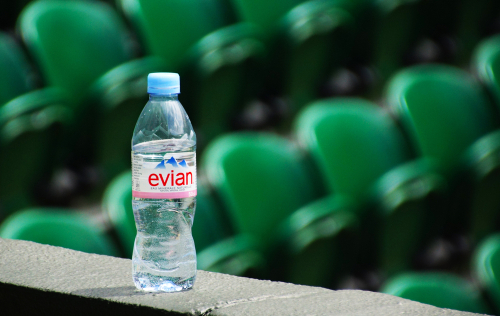
“Being an athlete, healthy hydration continues to be of the utmost importance to my day-to-day activity so I’m excited to partner with evian and can’t wait to see what’s next.”
Jaguar, replaced in 2024 by Range Rover as the official vehicle partner, shifted the focus to hybrid and electric vehicles.
Sponsorship revenue for Wimbledon reached an estimated US$124.7 million in 2024, according to data published by GlobalData . This places it ahead of other Grand Slams in commercial income, despite maintaining a smaller sponsor list.
Aligning heritage with global sport
Wimbledon’s approach is increasingly unusual in global sport. Football clubs and international federations have embraced digital advertising, dynamic pitchside boards, and a growing number of tiered sponsors. In tennis, the US and Australian Opens have followed similar trends, offering naming rights for stadiums and tournaments.
The All England Club has resisted this shift. There are no naming rights, no court-side logos, and limited advertising across the grounds. This scarcity of commercial real estate has become a strategic asset. Wimbledon’s brand is seen as a global luxury platform, appealing to sponsors seeking prestige over scale.
This strategy has not been without criticism. Some argue that the Club’s reluctance to expand access to its grounds and its conservative commercial approach limits opportunities for growth and engagement.
Others view it as a successful model for preserving sporting heritage while securing sustainable revenue.
Game, set, match
This year, Wimbledon has introduced new digital initiatives, including an official Roblox experience aimed at younger fans.
The tournament is also on track to complete its first full year without human line judges, relying instead on electronic line-calling technology supplied through existing vendor partnerships.
These developments indicate a willingness to evolve operationally, even as its sponsorship model remains consistent.
Wimbledon’s commercial strategy offers an interesting case study in brand discipline. By prioritising alignment, limiting visibility, and managing scarcity, the All England Club has built one of sport’s most recognisable and valuable brand portfolios.
The question now is whether that model can remain competitive as global sport becomes more commercially fragmented.