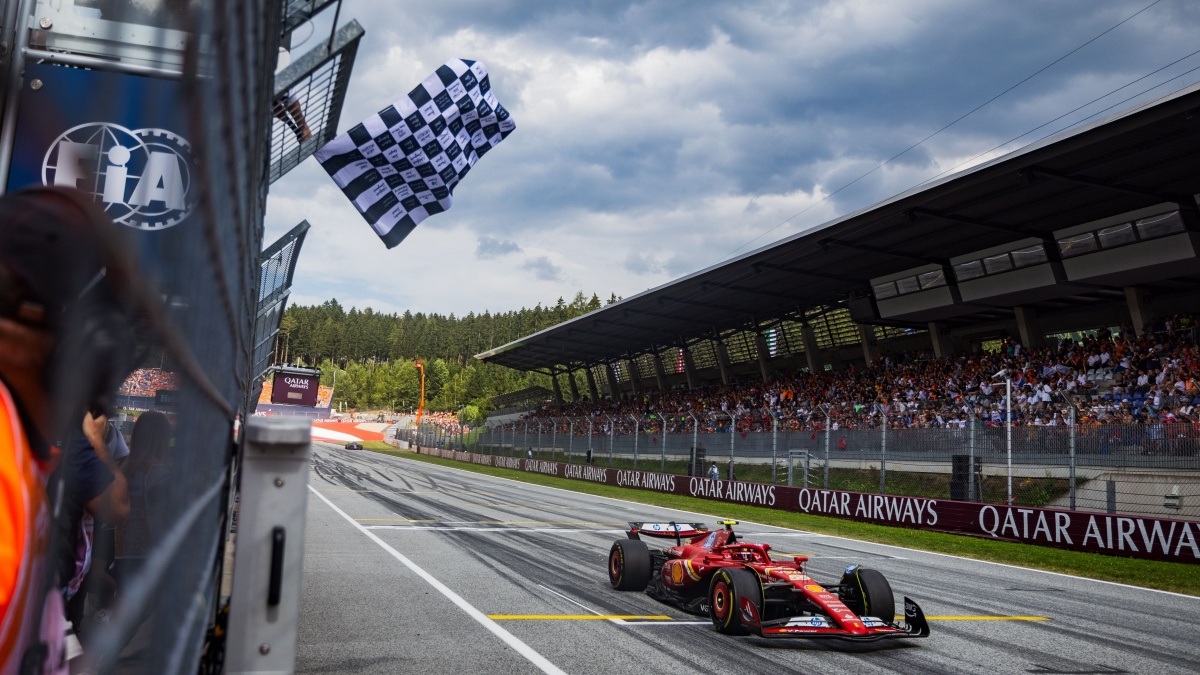



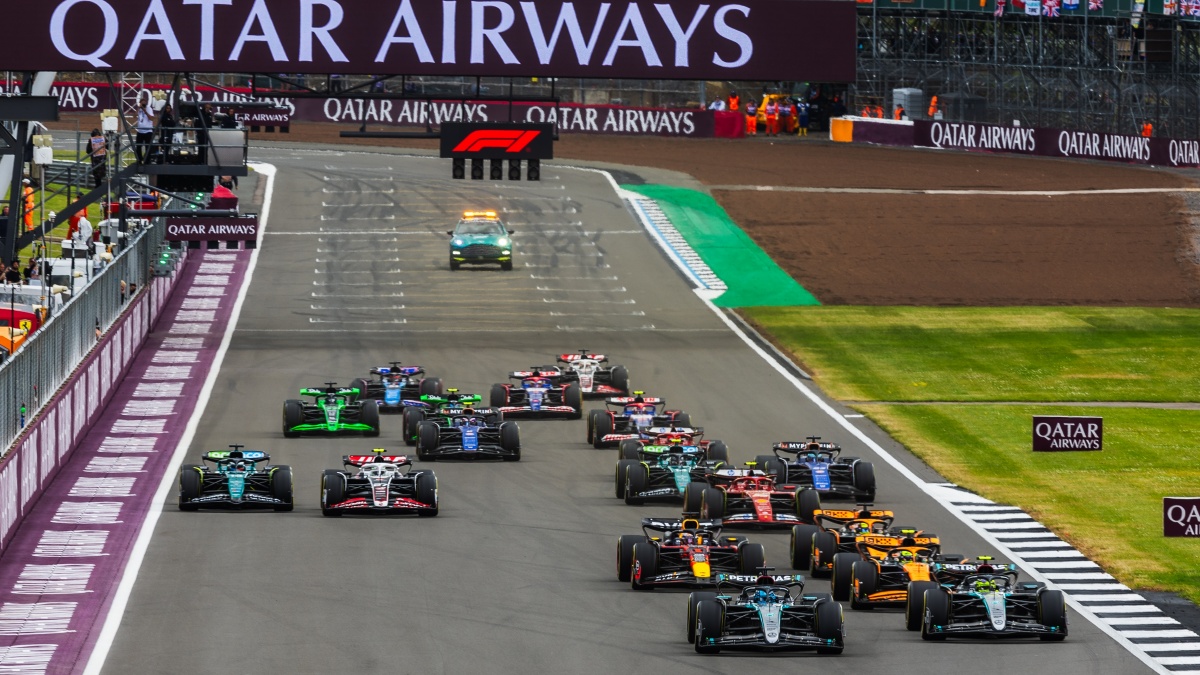
It’s tempting to view Formula 1’s recent surge in popularity as organic, a happy accident, or the result of shifting global tastes. However, like a Grand Prix victory, this success has been engineered.
If Formula 1’s business performance were measured like a time trial, the sport would be seeing green sectors across the board and even the occasional purple.
Owned by US media giant Liberty Media, Formula 1 reported revenues of $3.6bn for the year ending 31 December 2024, up 11% from $3.2bn the year prior. Total attendance across the season hit 6.5 million, a 9% rise in in person viewing, with 1.6 billion TV viewers and 97 million social media followers recorded.
These numbers are expected to rise again this year. But what, for lack of a better word, is driving this growth? A major factor is the influx of younger fans, drawn in by the F1’s new storytelling tactics.
The best grip comes from storytelling
Netflix’s Drive to Survive has been the gateway for many new fans, and while it’s too early to judge the impact of the new F1 movie, the momentum is clear. Some legacy fans may shake their heads, but this shift reinforces what modern audiences want from sport: access, emotion and narrative.
That’s the view of Dhaval Ponda, VP and Global Head of Media & Entertainment at Tata Communications, who spoke to Insider Sport on July 4 ahead of the UK’s race at the iconic Silverstone race track.

“In the UK, the experience is localised around the UK drivers and the UK ex-champions. We look at the ongoing [coverage], they’re focusing on British players who are making an impact,” said Ponda.
“People are more interested in the journey associated of those localised players, which has been a massive push across all the sports globally, where people are sort of adding localised commentary.”
Ponda explained many sports organisations are responding with storytelling tactics tailored to regional audiences, from language-specific commentary to culturally relevant framing of events and personalities. It’s no longer just about who wins the race; people want to know how and why they got there.
This is also an observation made by Nick LaManna, Brand Strategy Lead at Designit, who wrote for Insider Sport in April, arguing that this opening of arms to digital content storytelling, personalisation of athletes, while maintaining its traditional roots has expanded its global fanbase by attracting new eyes.
“F1’s growth trajectory hinges on this narrative arbitrage. While legacy fans can obsess over pit strategies and tyre degradation, new markets will be conquered through emotional currency,” he wrote.
A new audience
The focus isn’t the only area which is being changed to support new audiences. Ponda shared that broadcasters are also dealing with a new age of consumers who don’t even switch on the TV anymore.
“Going to their first port of call is looking at something on a mobile device or a tablet. They’re not even switching on the TV anymore. For them, consuming content is looking at it on their phones and consuming it straight away,” he said.
“There is an entire generation now who are digital natives and I think it differs across geography, but it differs more across the demography and the type of sports fans.”
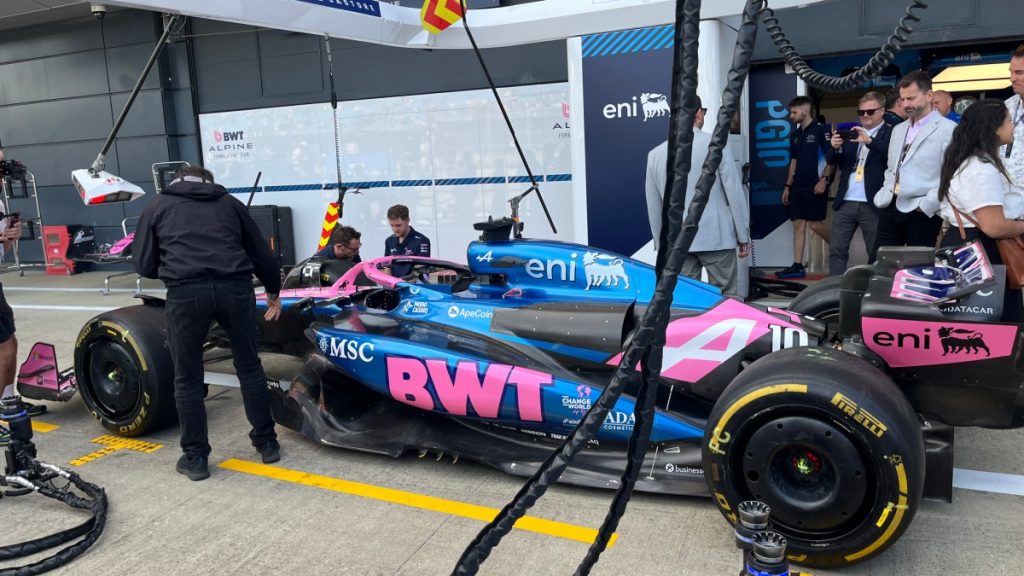
He added this shift goes beyond just the device, stating it speaks to changing expectations around how sport is consumed. Fans today aren’t satisfied with simply watching a race; they want tailored content that speaks directly to them, when and how they want it.
This means modular, mobile-first viewing experiences which allow for personalised engagement and on-demand immersion.
“This level of engagement and focus, people are getting used to a couple of things,” Ponda continued.
“One is they’re used to having a digital product which is natively digital, not just what I used to see on my TV before. If you show it on an iPad, that’s no longer good enough. If I’m watching something on a digital platform, it needs to have a lot of customisable elements. I need to feel that this product is curated for me.”
One reason behind F1’s ongoing evolution, with partnerships involving Disney and the over-the-top Netflix series, is that, while it may make legacy fans’ eyes roll, even they stand to benefit from the richer, more immersive experiences these changes bring.
Looking behind the tech curtain
That being said, for many new F1 fans, the name Tata Communications might not ring a bell. No disrespect to the company, it’s a compliment, since everything in the broadcasts just seems to work seamlessly.
Tata Communications is a global digital ecosystem provider specialising in media and entertainment, with a dedicated focus on sport. As Ponda put it: “We’ve been working with Formula 1 now for more than 12 years, and we are a core technology partner to what they do.”
The company first served as F1’s official connectivity provider for eight years, until the end of 2019. During that period, it helped lead the sport’s transition through a key technological evolution.
“Back in the day, when standard definition was still around, people were talking about going to high definition,” recalled Ponda. “We actually did multiple POCs at an engineering level with Formula 1 as a supporting federation and Sky as a broadcaster. And we were able to deliver on the POCs for ultra-high definition back in the day.”
One result of that collaboration was Sky’s 24/7 F1 channel, a first-of-its-kind platform which helped shift the sport into a new gear for fans and broadcasters alike.
After a brief hiatus, Tata renewed its relationship with the sport in 2022, returning as F1’s official broadcast connectivity provider. However, the remit has expanded far beyond transmission alone.
“We are focusing on how we use the biometric data of the athletes and players and drivers to bring that forward in front of the viewers,” said Ponda. “That is one example of how we are using technology to improve that experience.”
This innovation also extends to the live event itself. “We are investing globally in sporting venues so that we can deliver better fan engagement services when a fan goes to a venue,” Ponda added.
Tata isn’t eyeing the chequered flag just yet
Tata Communications isn’t coasting toward the finish line. As Ponda told Insider Sport, the question is always: “How can we create different types of experiences for fans going out globally?”
Virtual reality (VR) and augmented reality (AR) are two areas often mentioned in the evolution of broadcasts.
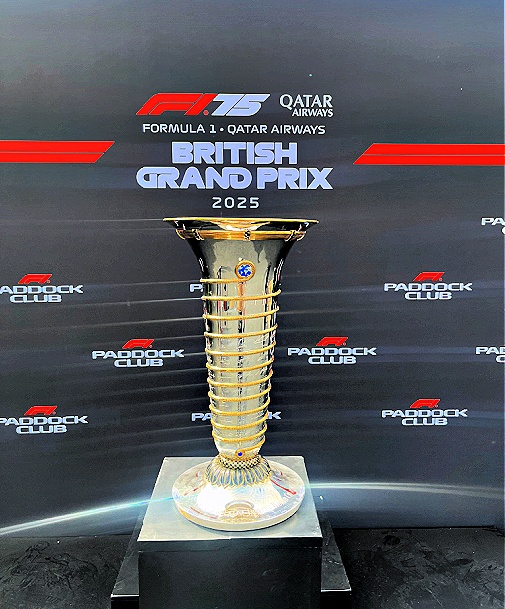
For Ponda and his team, the goal isn’t just innovation, it’s adaptability. “Not everyone is going to have a VR headset and not everyone who has a VR headset may want to watch a live sport on it,” he said. “So adaptability is a big part of how some of these immersive experiences sort of pan out.”
Whether it’s taking inspiration from fantasy sports, improvements to behind-the-scenes data overlays, or more immersive collaboration tools, Tata is watching closely as technology and fan behaviours evolve.
“We have consistently invested a lot in technology, people and platform,” said Ponda.
“Step number one is focus on the future. Step number two is that our entire mode of operation is focused around proof of concept.
“And I think if we continue to do that, [it] will hold us in good stead and we’ll always be part of what’s coming and not be playing catch-up.”