


In this regular series, Insider Sport speaks to volunteers at Old Glossop to uncover what goes into sustaining grassroots sport, who these people are beyond the game, and what drives their dedication.
Life has a funny way of turning passions into responsibilities. For most, hobbies like cricket are a welcome escape from work and family pressures. But for George White at Old Glossop Cricket Club, missing the old ball didn’t just mean being bowled out. It left him as Chairman of a grassroots side.
“There is not a day of the week I am not at the cricket club,” he tells Insider Sport, half proud and perhaps half exasperated.
He admits there are moments when he wonders what he’s taken on. “Why the hell am I doing it sometimes?” he laughs, before noting wryly that his wife is not exactly thrilled with the amount of time he spends at the club.
But from a chair placed in the corner of the clubhouse, in front of a wall of pictures, he explains: “I love sitting here. I love cricket and I love the fact that this means you can get more and more people into it.”
Established in 1901, Old Glossop Cricket Club is a grassroots club and a member of the Derbyshire & Cheshire Cricket League (DCCL). It fields three senior teams on weekends, five junior sides from under-11s to under-19s and a women’s team.
Like many grassroots clubs, it is a cornerstone of the community. It’s where friends are made, skills – both in life and in sport – are learned, stresses are forgotten and passion is ignited. What is less often acknowledged is the fragility of these communities. Clubs are usually taken for granted as permanent fixtures, but without the relentless work of volunteers, they would simply not exist.
For White, cricket has been a lifelong affair. He first picked up the game when a childhood friend took him to Old Glossop at the age of 11 or 12. But it was not just the thrill of hitting a ball, or the appeal of all the gear, that led him to the role of Chairman.
In fact, he never sought the position at all. “I fairly reluctantly picked it up,” he says. And, like many modern love stories, his journey towards the role began during the Covid-19 pandemic. With his two children getting older, White decided to dust off his pads and return to playing. But before long, he found himself drawn into a different kind of role.
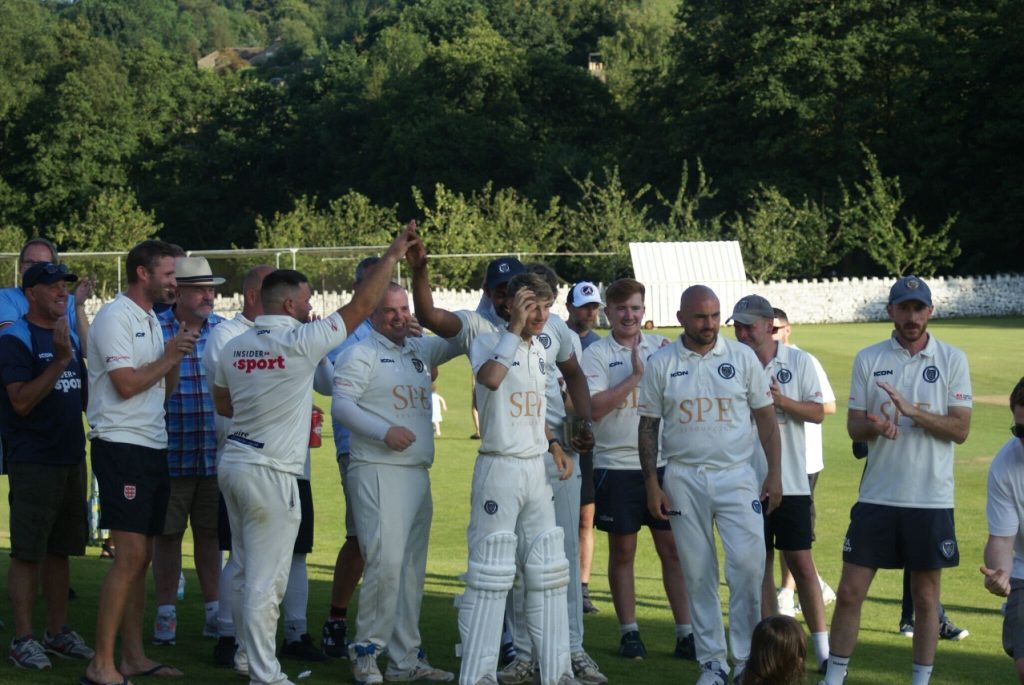
“One of the junior coordinators at the time pulled me aside and said, would you be up for helping us to start running the junior section,” he recalls. “At the time, for some reason, the junior section had fallen away a bit, so we didn’t have any under-11s or anything coming through. And so I said, yeah, let’s give it a go.”
What began as a small commitment to the under-11s soon grew. White helped rebuild the side, which quickly gained momentum. Within a year, the coordinator stepped down and White found himself in charge of the whole junior section.
With a smile, he adds: “He planned that well.”
As junior coordinator, White not only became a role model, a child minder and a teacher but a link between the English Cricket Board’s nationwide programmes. He introduced the All Stars and Dynamos initiative, which was designed to get more children into cricket.
“We did a taster the first year and we must have had a dozen kids come down,” he recalls.
Wanting to attract families as well as players, he struck on a simple idea of inviting a local barbecue company to set up on Friday nights. Parents could grab food and a drink while their children played. The result was transformative.
“That really got a whole bunch more folks down, funnily enough. Food, beer and free childcare is a great formula,” White says. “And then after that… suddenly we’re like 100 kids down here on a Friday night.”
Responsibilities
Perhaps it was ideas like this which earned White a reputation as someone capable of stepping into the chairman’s shoes when the role became vacant last year. But, as he stresses, it was never something he chased. “I fairly reluctantly picked it up… nobody else was standing up,” he recalls.
The role was decided by a vote at the club’s annual AGM. “Nobody else put their hat in the ring, which I knew was going to happen,” White says.
His expectations of the job were shaped by those who came before him. He explains the previous chairman and his wife were extraordinarily hands-on, even running the social side and bar themselves.
White was clear from the outset he couldn’t match this level of commitment. “I was always very nervous because I was quite open with people. I can’t do that. And I’m not expecting my wife to come and run the bar. She definitely made that very clear.”
Still, the role has been more demanding than anticipated. “There’s a phenomenal amount of offers of help. I think it’s somehow organising all of that help. That’s probably a little bit more of a challenge than I thought it was going to be,” he says. Day to day, White’s role is wide-ranging; overseeing facilities, liaising with captains and coaches, making sure juniors are supported and keeping the club financially healthy.
“First and foremost is we’re a cricket club and the first responsibility is to make sure that there’s a good environment… it’s just oversight to all those things. Liaising with the captains, the groundsmen, our secretary, treasurer, to make sure that we’ve got everything that’s needed from a cricketing perspective… and that’s the same then with the juniors.”
Chairman also means running the committee, ensuring bar revenue is steady, planning the social calendar and looking to the future with projects like redeveloping facilities to support women’s, girls’ and disabled cricket.
“What I’d love to be spending more time on is that future thing, but then it’s trying to organise the bins to be collected and the skip to be collected,” he explains.
The job consumes his week, as there’s not a day he’s not at the cricket club.
“Monday I am here in the capacity of coach and father for under 13s cricket and the women’s training is on. Tuesday I’m the coach for under 13s practice. Wednesday is under 15s, where I’m a coach and parent. Thursday is senior practice. Friday is the All-Stars Dynamo. Saturday and Sunday are match days.”
This is on top of his day job. Away from cricket, White works as a salesman in cancer research: “I wanted to go in and get into cancer research as there were a lot of incidents of cancer in my family and close friends.”
His role as chairman is made trickier by the fact he is also a coach and a parent. He works hard to separate those responsibilities, ensuring his children and other club members understand the boundaries.
“When I’m a coach, I’m not your dad, I’m your coach,” he explains. He’s conscious of avoiding any perception of favouritism.
“People used to say to me I was harder on them than anybody else on the team because the fear was I didn’t want to be perceived as being given any favouritism… As chairman, I’ve said, if I hear you say ‘my dad’s chairman,’ you’re in trouble.”
Still, for all the challenges, he doesn’t take the responsibility lightly. The club has been a haven for him during difficult times and he says he would never want it to just disappear.
More than cricket
Returning to the club, it is the small, tangible moments that keep him coming back. The Friday night sessions, for instance, when children who aren’t necessarily affiliated with cricket come to play, are especially rewarding. Beyond that, he values the simple feedback. “Honestly, it’s just people saying they have had a brilliant time and say that it’s a nice place to be,” he says.
Running a grassroots club, however, requires more than just good intentions. Partnerships and sponsorships play a critical role in keeping things going. The club relies heavily on partnerships, sponsorships, and volunteers. White explains that support from sponsors goes beyond money, helping with visibility, credibility and spreading the word.
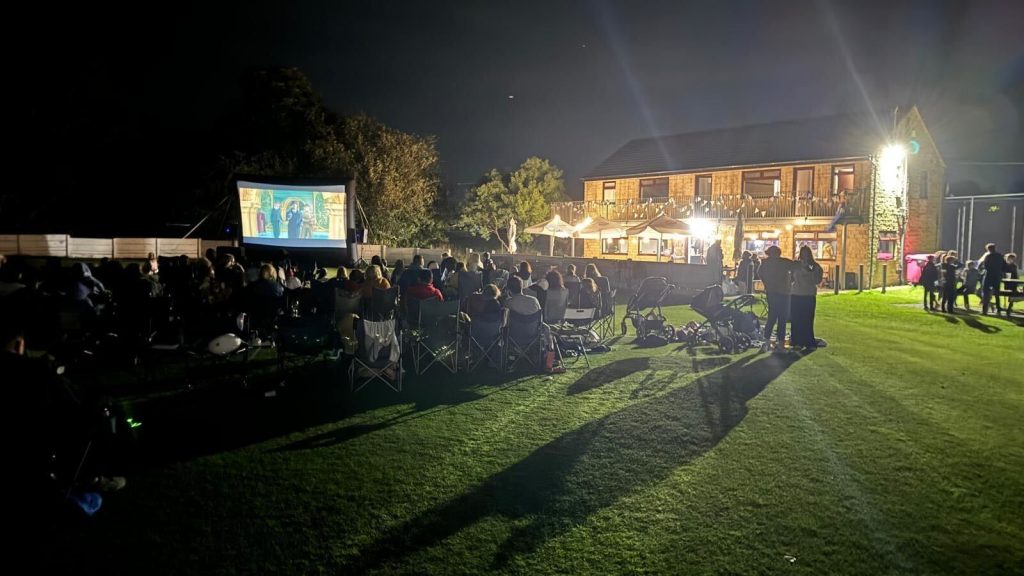
He emphasises the importance of nurturing those relationships to make the club’s work possible. Volunteers are equally essential. He says: “If you can’t get volunteers in to support the things don’t happen. You absolutely rely on them.”
Another challenge is the competition from other sports, particularly football. The England and Wales Cricket Board (ECB) has placed a lot of importance on increasing participation among younger players, but football can drag juniors away as seasons extend.
But White remains optimistic. He points to positive developments, like one of the club’s girls playing for Derbyshire and plans to start sessions for disabled children.
Ultimately, for White, the club is about more than cricket.
“The club is part of the life and soul this area, this little village,” he says. “It’s the centre of the community. And yes, it might look like we are just a group of people wielding a bat, but when everyone gathers to watch and support the teams playing, it is clear it is much more than a game.”
“It is also the future of the sport. Without grassroots we wouldn’t get to watch test matches, and T20. It all comes from grassroots.”