A late Szoboszlai free-kick at Anfield sharpened attention on the Premier League’s first Puma match ball after a quarter-century with Nike. Here’s how the ball differs, why the deal happened, and what to watch as players adapt.
Anfield had been simmering rather than boiling when the moment arrived.
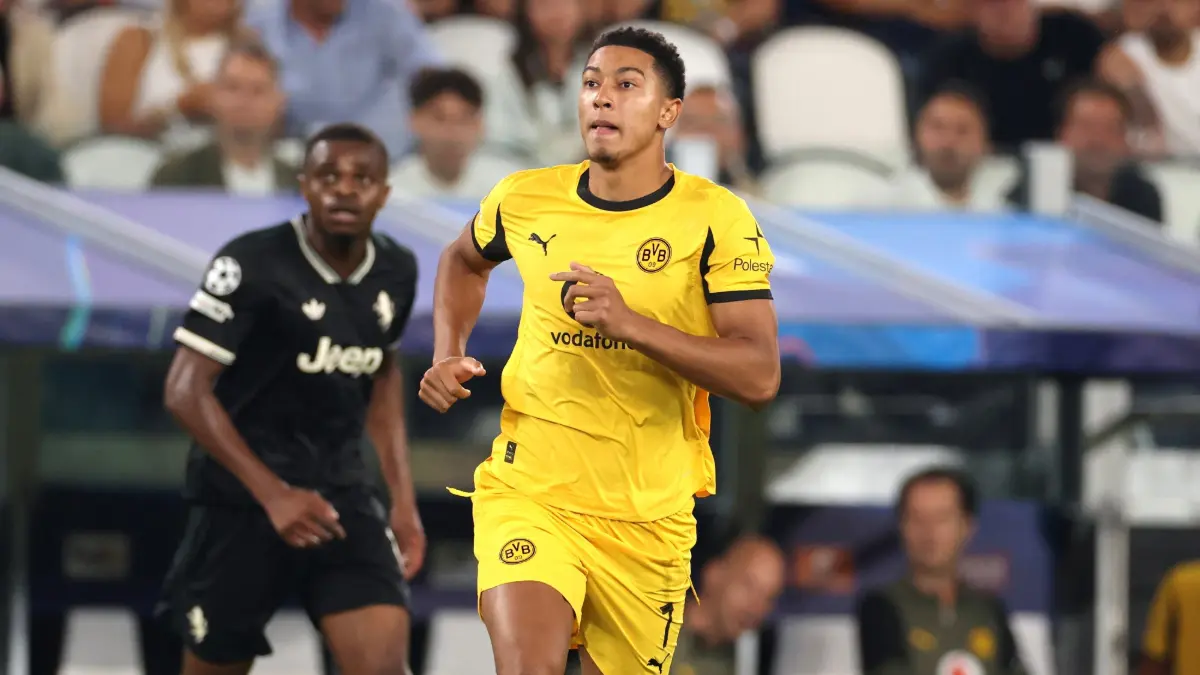
With the game inside its final 10 minutes, Dominik Szoboszlai stood over a free-kick from more than 30 yards and ripped it past David Raya, the ball swerving late as Liverpool edged Arsenal 1–0 and kept their perfect start intact.
For Arsenal it was a first league concession of the season and a reminder of how thin the margins are at this level. It also dropped into a bigger story of change. After 25 years with Nike, the Premier League has a new match ball from Puma, and goalkeeper instinct is still catching up.
In post match interviews, Raya called the strike ‘a hell of a one’ but admitted he is ‘still to adapt’ to the new ball, pointing to differences in grip and flight and how the shot ‘moved away’ from him. Arsenal manager, Mikel Arteta, shared the frustration, praising long spells of control but lamenting the lack of execution that left Arsenal vulnerable to a single, decisive moment.
A different ball, same standards
This isn’t the first time Arteta has raised concerns about the football. In January, he described the Carabao Cup ball as “tricky,” a complaint that drew a swift reminder from the EFL that its match balls carry FIFA Quality Pro certification. The Premier League’s new PUMA model meets the same benchmark.
The Premier League confirmed PUMA as official match-ball supplier on March 17, 2025, with unveiling on May 28 and retail launch on June 3. Nike reportedly had the opportunity to extend but talks “failed to reach a positive conclusion,” while PUMA framed the deal as part of a brand-elevation push.
“It’s a very good strike, especially with the new balls and everything. We still have to adapt. It’s going away from me so it’s harder to gauge and save it.” – David RAYA
“It’s different to the Nike ball so we have to adapt to it. The grip is different, the kick is different. We just have to adapt after playing with the Nike ball for many years. It’s the same for everybody.”
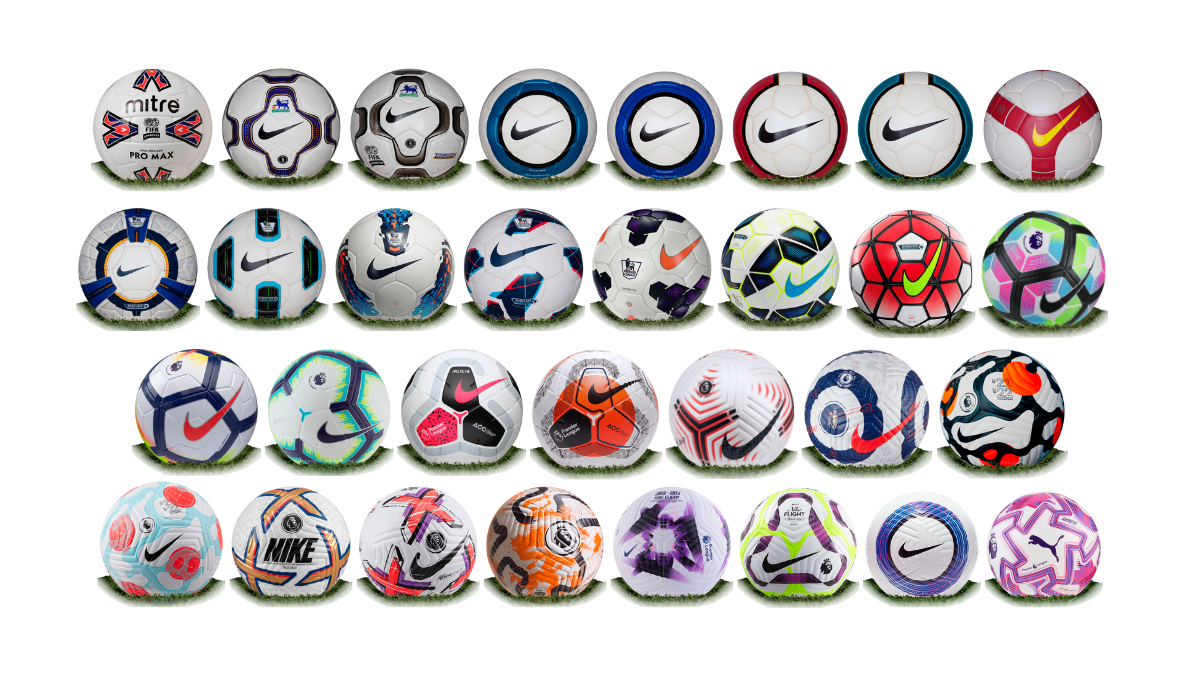
PUMA already owns prominent ball rights elsewhere, supplying LaLiga, Serie A and the EFL, which creates consistency across major competitions and underpins a coherent “own the ball” narrative. Only two brands supplied the Premier League’s official ball before this season: Mitre from 1992 to 2000, then Nike from 2000 to 2025.
PUMA’s construction uses a different panel layout and seam profile. Those choices alter how the ball leaves the foot and how it moves through the air, which is precisely what goalkeepers notice first.
Players who have spent entire careers striking one family of ball are now learning the cues of another.
A short history of the Premier League match ball
- 1992–1995 — Mitre Pro Max. The inaugural Premier League ball. Sets the early visual template before the brand’s most famous upgrade.
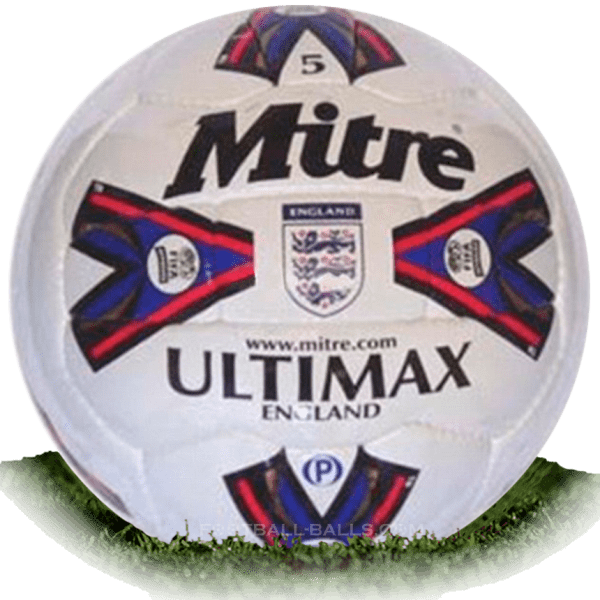
- 1995–2000 — Mitre Ultimax. Iconic, hand-stitched construction; Mitre hails it as the first ball recorded at over 100mph.
- 2000–2002 — Nike Geo Merlin. Nike replaces Mitre at the turn of the millennium; the Geo Merlin era begins.
- 2002–2004 — Nike Geo Merlin Vapor. Evolution of the debut Nike model.
- 2004–2008 — Nike Total 90 Aerow I/II. The swirl graphic becomes a cult visual; 2005/06 sees the Premier League’s first hi-vis winter edition.
- 2008–2013 — Nike Omni, Ascente, Tracer, Seitiro, Maxim. Annual technical and graphic refreshes become the norm.
- 2013–2018 — Nike Incyte and Ordem I–V. Continued focus on visibility and flight stability.
- 2018–2020 — Nike Merlin. Four fused panels appear, shrinking seam count and enlarging the striking surface.
- 2020–2025 — Nike Flight. AerowSculpt grooves and 3D ACC ink aim to cut wobble and standardise touch.
- 2025–present — PUMA Orbita Ultimate PL. PUMA takes over as official supplier for 2025/26.
So, what’s the difference?
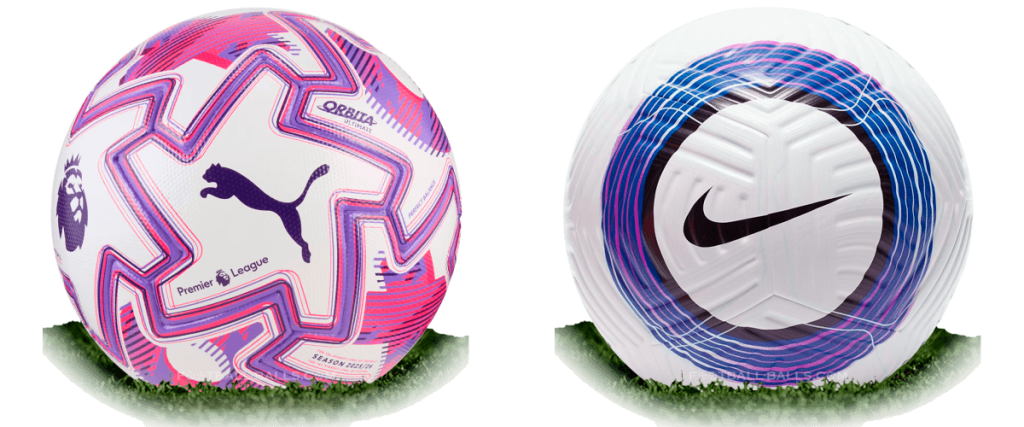
Puma’s Premier League ball, according to the sports brand, is a high-frequency moulded construction built from 12 identically sized panels with enlarged, deeper seams. A 3D-textured PU outer adds ‘bite’ for contact and flight, while the PAL (Puma Air Lock) valve is designed to hold air more consistently.
Nike’s Flight ball cut the shell to four fuse-welded panels, creating a larger striking surface and far fewer seams. That geometry changes how the ball leaves the foot and how air breaks across it. Puma leans on deeper seams and surface texture to manage turbulence, while Nike pursued stability through AerowSculpt moulded grooves and 3D ACC ink that creates microscopic “micro-flaps.”
Equipment resets rarely happen quietly
Across the sports industry, changes which meet the letter of the law often clash with the lived reality touch, bounce and trust. Athletes are often the first to speak up.
During the 2006/07 NBA season, a new Spalding microfiber composite ball was rolled out. Within weeks players complained about cuts on their fingers, unpredictable bounce and poor feel. After a union grievance and mounting backlash, commissioner David Stern scrapped the experiment and restored the leather ball mid-season.
Fast-forward to the 2021/22 NBA season an the league shifted its official ball from Spalding to Wilson. Early shooting slumps prompted several stars to say, in plain terms, that the ball just didn’t feel the same, adding fuel to debates about whether touch changes were bleeding into performance before numbers stabilised.
Tennis also had its own flashpoint at the 2022 US Open , when leading WTA players including Iga Świątek and Paula Badosa criticised the lighter women’s ball used in New York, arguing it led to more errors and a poorer spectacle. Tournament organisers responded the following year with the US Open adopted the same ball for women and men.
And in the 2021 NHL season, new microchipped tracking pucks were yanked less than a week into the season after players complained about how they performed on the ice. The league switched back to the standard pucks the same day it announced the decision.