


Insider Sport speaks with SailGP Managing Director Andrew Thompson on the league’s ambition to redefine high-performance sailing. From the spectacle of hydrofoiling catamarans to a fast-expanding global footprint, rising franchise valuations, and a commitment to sustainability and inclusion, Thompson outlines how SailGP is steering itself into the ranks of the world’s top sporting properties.
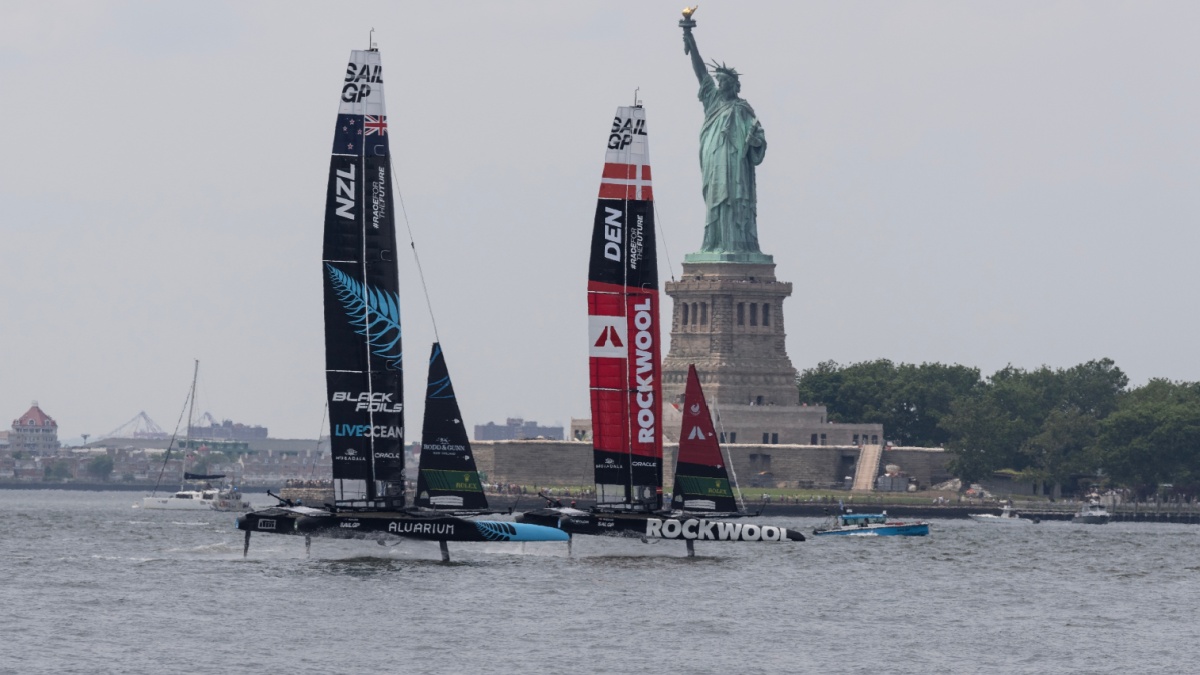
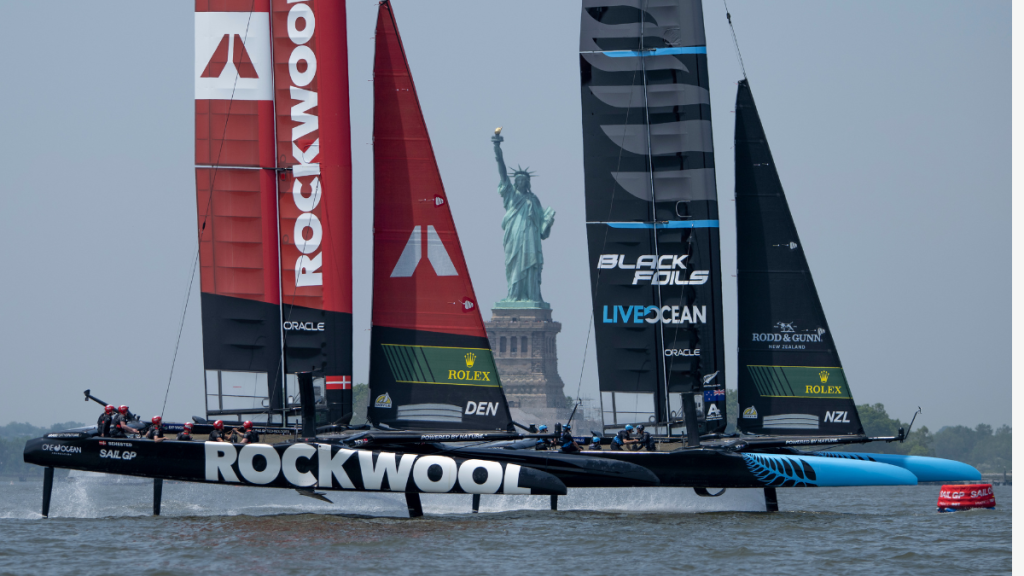
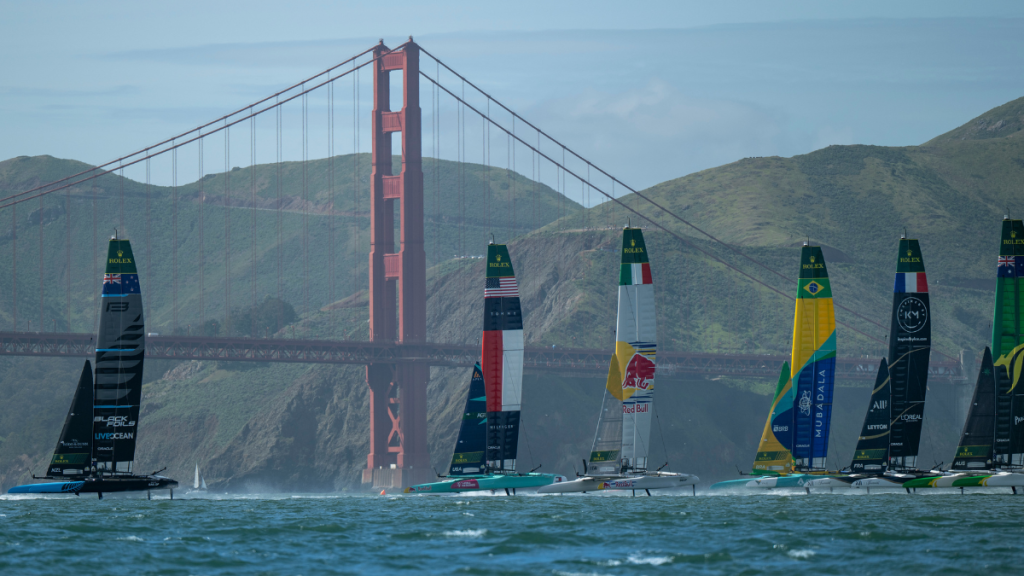
The F50 catamaran doesn’t so much sail as it does fly.
With a crew of six working in perfect unison, the boat lifts out of the water, its twin hulls replaced by hydrofoils slicing through the waves. The world is a blur of spray and wind, the city skyline a distant, silent backdrop. This isn’t a race of inches, but of centimeters, of split-second decisions and raw nerve.
To the spectators on shore, it’s a spectacle of speed and technology. But for the crew, it’s a fight against the elements, against the g-forces pushing them to their limits, and against the nine other teams all vying for the same prize. The slightest mistake – a misjudged gust, a millisecond of hesitation – could send the multimillion-dollar boat cartwheeling into the water.
This is SailGP.
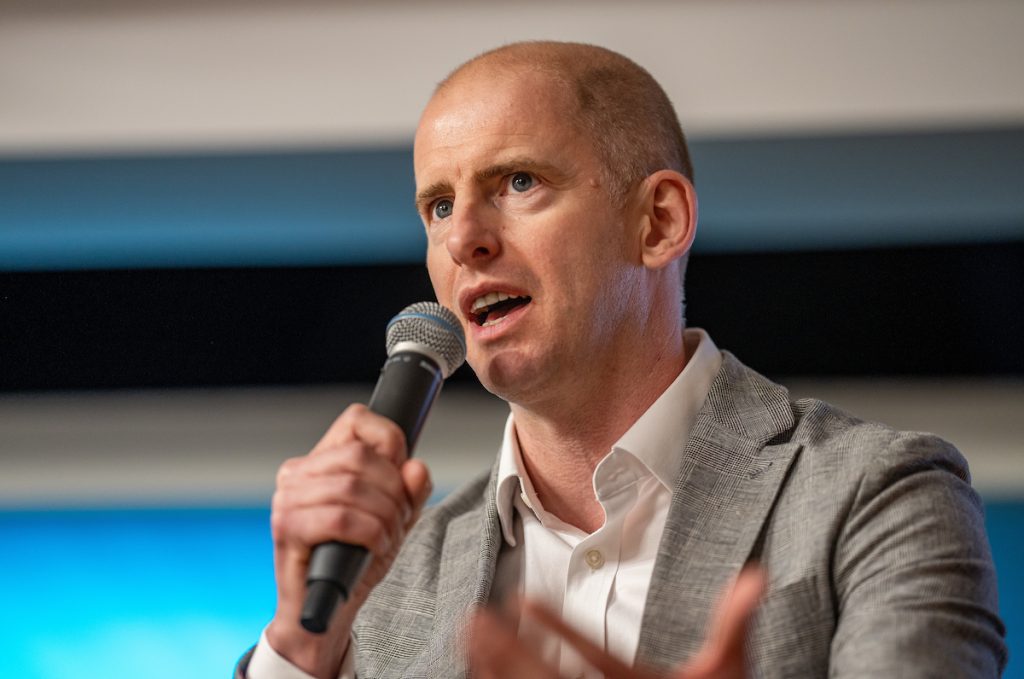
The man steering the league through this high-stakes environment is Andrew Thompson, SailGP’s managing director.
His vision is to expand both its number of events and its global footprint to compete with the top 20 sports properties in the world. The league is actively working to increase the number of events per season to between 18 and 20, a significant jump from its current schedule. To achieve this, the league is focusing on more efficient logistics to allow for a faster turnaround between events.
This expansion will also see the league enter new, high-growth markets. Thompson mentions specific future target markets, including China, Japan, Mexico, the UAE, and Saudi Arabia. The league has already established a strong presence in the Middle East, with two events in the UAE in a single season.
Shifting to a new model
From its inception, the league was centrally owned, a strategic decision made for “speed and agility” and to allow for “quick decisions” in its early stages. Now, the league is transitioning toward a private team ownership model, a move that was always the long-term plan.
Speaking to Insider Sport, Thompson noted the transition isn’t a “hard switch,” but a “rolling transition”. Teams have always been treated as third parties, with their own CEOs and commercial programs. The new owners are buying a perpetual license for their territory, which they can sell in the future.
The league has a strong sense of its own value. The franchise is a “scarcity thing” with only 20 licenses available. With 12 teams already in the league, the competition for new licenses is high, and the valuations are rising. Thompson notes that the valuations are driven by the growth of the league centrally, which he says has grown significantly in terms of media and broadcast numbers.
Since selling a small part of equity to the Endeavor Group in 2020, the league’s valuation has grown five times over.
This rising value has attracted a new wave of high-profile investors, transforming the league’s ownership landscape. The Australian team, a three-time champion, has recently been rebranded as the BONDS Flying Roos and is now co-owned by actors Hugh Jackman and Ryan Reynolds, alongside driver and CEO Tom Slingsby. Similarly, the German team is co-owned by Thomas Riedel of Riedel Communications and former Formula One champion Sebastian Vettel.
The influx of celebrity and sports-world figures isn’t limited to the men. Hollywood actress Anne Hathaway is part of a consortium that acquired the Italy SailGP Team, which also marks the first female-led ownership group in the league. A consortium including French football star Kylian Mbappé‘s Coalition Capital and Ares Management has acquired a stake in the France SailGP Team.
The US team is now owned by Marc Lasry’s Avenue Sports Fund, with additional investment from a group that includes boxer Deontay Wilder and actress Issa Rae. The Great Britain SailGP Team is owned by driver and CEO Sir Ben Ainslie, with an investment from businessman Chris Bake.
While some teams remain under central ownership, such as the teams in Denmark, New Zealand, and Spain, SailGP is actively seeking private investors for these franchises. This new ownership model brings not only financial stability and capital, but also significant marketing and operator experience, a key elementThompson noted for new teams to “hit the ground running”.
SailGP has taken steps to ensure the financial viability of its teams. Teams have a cost cap of $10 million US dollars, which limits spending and is seen as valuable to investors. Thompson states that some teams are already approaching or have achieved profitability, like the French team which is expected to “at least break even” this year.
The British and Brazilian teams are also very close to profitability. This profitability is driven by the fact that there is “certainly enough commercial inventory in order to sustain that 10 million dollars of cost,” Thompson says. The league’s guiding principle is “strong league, strong teams”.
The race for audience
SailGP’s high-octane racing is a perfect match for a modern media strategy, and Thompson is clear on the league’s direction: find media partners who “really cherish our rights and work with us to promote the sport”.
The league is moving away from simply selling broadcast rights and is instead looking for partners who will invest in the property and help it grow. This approach has already yielded success. A partnership with German free-to-air broadcaster ZDF, for example, resulted in over two million average viewers for an event in Germany. The league is also averaging around 20 million live or near-live viewers for its global broadcasts.
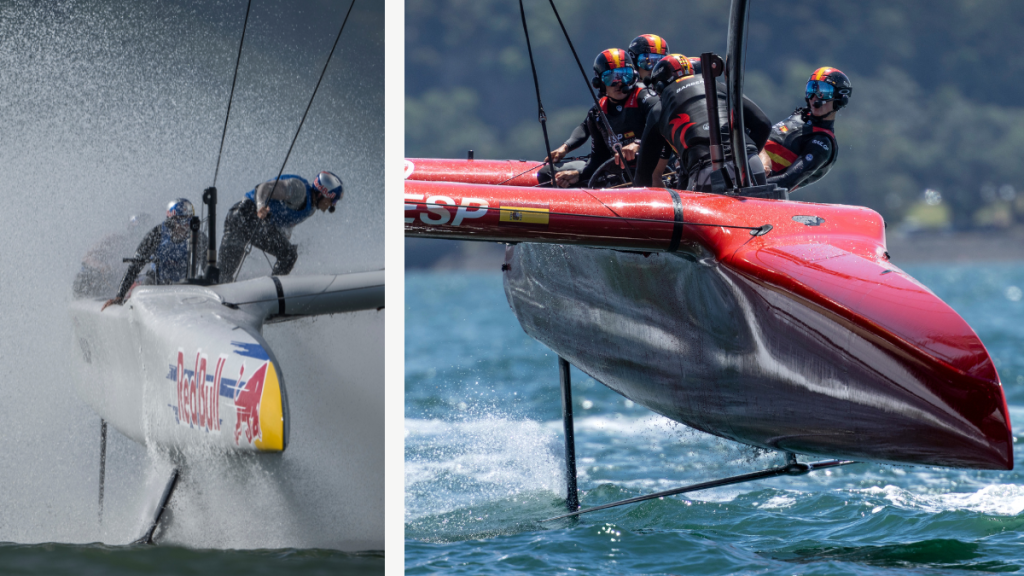
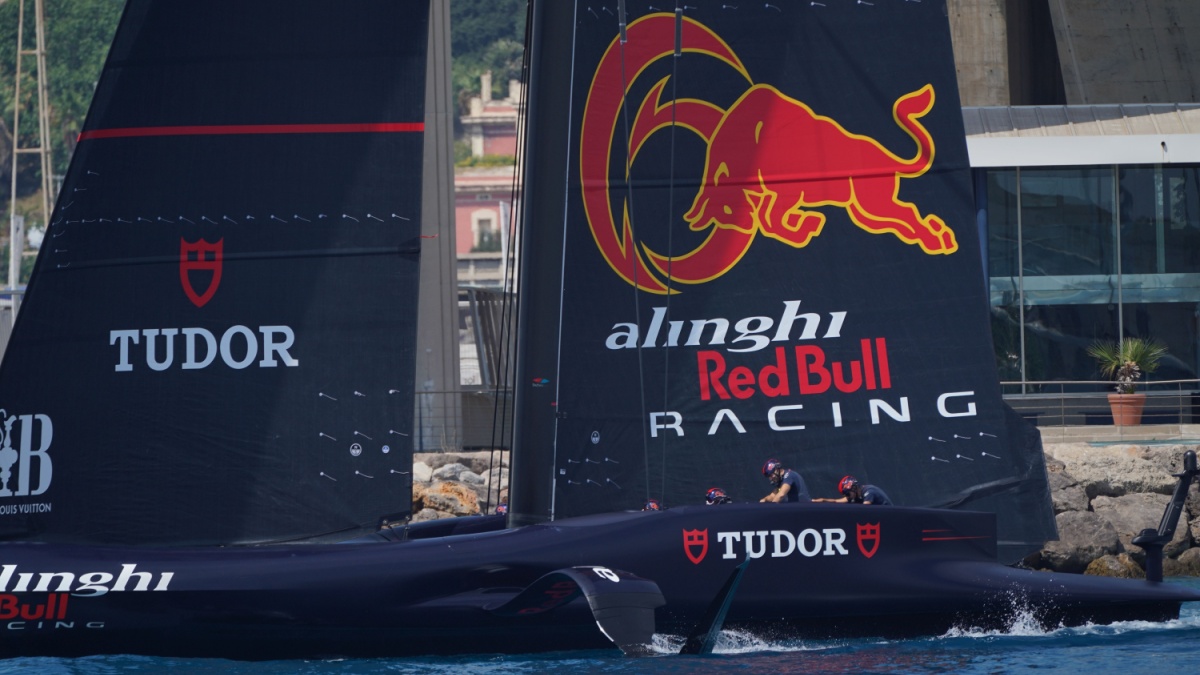
Left: Red Bull Italy SailGP Team helmed by Ruggero Tita in action as Alex Sinclair, grinder, crosses the boat during a practice session ahead of the Oracle San Francisco Sail Grand Prix held in San Francisco, California, USA. Friday 21 March 2025. Rolex SailGP Championship Event 5 Season 2025. Photo: Ricardo Pinto for SailGP. Handout image supplied by SailGP
While linear broadcast remains a key tool for reaching new fans, SailGP is also a digital-first league. The league works with broadcasters to find a balance between providing exclusive rights for viewers to tune into, and “also enabling us to go live on YouTube, for example”, says Thompson.
The league’s YouTube numbers are growing significantly, as are its TikTok numbers, which are particularly effective for reaching a younger audience with “short-form snacking” content, he adds.
The media strategy is built on a foundation of data. SailGP owns all the live telemetry data generated by its F50 boats. This data, which is hosted in the Oracle Cloud, which Thompson explains is used to “extract the right data for our teams” with the help of AI techniques. The league has an “open data policy,” he says, allowing teams to analyse their own data as well as that of their rivals.
The sport is now also starting to consider monetising this data through a new venture into the world of sports betting. SailGP has partnered with firms like Bet365 and DraftKings to offer in-play betting on races. Thompson describes the races as being similar to a “handicapped horse race” where “any team can win in any race”.
He also notes the league has implemented “new betting policies for all our athletes, all our umpires, all our broadcast teams” to ensure integrity and protection. This move is a testament to the sport’s data-rich nature, which “lends itself very nicely to that world” of betting.
Sustainability at the core
A cornerstone to SailGP’s growth plans is SailGP’s its commitment to sustainability. A key component of this is the Impact League, which runs parallel to the on-water racing championship. It is the first league of its kind in any sport, rewarding teams for their positive actions to reduce their carbon footprint and accelerate inclusivity in sailing.
Teams are judged on ten sustainability criteria, including:
- Team Base Energy: Reducing electricity consumption.
- On-Water Fuel: Limiting fuel consumption in support boats.
- Breaking Boundaries (DE&I): Boosting gender equity within the team.
- Race to Zero Waste: Eliminating single-use plastics and recycling correctly.
The Impact League fosters a unique form of competition. In Season 4, the GB SailGP Team, led by Ainslie, won the Impact League trophy, having previously finished second and third in prior seasons. The team’s winning efforts included generating over 5,600 kWh of renewable energy at events using a portable solar and wind installation.
This initiative even provided surplus energy to power other teams’ operations. As a result, the team’s base was 100% powered by clean energy at events.
This commitment to sustainability has also been recognized with SailGP becoming the first sport to achieve a triple-gold recognition from the United Nations Climate Neutral Now Initiative.
Roots in inclusion and development
SailGP’s vision extends beyond the racecourse, with a strong commitment to making the sport more inclusive and building a pathway for the next generation of athletes. The league launched its Women’s Pathway program in 2021 as part of its Better Sport strategy to drive gender equity.
Since October 2021, a female athlete has raced onboard every team’s F50 catamaran in every single race. This initiative aims to address a significant “experience gap” in high-performance sailing, says Thompson, which has been historically male-driven.
The league is taking a deliberate approach to nurturing female talent, providing “more access to training time for our female athletes”. In partnership with DP World, SailGP held a female-only training camp in Dubai where female athletes drove the boats in skilled positions. Thompson believes that there’s “no reason why female athletes wouldn’t be competing alongside male athletes” and that the main barrier has been a lack of experience.
Crucially, the league has been careful not to set deadlines or KPIs for female participation. Instead, the goal is to provide opportunities and allow the athletes to evolve at their own pace. Thompson notes that many female athletes are “highly ambitious” and want to be pioneers for the sport. This approach is already showing results.
Martine Grael, a two-time Olympic champion from Brazil, was selected to lead the Brazilian team and is the first female driver in the league’s history. Her success in winning races in her first season proves that women are selected in squads and on rosters based on merit.
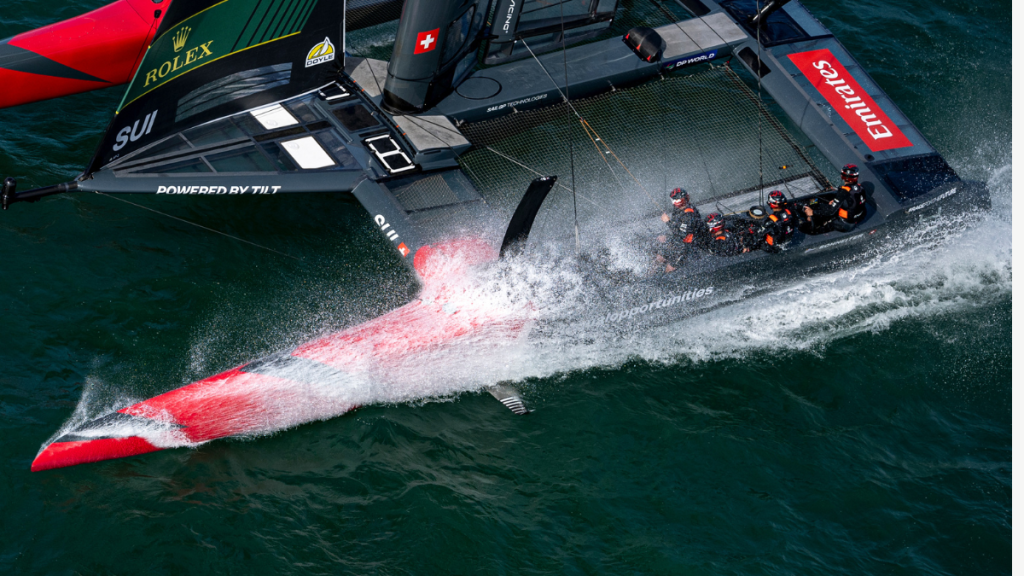
Looking ahead, Thompson says the league plans to build an additional training boat. Thompson says this asset will be stationed “somewhere in the world” to provide new athletes, including women and young sailors, more training time outside of the main circuit.
The league also recently launched a new $10 million facility in Southampton in the UK, which will serve as a hub for off-water athlete development, including a simulator for training. The new facility, which replaced the previous technical base in New Zealand, houses more than 100 designers, engineers, and boat builders to support the development and maintenance of the F50 fleet.
These initiatives are designed to ensure that the “next generation will come through” and that the sport continues to progress organically, Thompson says.