


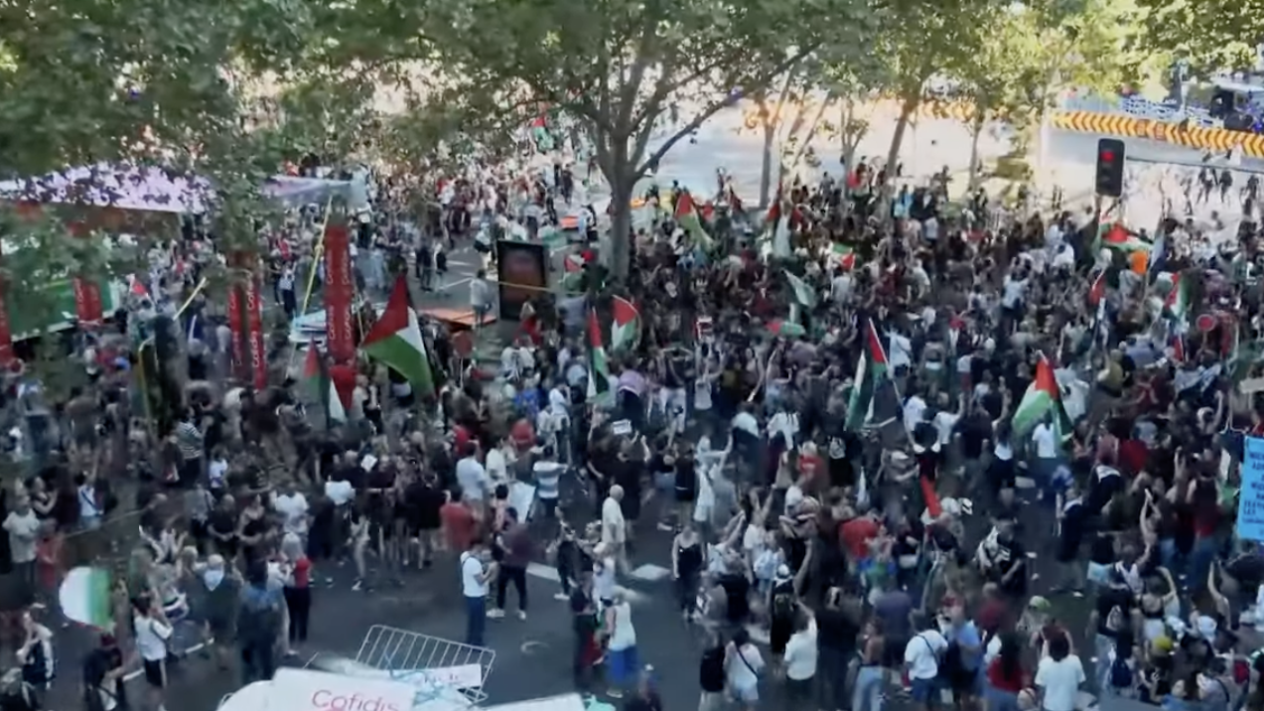
The International Cycling Union (UCI) has issued an unusually forthright statement condemning the political turbulence that overshadowed the 2025 Vuelta a España, which ended in chaos on the streets of Madrid on September 14.
The governing body’s reaction raises questions not just about rider safety and event integrity, but also about the increasingly blurred lines between global politics and elite sport.
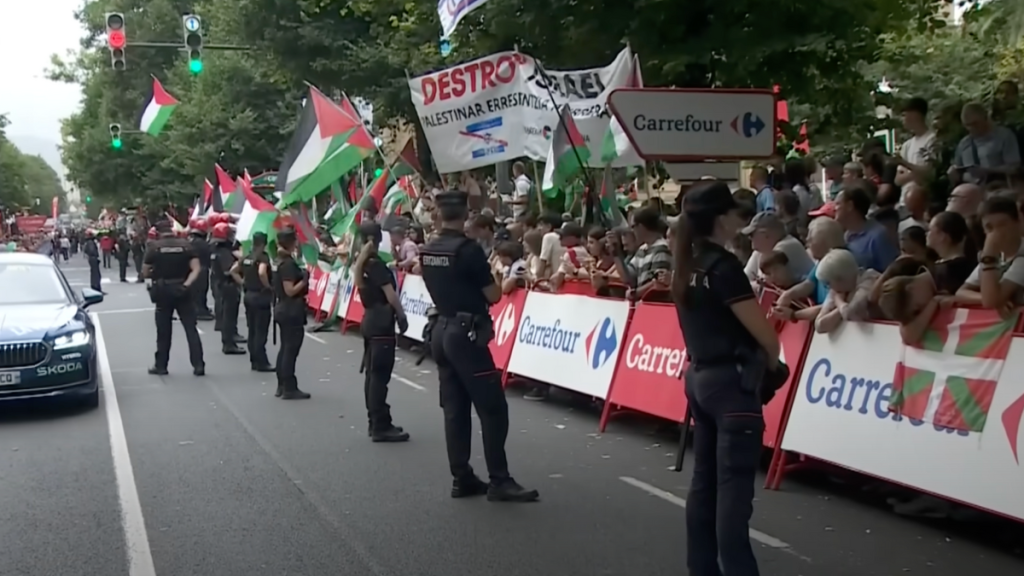
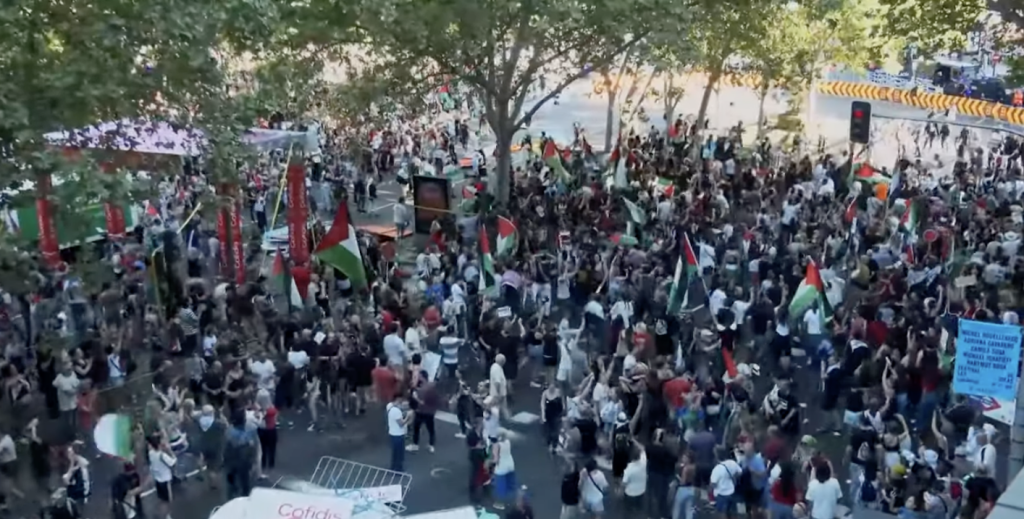
This year’s Vuelta was repeatedly disrupted by pro-Palestine demonstrators, who staged direct actions along the route.
The UCI lists incidents including urine being thrown, intrusions into the peloton, and physical clashes that led to rider crashes and withdrawals. Last week, Israel-Premier Tech began racing in modified jerseys which did not display their team name.
The protests come in the wake of the Israeli military launching a campaign in Gaza in response to the Hamas-led attack on southern Israel on October 7, 2023.
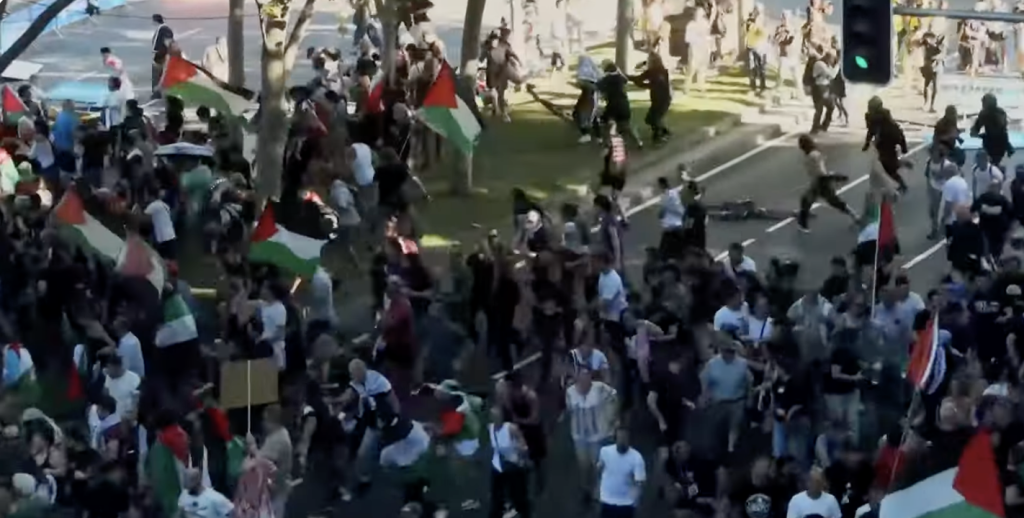
The final stage in Madrid was cut short entirely after large-scale demonstrations broke through barriers, forcing organisers to halt the race in unprecedented circumstances. International media reported more than 1,000 police officers were deployed on the streets of the Spanish capital, with demonstrations having been expected.
While race organisers were praised for their crisis management, the repeated interruptions highlighted how vulnerable road cycling remains to outside interference. Unlike stadium-based sports, road races are inherently exposed, stretching across hundreds of kilometres of public space, where complete control is practically impossible.
The protests at the Vuelta illustrate how cycling’s accessibility and visibility also make it a stage for political messages.
A rebuke to Spain’s government
What elevates the controversy is the UCI’s sharp criticism of the Spanish government. In its statement, the body accused Prime Minister Pedro Sánchez and his team of “supporting actions” that hindered the event, and in some cases “expressing admiration for the protesters.”
That language is strikingly political for a sports federation, especially one that, like most international bodies, typically stresses neutrality.
Madrid’s government has previously expressed sympathy for Palestinian causes, particularly following the escalating conflict in Gaza earlier this year. Against that backdrop, the Vuelta became a focal point for activists who saw the race as a global stage.
The UCI’s warning that Spain’s ability to host major international events is “called into question” reflects a deepening frustration in Lausanne over the political entanglement of one of cycling’s Grand Tours.
The Olympic Charter invoked
The UCI also framed the incidents as a breach of the Olympic Charter, which enshrines the principle that sport should remain free from political exploitation. By invoking the Charter, the federation placed the Vuelta crisis within a wider Olympic context – particularly sensitive given Spain’s potential ambitions to host future Games, and cycling’s central role in Olympic sport.
Next week, the UCI Congress will bring together representatives from the Palestinian, Israeli, Russian, and Ukrainian cycling federations. By explicitly naming these groups in its statement, the UCI is presenting itself as a platform for dialogue, contrasting that with the disruption of competition.
Broader implications for sport and protest
The Vuelta turmoil feeds into a broader trend: sport is increasingly becoming a flashpoint for geopolitical tensions.
From Russian athletes facing restrictions since the invasion of Ukraine, to pro-Palestinian protests at football matches across Europe, governing bodies are struggling to defend sport’s autonomy while responding to real-world crises that resonate deeply with fans and athletes.
For cycling, the immediate issue is security. Organisers of next year’s Tour de France and Giro d’Italia will be studying the Vuelta closely, knowing that the risk of politically motivated disruptions has risen. For Spain, the episode threatens reputational damage at a time when hosting rights for international competitions are a source of soft power and economic benefit.
Vingegaard’s win overshadowed
Jonas Vingegaard’s victory in the general classification should have been the crowning sporting moment of the Vuelta.
Instead, it was framed by a narrative of protest, disruption, and political fallout. For the Dane, and for the race as a whole, the sporting achievement risks being remembered as secondary to the circumstances.