


E1 is making headlines with celebrity team owners and futuristic electric boats, but it is the pilots who are shaping the series’ identity. Insider Sport caught up with four of them back in June to find out more.
E1 may have captured headlines with its celebrity owners and spaceship-like electric boats, but it is the pilots who are shaping the sport’s identity.
Drawn from backgrounds as varied as rally driving, jet ski racing and endurance motorsport, they are the human face of a series that is still working to prove its commercial case.
Speaking on the banks of Lake Maggiore earlier this year, Insider Sport caught up with four pilots who are propelling the sport forward.
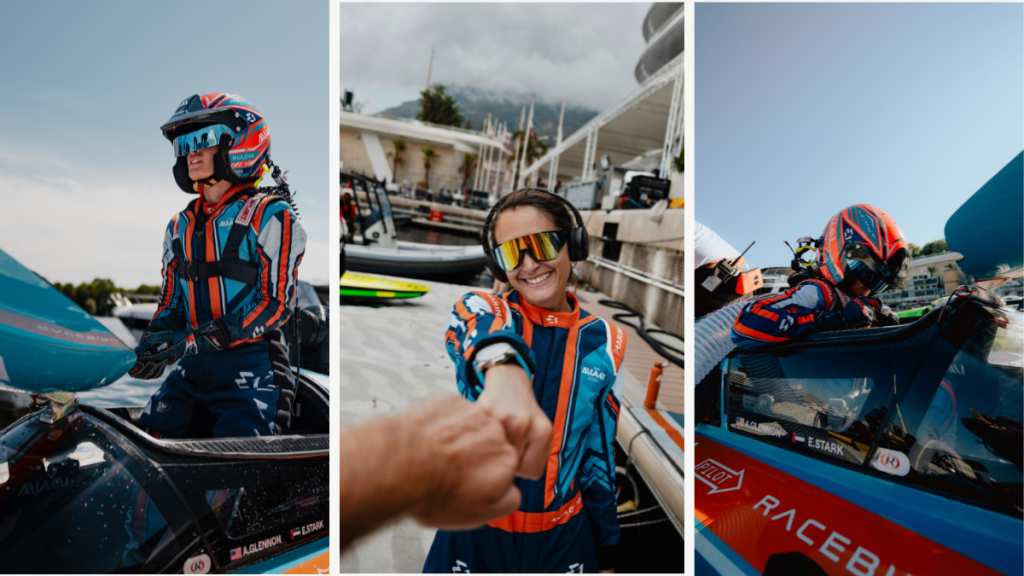
Few stories underline the experimental nature of E1 better than that of Anna Glennon or JetGirl777 as she is fondly known within the water sports world. With eight US and Canadian national titles and a historic win as the only woman to claim the IJSBA Men’s Classic Two-Stroke World Championship, Glennon brings a fearless competitive edge to the E1 Series.
And she almost missed the opportunity. Speaking to Insider Sport, Glennon admits she initially thought the invitation to test an electric hydrofoiling powerboat was a scam when an email popped into her inbox in 2023. Only after speaking with contacts in the sport did she realise it was genuine.
Glennon eventually made the trip to Lake Maggiore, the birthplace of hydrofoils, at the end of 2023, and, after her first laps in the RaceBird, found herself tearing up at the wheel. That was the moment she decided she had to be part of it.
“I came all this way. I’m not leaving until I get in that race boat,” she told Insider Sport. After her first laps, she remembers coming in slowly and telling herself, “This might be the coolest thing I’ve ever done.”
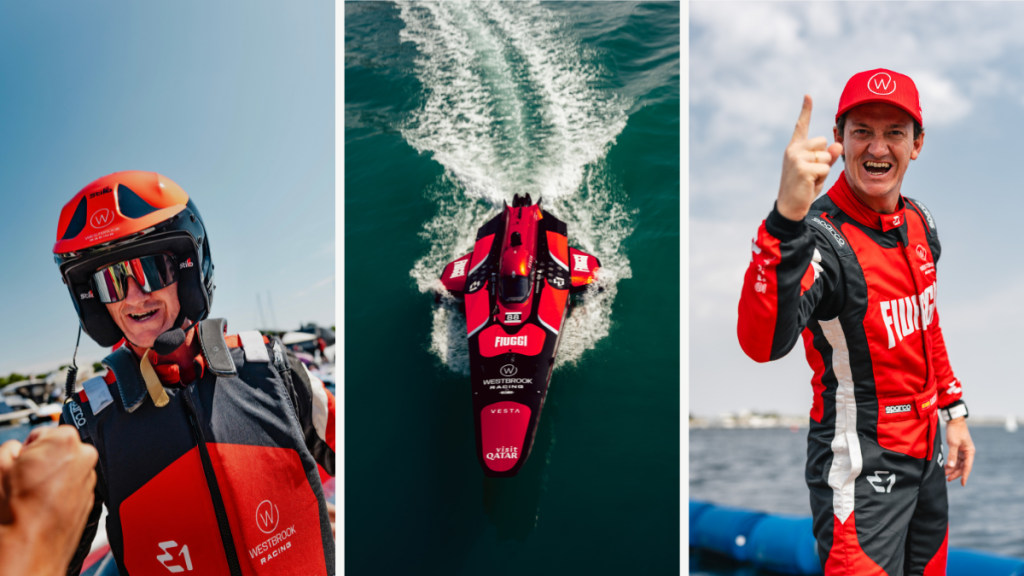
Lucas Ordoñez, racing for Westbrook, came from endurance motorsport but grew up sailing off Spain’s coastlines. He made history as the first-ever winner of GT Academy, transforming from a Gran Turismo gamer into a professional racing driver.
He has competed in some of the biggest endurance races in the world, including the 24 Hours of Le Mans, and now brings his elite motorsport experience to E1 as a pilot for Will Smith‘s team. “I love sailing, I love boats, I love spending time in Mallorca and Galicia. I come from endurance racing, and when I heard Alejandro was launching E1 I tried to get involved straight away,” he says.
His teammate, American off-road driver Sara Price, was equally at home on the water. She grew up on a river and explained that racing boats felt natural even if she had never competed in them before.
“I never raced boats, but it was always enticing. I always say with anything, I’ll race anything.” – Sara Price
Price is known as a trailblazer in the motorsport world, respected for her versatile career in both off-road racing and powerboat competitions. As a multi-time off-road champion and a key figure in various racing series, including the UTV
World Championship, she has proven herself as a fearless competitor.
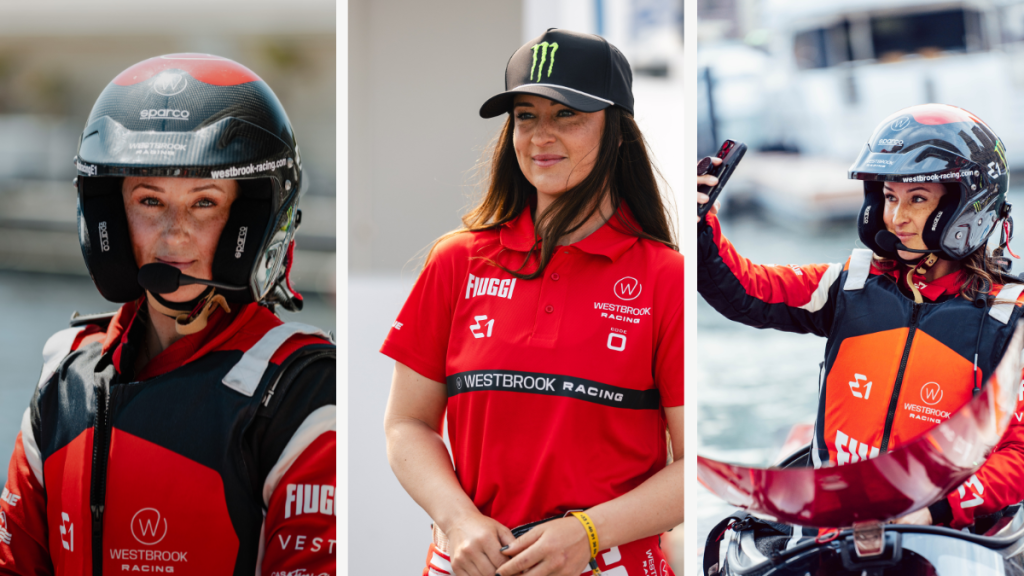
For Saudi Arabia’s Mashael Alobaidan, a free diver and rally driver, E1 represented a different kind of challenge. She was attracted to the idea of a sport that combined speed with environmental awareness, calling it a beautiful challenge that was good for the ecosystem.
“I’m always up for a challenge,” she said. “As a free diver and scuba diver, to know that this combines speed and excitement and is good for the ecosystem caught my attention.”
Alobaidan is known for breaking barriers as the first female to obtain a rally lisence in Saudi Arabia and one of the first female drivers to compete at the highest levels in the Middle East, also becoming the first Saudi female to race in the prestigious Formula 4 UAE Championship.
What unites these paths is that E1 has drawn in competitors who would never normally have shared the same paddock.
Mastering the RaceBird
If entry stories were diverse, the learning curve was universal. Adapting to the RaceBird has required each pilot to leave comfort zones behind.
Ordoñez explained his biggest challenge is racing on a course that is never the same twice. A racetrack is fixed, he said, but on water every wave and corner is different. Price pointed to the difficulty of learning currents and under-water conditions, factors she had never had to consider before.
“In E1, [a] buoy is moved, each wave and each corner is different. Once you get the spray of the water from other RaceBirds you can’t see anything – it’s like being in a washing machine,” he says.
Designed by Norwegian naval architect Sophi Horne and later engineered into a spec craft by E1, it is a 7.5-metre, all-electric powerboat powered by a 150kW outboard motor. What makes it distinctive is the hydrofoiling system; at racing speed, the boat lifts clear of the water, running on three fixed foils that reduce drag and extend battery range.
Visually, the RaceBird has been described by pilots as a “spaceship on water”. Its streamlined cockpit seats one, with safety systems adapted from car racing, and its low-noise propulsion allows it to race in locations that would otherwise be closed to traditional motorsport.
For competitors, though, the futuristic design also presents new challenges. Balancing lift, trim and speed requires a different skill set from cars or jet skis, and once the spray of rivals hits the visor, visibility can vanish in seconds.
Glennon, used to running her own racing programme with her father in jet skis, found it difficult to let go of mechanical control. In E1, much of the technology is standardised, which means pilots must rely on their feel and their feedback to engineers rather than making adjustments themselves.
The decision to keep all RaceBirds identical is deliberate. E1’s centralised model means teams cannot alter performance hardware, ensuring close racing while controlling costs. For the pilots, that makes the human element – reading conditions, reacting to the water, and communicating with engineers – the true differentiator on race day.
Alobaidan, coming from rallying, described her steepest task as mastering lift and trim — an entirely new concept compared with four wheels on the ground. The most challenging part at the beginning was to find the sweet spot to hit the smoothest RPM on a race course,” she says.
Athletes as ambassadors
What also emerged consistently from the pilots is recognition that their role extends far beyond the cockpit.
Glennon was explicit that branding is her “big thing”, recalling that she built a reputation and a social media presence before she had race results during her jet ski career. She now applies the same approach to Team Miami, seeing it as a crucial part of attracting sponsors.
Price highlighted how athletes bring their own fan bases into the sport, creating natural entry points for audiences. She stressed the importance of being personable and real, pointing to the way fans now want to follow individuals rather than just the competition.
“It’s fun to see our fans follow us on this new journey. Everyone gets to pick who they relate to, who they want to cheer for,” she says. “If we’re all robots, at the end of the day no one can understand who you are.”
For Ordoñez, pilots must be turned into superstars if the sport is to replicate the audience pull of Formula 1. “To make the sport grow, the pilots need to become superstars. In F1 you have Hamilton, and that really brings fans,” he says.
Alobaidan saw personal branding as a responsibility, particularly in inspiring young Saudis and children around the world who she said come to races wide-eyed at what the pilots are doing.
“When it comes to PR we have a responsibility to inspire the younger generation. If you come to our races you’ll see plenty of kids with wide eyes. That’s close to my heart.” – Mashael Alobaidan
The celebrity effect
If the pilots bring authenticity, celebrity team owners bring reach.
The roster already includes Will Smith with Westbrook Racing, Marc Anthony with Team Miami, Steve Aoki with Aoki Racing Team, Rafael Nadal with Team Rafa, Tom Brady with Team Brady, Didier Drogba with Team Drogba, Virat Kohli with Team Blue Rising, and Marcelo Claure with Team Brazil. More recently, LeBron James joined the line-up as the face of Team Alula.
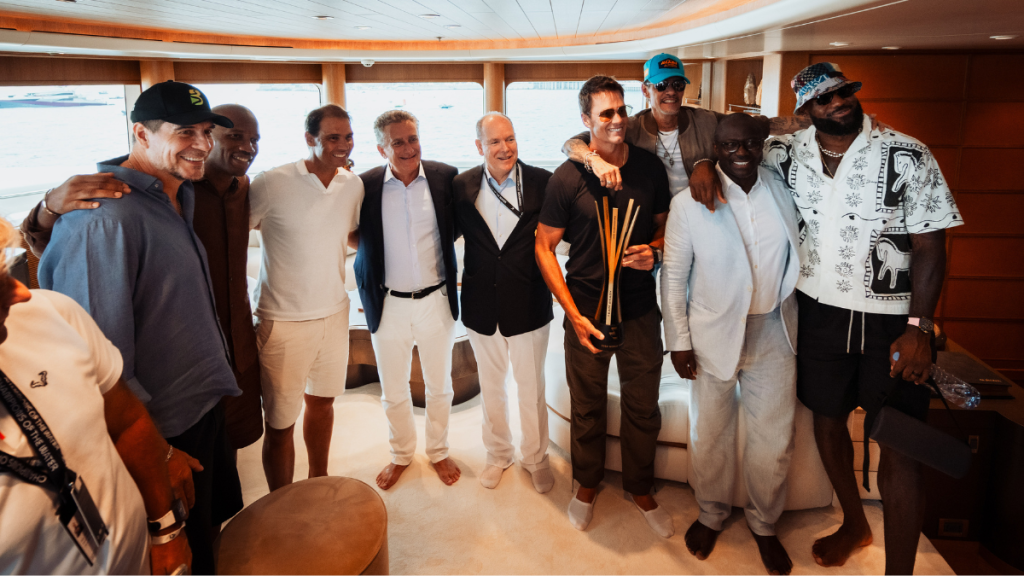
Ordoñez described meeting team owner Will Smith as surreal, recounting that the actor offered hugs and encouragement as though he were another member of the crew. Both he and Price believe Smith is their lucky charm, noting that the team’s first win coincided with his first race visit.
“He hugs you, he gives you good vibes, he’s always pushing you to the limit,” says Ordoñez.
The owners buy into a licence model, with E1 supplying the turnkey RaceBird platform and managing logistics, maintenance and technical support centrally. Investment is directed towards branding, team operations and driver recruitment, while the value proposition lies in equity growth.
Glennon credits Marc Anthony with giving Team Miami an instant fan base. She said the singer’s status as the “king of Miami” meant the city rallied behind the team, with fans turning up in force at the launch event.
For Alobaidan, celebrity ownership extends the sport’s visibility to audiences who would never have otherwise tuned into motorsport, while adding a sense of fun – including the much-talked-about owners’ WhatsApp group where banter flows between Will Smith, Tom Brady and Rafael Nadal.
“Celebrities from different sports and industries have huge followings, and this opens the door for audiences not reading into motorsport to get introduced to the sport,” she says.
Venues and aspirations
The mix of celebrity and pilot perspectives is particularly visible when it comes to destinations. The 2025 E1 season spans seven race venues across four continents, beginning in the Middle East — first in Jeddah, Saudi Arabia, then in Doha, Qatar — before moving on to Europe.
Dubrovnik made a return as a new host, followed by Lago Maggiore in Italy and the classic stop in Monaco. Later in the season, the championship pushes into new frontiers with Lagos, Nigeria – the first African stage – and a finale in Miami.
For Glennon, the upcoming Miami race is not just a commercial test for the series but a career milestone. She said the professionalism and exposure of E1 makes her feel like a rock star, something she is eager to share with her family at home.
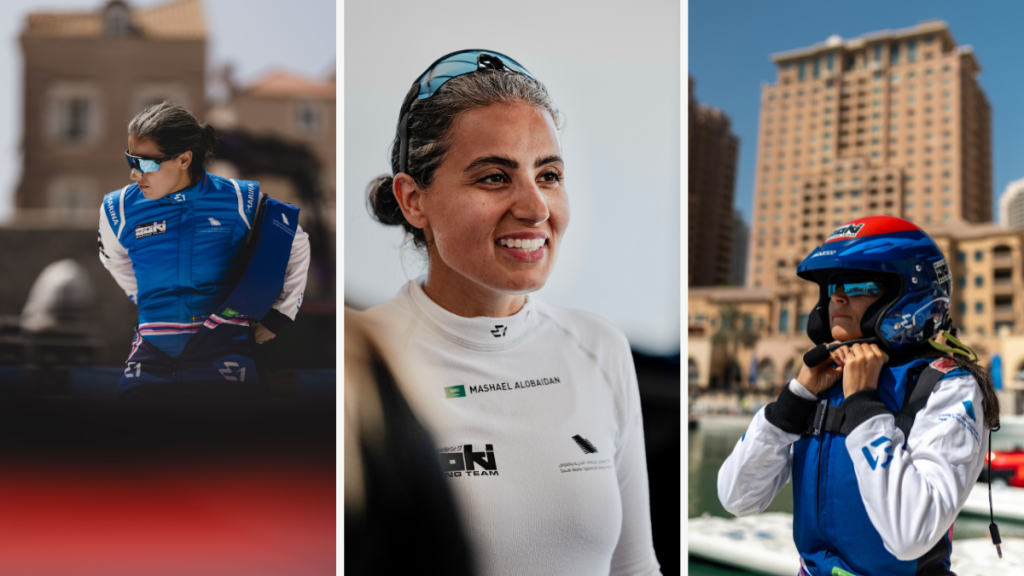
When asked where they’d like to take the racing for the 2026 season, Alobaidan says she’d love to race in the Red Sea or even Tokyo, while Price dreams of racing in her hometown of Lake Havasu. Ordoñez would like to bring the series back to Spain, and also suggested cooler locations such as Iceland, where fans could see the RaceBirds foil close to the shore.
Racing against time
E1’s future will depend on whether it can turn novelty into loyalty – from fans, investors and host cities alike. That depends not just on the futuristic technology or the celebrity names but on whether the pilots’ stories resonate.
The pilots understand their dual role. They are racing pioneers, adjusting to the unpredictability of water, but also ambassadors, using their voices to build a sport from the ground up.
If E1 succeeds, it will be in no small part because Glennon, Ordoñez, Price and Alobaidan – alongside the rest of the pilots – are helping audiences see themselves not only in the spectacle of the RaceBirds, but in the people who fly them.
The Lagos GP will take place on October 4-5, 2025.