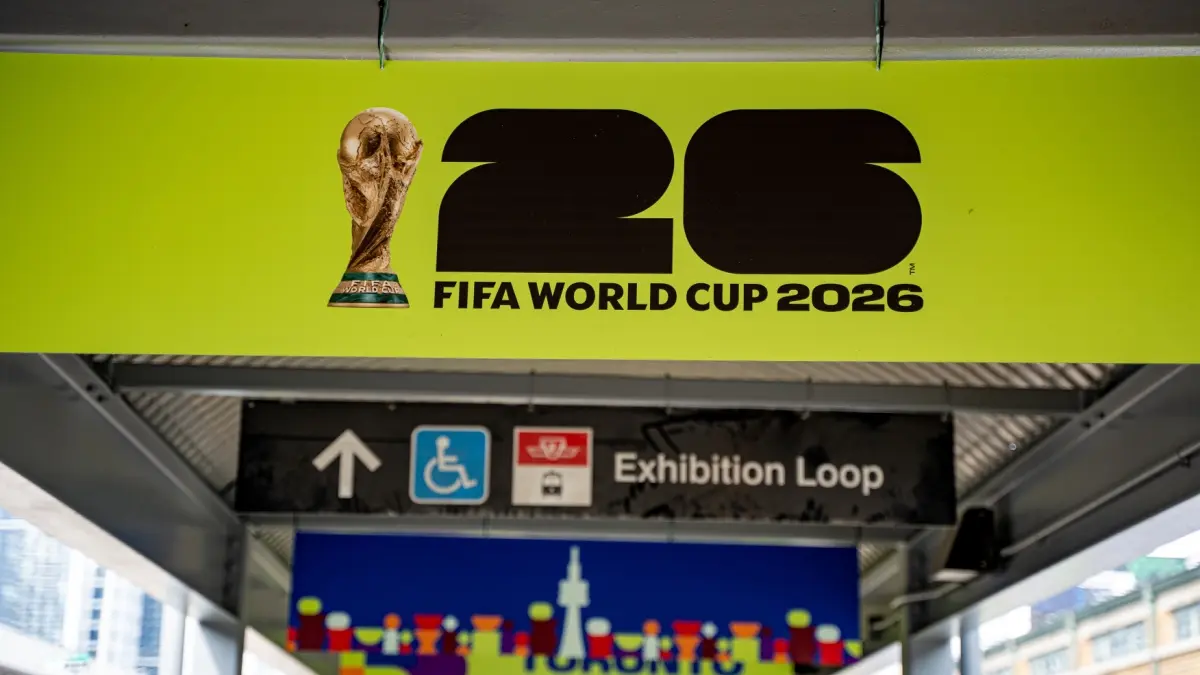



The 2026 World Cup in North America kicks-off 223 days and while that may still seem far away, international brands are already putting plans in place to match the enormity of the world’s most-watched sports competition.
The 2026 edition will be the largest in World Cup history, with more teams and games than ever before. This is why World Cup sponsors such as Coca-Cola have begun unveiling specialised 2026 World Cup branded bottles.
Writing for Insider Sport, Will Ramos, Senior Strategy Director at We Are Social, reveals why the World Cup next summer can become a multi-year cultural moment for brands, not just internationally, but locally.
Ramos describes the opportunity staring many companies across Canada, Mexico and the US in the face as a defying moment, not just for a one month sponsorship, but a potentially life-long relationship with both the sport, players and fans.
The 2026 World Cup isn’t just bigger. It’s fundamentally different.
With 48 teams, 104 matches, and a footprint stretching across three countries and 16 diverse cities, this tournament will challenge how brands think about sports marketing and cultural connection.
Billions will tune in, but the sheer scale brings fragmentation: more teams, more narratives, more noise. The old “sponsor and shout” model won’t cut it. Marketers need new approaches to navigate what will be the most complex global sporting event ever staged.
Fandom isn’t one audience
Soccer fandom is a fractured, multifaceted ecosystem shaped by diverse identities, motivations, and cultural influences. Three dynamics stand out:
● Heritage and identity: For many, fandom is generational, tied to diasporas and cultural pride. Hispanic and immigrant communities in the US and Canada are reshaping the sport’s cultural landscape. Brands that honor these ties, like McDonald’s aligning with Hispanic Heritage Month around previous World Cups, connect on a deeper level.
● Play-first fandom: Many fans follow players before teams. Cristiano Ronaldo’s billion-plus social followers illustrate the gravitational pull of athletes. During the 2022 World Cup, adidas leaned into this by spotlighting individual athletes–from Lionel Messi to Jude Bellingham–showing how players have become cultural icons in their own right.
● Social-first casuals: Some tune in less for goals than for the culture around the game: memes, fashion, music, viral moments. At the 2014 World Cup, Beats by Dre captured this audience by blending soccer with music and lifestyle storytelling, proving that not every entry point is about on-field stats.
Understanding these personas is critical. It’s not just “soccer fans” anymore; it’s overlapping communities that require tailored, authentic engagement.
Local nuance is the new currency
With matches in cities from Miami to Vancouver to Mexico City, no two fan experiences will look alike. Each host city brings its own cultural fabric and expectations. That makes hyper-localisation essential.
During the 2014 World Cup in Brazil, Coca-Cola localised its activations by tapping into regional music and street art. In 2026, brands will need to go even further, partnering with local creators, investing in neighborhood events, and ensuring activations feel born of the community, not parachuted in. Fans are quick to spot when campaigns feel generic or performative.
Managing scale and content overload
The World Cup’s 104 matches mean relentless content. Not every game will grab global headlines, but every moment has cultural potential. Social media will function as a “second screen,” with fans creating their own narratives in real time.
That demands agile content strategies. Brands that wait for polished TV spots will be outpaced by those ready to respond in the moment. During the last men’s World Cup, Oreo and Popeyes stood out by riding viral moments within hours. Expect even faster cycles in 2026, with fan-made memes and clips shaping the story before broadcasters do.
Thinking beyond the game
2026 will test endurance. Matches span thousands of miles, climates range from desert heat to northern chill, and the expanded schedule risks fatigue for both players and fans.
That opens a new lane for brands: supporting wellness and relief. At the 2020 Tokyo Olympics, Visa built cooling stations for fans. In 2026, opportunities include hydration partnerships, recovery-focused digital content, or even mental wellness activations that recognize the toll of marathon tournaments.
Start early, stay consistent
World Cup conversations are already building years in advance. Brands that wait until kickoff risk being drowned out. The Women’s World Cup showed how long-tail engagement pays off, Visa and Budweiser seeded stories months ahead of the tournament, giving them momentum before the first whistle.
The lesson: treat 2026 as a multi-year cultural moment, not a one-month sponsorship.
A playbook for marketers
To cut through the clutter, brand should:
1. Segment the fanbase: Recognise heritage fans, player-first followers, and social-first casuals. Design activations that speak to each.
2. Leverage athletes authentically: Work with players as cultural voices, not just endorsers.
3. Invest in local cultural fluency: Tailor activations city-by-city, collaborating with communities to earn trust.
4. Be agile with content: Plan for real-time responsiveness and creative flexibility.
5. Support human needs: Create experiences that prioritise well-being for fans and players alike.
The 2026 World Cup won’t just be the biggest sporting event ever, it will be a stress test for how brands understand culture, community, and complexity. Those who approach it as a sponsorship will be forgotten.
Those who approach it as a cultural phenomenon, with humility and creativity, will earn lasting relevance.