


As the Ashes return in Perth, England’s expanded Vitality deal and Australia’s controversial Westpac front-of-shirt are turning traditionally “clean” Test whites into valuable, and increasingly contested, sponsorship real estate
On the eve of the men’s Ashes in Perth, the European Cricket Board quietly redrew its commercial map.
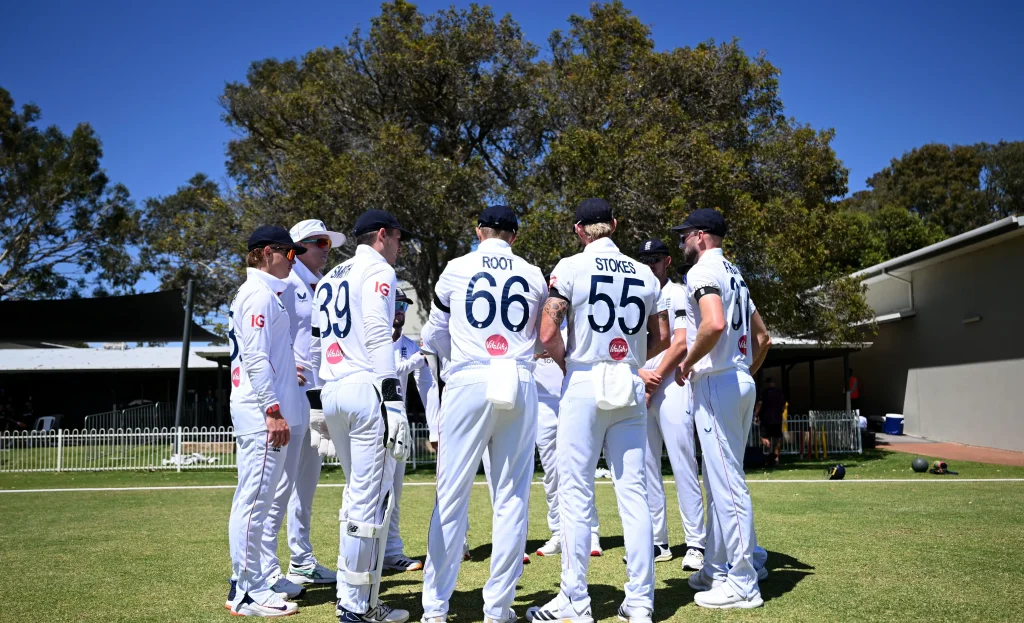
Vitality, already one of English cricket’s most visible partners, has become the first brand to appear on the back of England’s shirts, with the new logo making its Test debut as Ben Stokes led his side out in Western Australia.
The move is an expansion of a relationship which now runs across almost every corner of the domestic and international calendar. Vitality’s branding already fronts the men’s and women’s international T20s, the Vitality Blast and recreational T20 competitions, and it also holds the “Official Wellness Partner” tag for both Test cricket and The Hundred.
The move extends a relationship that now runs through almost every corner of the domestic and international calendar. Vitality already fronts the men’s and women’s international T20s, the Vitality Blast and recreational T20 competitions, and holds the “Official Wellness Partner” tag for both Test cricket and The Hundred.
The new back-of-shirt slot gives the insurer another broadcast and retail touchpoint, just as English cricket enters a packed 18 months on home soil. The ECB is leaning on that ecosystem as it builds towards hosting the ICC Women’s T20 World Cup in 2026, a women’s Test against India at Lord’s and the second edition of the revamped Vitality T20 Blast Women’s competition.
For England, the deal also fixes a clear pecking order on the kit. Toyota, which replaced Cinch as principal partner earlier this year, sits on the front of the shirt, with Castore as technical supplier. Vitality now takes the back panel, completing a sponsorship spine that mirrors the ECB’s broader commercial strategy.
A target on their shirts
If Vitality’s arrival on the back of England’s whites feels like an incremental, almost inevitable evolution, the story on the other side of the contest has been more turbulent.
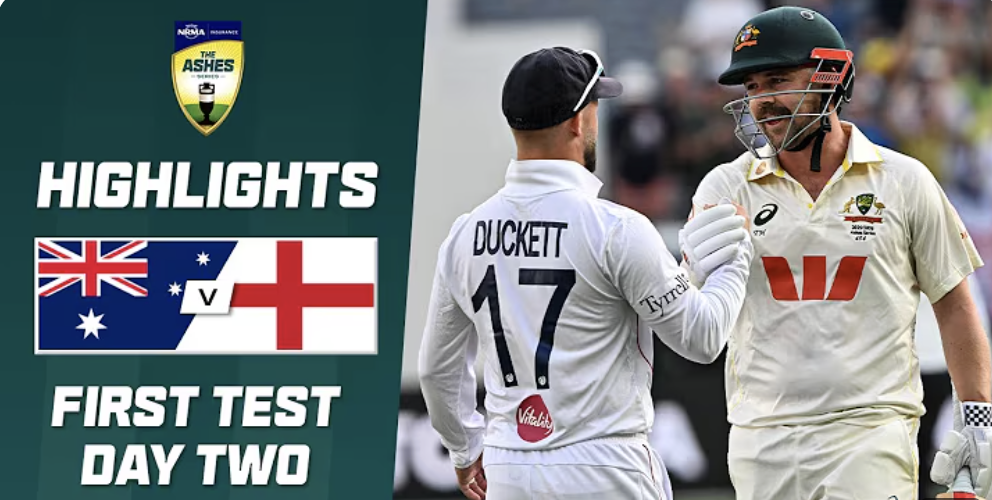
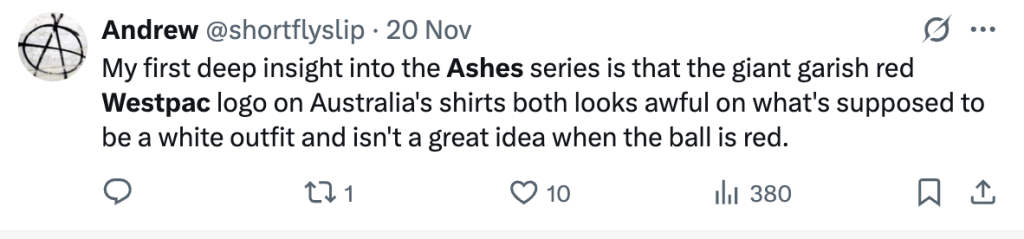
In Australia, the Test shirt has become the centre of a mini culture war. Westpac’s bright red “W” logo, applied squarely across the front of the traditional cream kit as part of the bank’s new principal partnership with Cricket Australia, has triggered a wave of criticism from fans and some former players.
Supporters on social media have complained the bold block of red “ruins” the understated aesthetic of the whites, arguing that names, numbers and now an outsized sponsor mark have pushed the design too far away from the sport’s heritage. Former batter Damien Martyn, who had already voiced discomfort with Test front-of-shirt branding in previous seasons, has been widely referenced in that debate as a traditionalist voice.

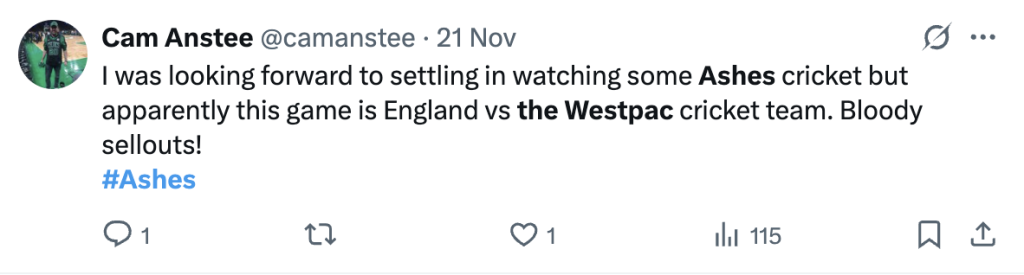
Westpac’s deal, which began in July, puts the bank on the front of the men’s and women’s national team shirts across all formats played on home soil, as well as on Australia A and under-19 sides, and extends into both Big Bash leagues.
The partnership is positioned around community investment, women’s cricket pathways, inclusion teams and First Nations programmes, part of a wider effort by Cricket Australia to show sponsors contributing more than just logo spend.
A global arms race for the chest and back
By 2025, front-of-shirt deals in international cricket are dominated by financial services, automotive and consumer brands. Westpac’s agreement with CA, Toyota’s partnership with the ECB, Suzuki’s sponsorship of South Africa’s ODI sides, and long-running deals such as ANZ with New Zealand and Pepsi with Pakistan, underline how central the jersey has become to cricket’s commercial model.
In that context, Vitality’s move onto the back of England’s Test shirts is less about breaking new ground and more about filling in the remaining gaps. The insurer already has deep roots in county T20 through the Vitality Blast and in recreational cricket through community programmes.
The early backlash to Australia’s new kit is unlikely to reverse the direction of travel. Sponsors are underwriting player salaries, central contracts and, increasingly, development programmes. Cricket boards cannot easily afford to turn away eight-figure partnerships tied to shirt inventory, especially in markets where media rights values have plateaued.
What the Ashes has done, again, is expose the tension between tradition and commercial necessity. Some boards, like the ECB, appear to be opting for a layered, more incremental approach, spreading brand presence across multiple touchpoints and formats rather than relying on a single dominant logo in the most visible real estate. Others, like CA, are testing how far they can push the front of the shirt without permanently alienating their core supporters.