Could a reported agreement in principle between the WNBA and its players signal a shift in the league’s economic model?
The WNBA and its players’ union have reportedly reached an agreement in principle on a new collective bargaining agreement (CBA), with reported terms pointing to a significant overhaul of the league’s economic structure.
According to reports from ESPN, the deal includes a substantial increase in team salary caps, enhanced revenue sharing, and a sharp rise in both maximum and minimum player salaries, marking what both sides have described as a “transformational” moment for the league.
While the agreement has not yet been formally ratified, the headline figures illustrate the scale of change under discussion.
The most notable development is a reported increase in the team salary cap to $7m, up from approximately $1.5m under the current framework.
Player compensation is also set to rise significantly. ESPN reports that:
- The supermax salary will start at $1.4m
- The average salary is expected to reach around $600,000
- The minimum salary will exceed $300,000
These figures would represent a step change for the WNBA, where salaries have historically lagged behind other major professional leagues and have often required players to supplement income through overseas contracts.
Revenue sharing expanded
The proposed agreement also includes an average revenue share of nearly 20% across the duration of the deal, according to ESPN.
This marks a notable evolution in how players participate in the league’s financial performance. Previous agreements introduced bonus structures linked to league success, but the latest framework suggests a more direct alignment between revenue growth and player earnings.
Neither the league nor the Women’s National Basketball Players Association has publicly released a full breakdown of how this revenue share will be calculated or distributed.
Agreement follows stalled negotiations
The breakthrough comes after negotiations between the league and the Women’s National Basketball Players Association (WNBPA) had reportedly stalled earlier in the week, following extended talks.
Both sides have since framed the outcome as a major step forward.
WNBA Commissioner Cathy Engelbert described the agreement as “transformational”, while union representatives have highlighted the role of player unity in securing improved terms.
At the time of writing, the agreement remains subject to formal ratification, and a complete term sheet has not been made publicly available.
Growth backdrop informs deal
The new CBA has been negotiated against a backdrop of sustained commercial growth for the WNBA.
The league has secured expanded national broadcast exposure through deals with partners including ESPN, CBS and Amazon Prime Video, increasing both the volume of games shown and their prominence in scheduling.
Sponsorship revenues have also risen, with the WNBA adding new brand partners across categories such as finance, technology and consumer goods, while existing partners have expanded their commitments amid growing visibility for the league and its players.
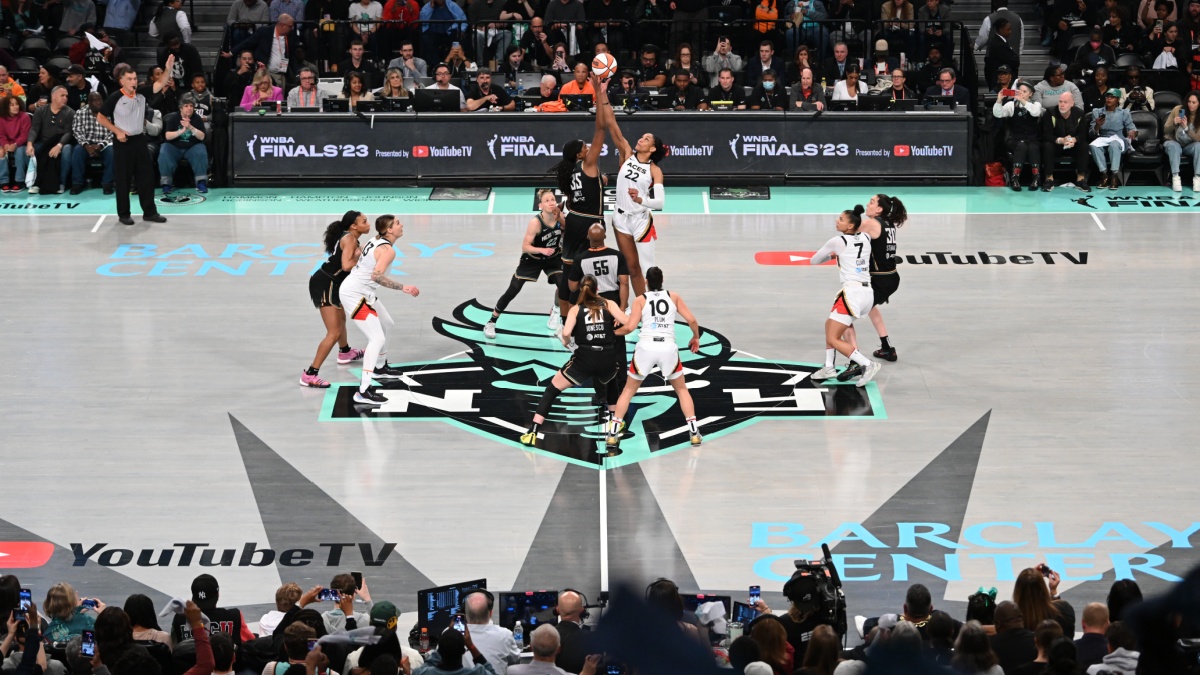
According to reporting from Insider Sport, the league’s 2025 opening weekend saw 89% of arenas near full capacity, with multiple sell-outs across key fixtures, including the Golden State Valkyries’ debut at the 18,064-capacity Chase Center and the New York Liberty’s home game at Barclays Center.
Across the 2025 opening weekend, the WNBA recorded average attendance of 8,487, representing a 36.7% increase year-on-year.
This follows a strong 2024 season, where total attendance reached 2.35 million fans, the league’s highest figure in 22 years, alongside 154 sell-out games, up from just 45 the previous season. Average attendance also rose to 9,807 per game, compared to 6,615 in 2023.
This growth has coincided with the rising visibility of star players and increased investment from existing NBA ownership groups and new stakeholders. The reported financial terms suggest that both parties are seeking to reflect that trajectory within the league’s labour framework, particularly through higher salary ceilings and expanded revenue participation.
A new phase for the league?
The scale of the reported financial changes positions the agreement as one of the most significant in the WNBA’s history.
By comparison, the 2020 CBA was widely regarded as a turning point for player conditions, introducing improved salaries, travel standards, and maternity benefits. The latest deal appears to build on that foundation, with a stronger emphasis on revenue participation and top-end earnings.
For now, however, many of the details remain contingent on final ratification and official publication.