A new report from America’s largest hotel association, AHLA, finds international travel barriers and FIFA room block cancellations are undermining World Cup economics
Close to 80% of hotel operators in host cities for this summer’s upcoming FIFA World Cup 2026 are recording bookings below initial forecasts ahead of the tournament’s June 11 kick-off, a new report from the American Hotel and Lodging Association (AHLA) has revealed.
The findings, based on a survey of hotel owners and operators across all 11 US host markets, paint a picture of fragmented, underwhelming demand – not in terms of ticket sales, which FIFA reports have exceeded five million, but in terms of who is actually travelling to fill the seats and the rooms around them.
The primary issue identified by the AHLA is a marked imbalance between domestic and international visitors, with forecasts showing the former is heavily outpacing the latter.
This could have wider commercial repercussions, with research cited in AHLA’s report from the US Travel Association indicating international World Cup visitors are expected to spend around $5,048 per person. This is roughly 1.7 times more than a typical international traveller to the US – with international travellers more likely to extend their trip across multiple destinations over several weeks as compared with domestic match attendees.
AHLA’s report suggests domestic travellers tend to cluster around match days on shorter, game-focused itineraries.
So why are international travel figures below expectations?
Some 70% of those surveyed by AHLA cite visa barriers and geopolitical concerns as the dominant constraints on international demand for hotel bookings.
There are also travel bans currently affecting nationals from four World Cup-competing countries, while a US Visa Bond Pilot Program – requiring deposits of up to $15,000 per person before a tourist visa is granted – now applies to fans from five World Cup-qualified nations: Algeria, Tunisia, Senegal, Ivory Coast and Cape Verde.
Has a room block collapse distorted the picture?
According to the AHLA, there are also structural issues which may have distorted early demand expectations for hotel bookings. FIFA had secured large pools of hotel inventory across host cities months in advance, locking in rooms which has created an artificial signal of strong early interest.
As this inventory has since been released – with cancellations in some markets reaching 70-95% of originally contracted rooms – hotels have been left scrambling to backfill capacity at short notice.
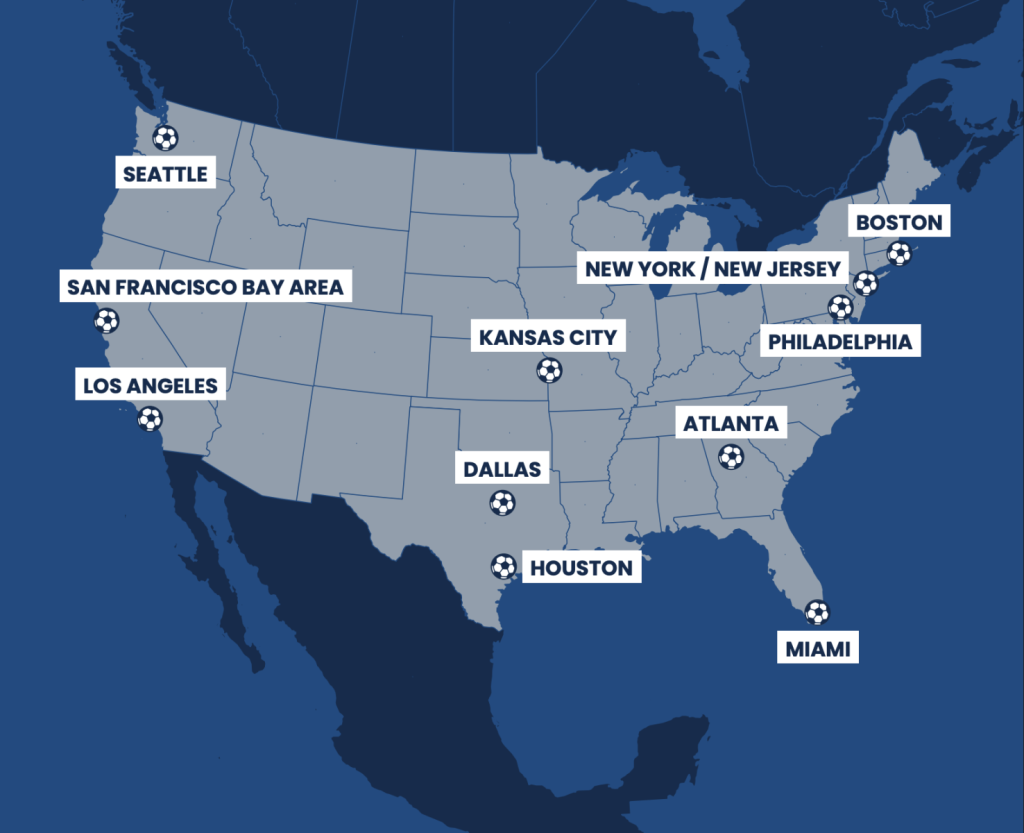
AHLA identifies Boston, Dallas, Los Angeles, Philadelphia and Seattle as the most affected markets. In some cases, blocks were cancelled just three months out from the tournament, with entire reservations returned having never been picked up by a single guest.
Per reporting from The Athletic, FIFA has disputed the characterisation, stating all room releases were conducted within contractually agreed timelines and that communication with hotel partners was maintained consistently throughout planning.
Kansas City emerges as the most acutely impacted host city in the survey, with 85-90% of respondents reporting below-expectation booking pace, while Miami and Atlanta offer the most positive reading, with around 50-55% of respondents in both cities reporting bookings in line with or ahead of projections, buoyed by team base camps, strong air connectivity and leisure demand.
Rising costs add further friction
The report also turns its attention to a series of last-minute cost increases being introduced across host markets, which AHLA argues risks compounding an already difficult demand environment.
In New Jersey, a proposed temporary tax package would raise the lodging tax by 50% and the sales tax rate on prepared food by 45% during the tournament period. A Morning Consult poll cited in the report found 86% of New Jersey residents believe the hikes would jeopardise the state’s World Cup economic benefits.
New Jersey Transit‘s announcement of $150 round-trip rail fares to MetLife Stadium on match days – against a standard fare of $12.90 – drew criticism from FIFA itself for a potential chilling effect on attendance. Similar surcharges have emerged in Los Angeles and Boston.
Despite the troubling indicators, AHLA notes CoStar projects national revenue per available room will grow 1.7% during tournament months – vs just 0.2% without the World Cup – suggesting the tournament retains the capacity to deliver a meaningful uplift if barriers to international travel can be reduced in the weeks remaining before kick-off.