













FIFA has confirmed China Media Group as the official broadcaster for the next two men’s and women’s World Cups, easing concerns over its presence in one of football’s most important markets while negotiations in India remain unresolved.
FIFA has secured one of its most important outstanding broadcast agreements ahead of the 2026 FIFA World Cup after confirming China Media Group (CMG) as the official broadcaster in China for the next two editions of both the men’s and women’s tournaments.
The agreement covers the FIFA World Cup 2026 and FIFA World Cup 2030, as well as the FIFA Women’s World Cup 2027 and FIFA Women’s World Cup 2031, extending a long-standing relationship between FIFA and Chinese state broadcaster CMG.
The deal arrives just weeks after concerns emerged over FIFA’s ability to finalise broadcast agreements in both China and India, two of the world’s largest media markets. Insider Sport previously reported the two countries accounted for 22.6% of global digital streaming reach during the 2022 World Cup in Qatar.
At the time, no broadcaster had been confirmed in either territory despite the tournament drawing closer, raising questions over broadcaster appetite, media rights valuations and FIFA’s ability to maintain the global reach expected from its flagship competition.
“It’s a real pleasure that we have found an agreement with CMG,” said FIFA Secretary General Mattias Grafström.
“The Chinese market is of very big importance to the global football community. We know the passion of Chinese football fans, and we’re very happy and proud of our partnership with CMG to bring the FIFA World Cup to all fans in China.”
China remains critical to FIFA’s global ambitions
While China’s men’s national team has not qualified for a FIFA World Cup since 2002, the country remains one of FIFA’s most commercially important international markets.
State broadcaster CCTV, now operating under CMG, has historically held World Cup broadcasting rights in China, with the 2018 and 2022 tournaments both widely distributed across the country through the broadcaster’s television and digital networks.
For FIFA, securing China was always likely to be viewed as strategically important beyond simple rights revenue.
The 2026 World Cup will be the first edition of the tournament to feature 48 teams, expanding from 32 nations and increasing the total number of matches from 64 to 104. FIFA has repeatedly described the competition as its “most inclusive” World Cup to date, while also using the tournament expansion to unlock new commercial inventory and sponsorship opportunities.
China’s scale remains central to that strategy.
The country is the world’s second-largest by population and represents a major digital consumption market for football. FIFA also highlighted the role the agreement could play in supporting the Chinese Football Association’s youth development ambitions, noting both the men’s and women’s U-17 national teams have qualified for FIFA youth tournaments this year.
The governing body has also increased engagement with Chinese football authorities in recent weeks. FIFA Chief Football Officer Jill Ellis and Chief of Global Football Development Arsène Wenger both visited China recently as part of broader collaboration efforts with the Chinese Football Association and government stakeholders.
Grafström added: “CMG have been a strong partner for the last 50 years and having them on board for the next two editions of the FIFA World Cup and the FIFA Women’s World Cup will really enhance the way the tournament will be broadcast.
“CMG are at the forefront of broadcast technology, so we’re really looking forward to taking this World Cup, the first with 48 teams, to the next level.”
India negotiations still unresolved
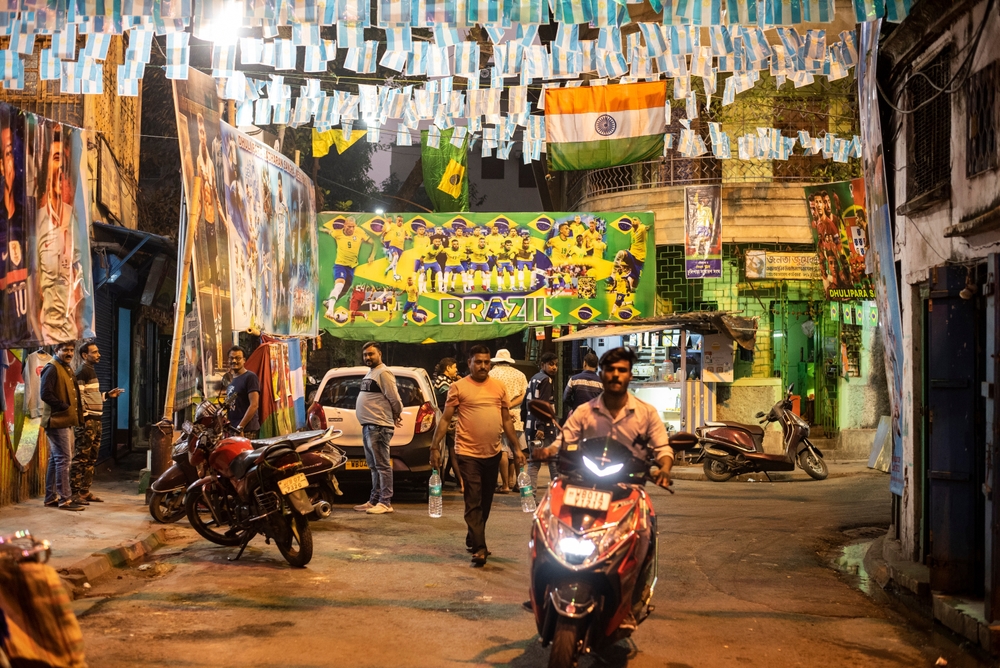
While FIFA has now secured certainty in China, questions remain over the status of negotiations in India.
Insider Sport previously reported that FIFA was facing a substantial valuation gap in discussions over Indian rights for the 2026 tournament.
According to Reuters, a Reliance-Disney joint venture had reportedly offered around $20m for the rights, significantly below FIFA’s earlier expectations, which were initially believed to be closer to $100m before being reduced.
Sony was also reported to have stepped away from negotiations after deciding the commercial economics did not justify the investment.
Broadcasters are understood to have concerns around late-night kick-off times for Indian audiences due to the tournament’s North American hosting schedule, alongside questions over advertiser demand in a market where cricket continues to dominate sports media spending.
The contrast between China and India may also reveal broader shifts taking place across the sports media rights industry.
While premium live sport remains one of the most valuable assets in broadcasting, rights buyers have become increasingly selective as media companies balance rising costs against uncertain advertising markets and changing viewing habits.
In Europe, several major rights cycles have already demonstrated that even elite properties are no longer guaranteed aggressive bidding wars. France’s Ligue 1 has faced prolonged media turbulence in recent seasons, while global streaming platforms have become more cautious around large-scale sports investments.