











Entain has urged six Premier League clubs to drop unlicensed betting sponsors, escalating pressure on football’s links to offshore gambling operators.
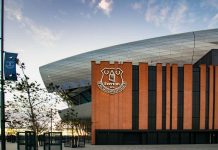
Entain has written to six Premier League clubs, including Everton and Bournemouth, calling for an end to partnerships with unlicensed gambling operators.
Simon Zinger, Entain’s General Counsel, penned the letters to the teams, continuing a campaign against unlicensed betting sponsors which has already seen Stella David, the firm’s CEO, appeal to the Premier League and the UK’s Independent Football Regulator.
The letters, seen by Insider Sport’s sister publication SBC News, are part of a wider campaign urging clubs to commit to UK‑licensed sponsors only.
Zinger wrote to executive figures at Burnley, Bournemouth, Fulham, Everton, Sunderland and Wolverhampton Wanderers, calling on the top-tier sextet to ‘commit to only using UK-licensed gambling sponsors next season’.
Entain slams ‘aggressive marketing’ of unlicensed operators
Burnley is partnered with 96.com, Bournemouth with BJ88, Fulham with SBOTOP, Everton with Stake, Sunderland with W88, and Wolves with DEBET.
With the exception of Stake, all of these firms are ‘Asian-focused’ bookmakers, and none hold a licence with the British Gambling Commission. All six companies were also at one point licensed in the UK via TGP Europe, an Isle of Man white-label provider.
Stake surrendered its licence in February 2024 after a marketing controversy, and TGP later collapsed in April 2024, receiving a Commission fine in the process.
In letters to Bill Foley, Bournemouth Chairman, and Angus Kinnear, CEO of Everton, Entain’s Zinger stated the FTSE 100 company “is deeply concerned” about the clubs’ respective partnerships with BJ88 and Stake.
“As you will know, Stake’s heavy reliance on cryptocurrency and its history of operating in grey jurisdictions make it a lightning rod for concerns regarding money laundering and lack of player protection,” he wrote to Kinnear.
“Stake’s rapid rise has been fuelled by an unregulated streamer culture that specifically targets the younger demographics your Everton in the Community programmes seek to protect.”
Addressing Bournemouth’s Foley, Zinger wrote: “The sponsorship with BJ88 is particularly concerning given the brand’s lack of transparent corporate history and its focus on the grey market.
“BJ88 has been frequently associated with aggressive marketing tactics in regions where gambling is prohibited, often using unregulated payment methods like cryptocurrency to evade financial oversight.”
“By accepting sponsorship from a firm that operates in the shadows of international law, Bournemouth is actively legitimising the infrastructure used by the global black market.”
Operator calls on clubs to act in place of Premier League
Entain’s David appealed directly to Premier League CEO Richard Masters back in February, arguing “it cannot be right that clubs competing in the world’s most watched football league are promoting gambling brands that do not hold a UK licence”.
From next season onwards, the Premier League will implement a self-imposed ban on front-of-shirt deals with betting companies – whether licensed or unlicensed. Sleeve sponsorships, perimeter LED advertising, and social media marketing, can continue.
There are also no rules preventing clubs from working with offshore betting companies. The Department for Culture, Media and Sport’s (DCMS) current rules state clubs can continue to do so as long as an unlicensed company is not directly targeting British customers – a reflection of the league’s global visibility.
Concerns around the extent of black market gambling activity in the UK, as well as public and political frustration with gambling advertising in general, have led to DCMS consulting on whether to ban unlicensed betting firms from sponsoring British sports outright.
“I welcome the government’s intention to crack down on this,” Zinger wrote in his letters to Bournemouth and Everton.
“Going beyond the Premier League’s voluntary front-of-shirt gambling ban from next season, they are consulting on banning all unlicensed, illegal gambling operator sponsorship in sport, including sleeve patches and perimeter boards.”
Entain is clearly not waiting around for the DCMS’ Illegal Gambling Taskforce to complete its consultation, however – perhaps having taken note of how long UK political processes around gambling regulation have been in the past.
The company is also not satisfied with the Premier League’s response to its CEO’s February appeal, as Zinger’s letters outline.
“With the Premier League failing to show sufficient leadership, I am appealing to you directly,” Zinger wrote to Bournemouth’s Foley, also citing the clubs’ commitments under the Premier League Owners’ Charter.
An appeal to regulation
Entain has drawn attention to charter provisions that clubs operate “in an economically stable, sustainable, and socially responsible manner” and “with good faith, honesty and the highest possible standards of professional behaviour and sporting integrity”.
Zinger argues offshore operators’ illicit activities – the above mentioned statement regarding BJ88’s ‘lack of transparency’ being an example – coupled with Betting and Gaming Council (BGC) estimates of £2.7bn a year staked with unregulated and illegal operators, contradicts clubs’ charter commitments.
“On the evidence set out above, a front-of-shirt partnership with an unlicensed gambling operator cannot be squared with either,” he said, also describing both Bournemouth and Everton as ‘a proud club’ that ‘deserves better than to be sold out to nefarious sponsors’.
The UK gambling sector is facing a lot of pressure in 2026. This is coming in the form of both political scrutiny, particularly around advertising and retail betting activity, and also in the financial burden of heavier taxation.
Against this backdrop, Entain is campaigning heavily around unlicensed sponsorship in football. In this writer’s opinion, this is a very smart move, appealing around a sport that is deeply entrenched in British culture and communities.
The company is also drawing a line between its own regulated activities and those of unregulated firms at a time when many people, whether among the general public or in political circles, aren’t always sure where the difference lies.
This article originally appeared on SBC News, Insider Sport’s sister publication, on 15 May 2026.