


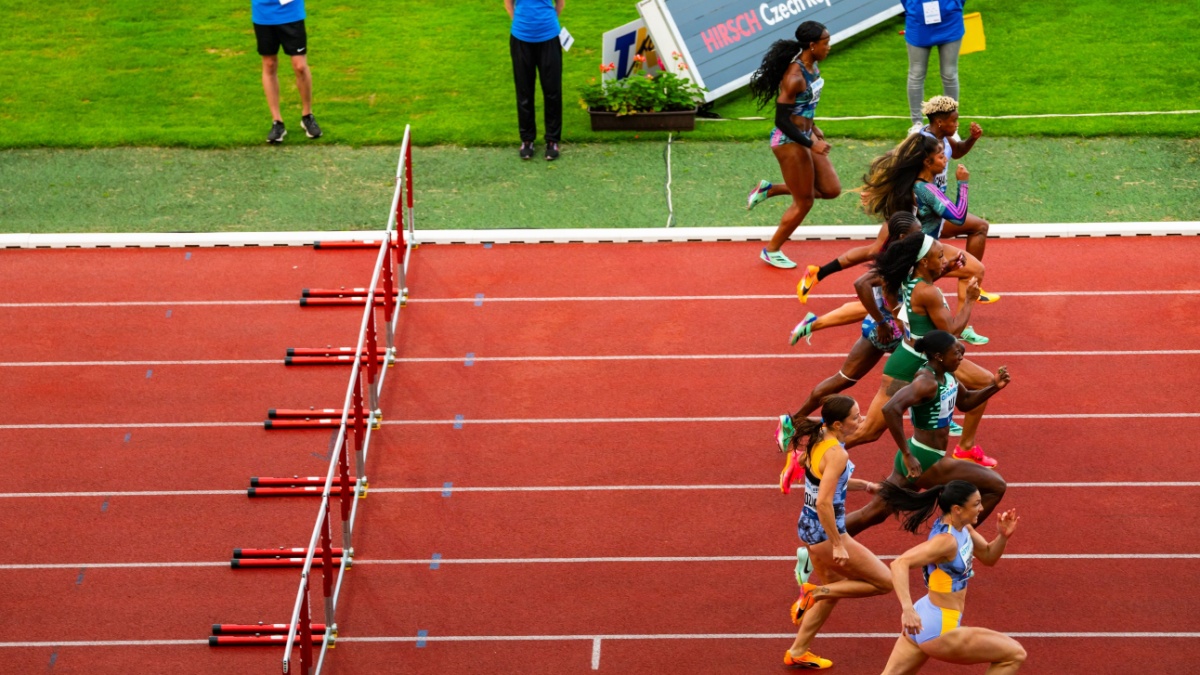
The Childbirth And Return in Elite Sport project will use athlete surveys and scientific research to shape future policies protecting pregnant competitors
World Athletics has opened a new research project examining pregnancy, childbirth and the return to competition for elite female athletes, with the findings set to guide how the sport supports women through motherhood.
The Childbirth And Return in Elite Sport (CARES) project pairs scientific study with direct input from athletes. Its aim is to build a body of evidence to help shape future policies and support systems, reducing the inequities women still face when they choose to start a family during their careers.
The work is being led jointly by the Health and Science and Competition departments at World Athletics, with the World Athletics Athletes’ Commission, the official representative body for elite track and field competitors, feeding into its design.
Two surveys, two perspectives
At the centre of the project are two surveys, both open to female athletes listed in the World Athletics competition performance ranking.
The first is aimed at athletes who experienced pregnancy on or after 1 January 2019 during their elite careers, whether or not the pregnancy led to childbirth.
It gathers information on the return to sport, the barriers and support athletes encountered, and the contractual and financial pressures they faced.
It also asks how world rankings might be protected during maternity leave. This is paired with a retrospective analysis of the World Athletics database, including performance metrics, to add scientific weight to the athletes’ accounts.
The second survey is for elite female athletes who have not been pregnant, drawing on their views of organisational support, maternity-related governance and how ranking policies might work in practice. Both surveys close on 30 September.
Coe and Adams make the case

World Athletics President Sebastian Coe said the project is part of a wider push to level the playing field for women in the sport. He said the governing body is “continually looking for ways to make our sport even more equitable”, adding that CARES is the next step in making sure athletes who become pregnant are protected and able to return without facing barriers.
Coe stressed athletes themselves should drive the work, describing the survey responses and performance analysis as vital to informing what World Athletics does next.
Valerie Adams, Chair of the Athletes’ Commission and a mother of two, welcomed the more open conversation around competing and motherhood. “I am really proud to see World Athletics taking a leading role in encouraging research and more open dialogue about what it means to be a mother and an athlete,” she said.
“When I started my career, you didn’t want to tell your sponsors if you got pregnant because you might get dropped. By the time I retired – as a mother of two – we’re seeing more female athletes coming back from having kids and performing at an elite level.
“I hope that the work being done in this space will further inspire female athletes to not only plan their sporting career, but also plan their life.”
Is the picture changing for mothers in sport?
The project comes as the treatment of pregnant athletes is under far greater scrutiny than it once was. American sprinter Allyson Felix, the most decorated woman in track and field history with 11 Olympic medals, challenged former sponsor Nike in 2019 after the company threatened to cut her pay by 70% if her performance dipped following childbirth.
Nike revised its maternity policy within months, guaranteeing pay and bonuses for 18 months around pregnancy.
Felix, who won six medals at major championships after the birth of her first child, is now coming out of retirement with the aim of qualifying for the 2028 Olympics in Los Angeles.
More recently, British runner Calli Hauger-Thackery completed this year’s Boston Marathon in two hours and 43 minutes while 22 weeks pregnant.