



Govee finds US fans staying home to escape ticket costs, while emerchantpay reveals UK Gen Z willing to risk scams for cheaper World Cup entry.
The 2026 FIFA World Cup is already underway in the US, Canada and Mexico, but more than half of US fans are planning on watching matches from home.
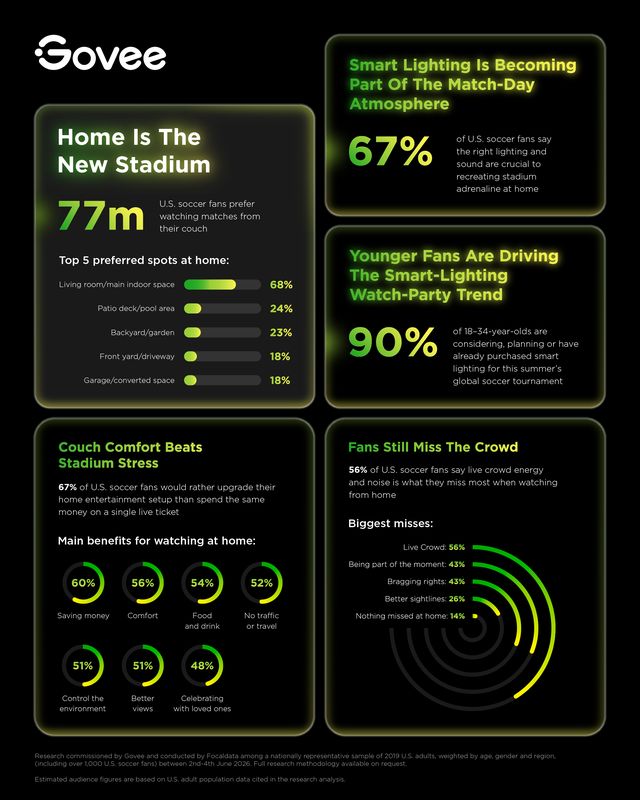
Research from Govee revealed that an estimated 77 million US fans will watch the World Cup from their homes due to the cost of tickets and travel.
The report found that 75% of Americans say the cost of tickets, travel, food and parking has made attending live sporting events less appealing than it used to be, opting for the comfort of their homes, as nearly 70% of US viewers plan to watch or host in the living room or main indoor space.
The cost of ticketing for the 2026 World Cup has been a controversial issue before and during this year’s competition becoming the costliest World Cup to watch in stadiums.
Tickets for the upcoming USA vs. Australia game on 19 June are starting at around $1,800, with some of the most expensive tickets listed at over $13,000.
These ticketing costs are instead being used by viewers to upgrade their home entertainment setups, according to 67% of viewers, instead of spending the same money on a single ticket.
Govee argued homes have now become the default matchday setting that many fans are opting for due to comfort and convenience, as well as a cost-effective way to watch the World Cup.
However, 53% of respondents to the survey admitted that the stadium atmosphere of attending a live game is what they miss the most.
Govee found that viewers have been attempting to replicate this by hosting watch-parties at homes, inviting friends and family over in a bid to recreate the atmosphere and tension rather than spend more on a ticket.
This being primarily driven by 18-34-year-olds, an age demographic that are often less wealthy than older demographics.
Younger US soccer fans have been leading the house watch-party culture and have been implementing elements such as smart lighting to reenact the floodlights of a stadium, according to Govee.
An overwhelming 90% of 18-34-year-olds revealed they are considering, planning or have already purchased smart lighting for this year’s World Cup.
Priced out Gen Z heading to the Black Market?
While some Gen Z US soccer fans may find comfort in watching World Cup games at home watch-parties, there is still a segment of fans that want to attend the games live, but are priced out due to costs.
In the UK, nearly 20% of Gen Z Brits admit that they would be willing to purchase a World Cup ticket from an unofficial website and risk the results of being scammed or a victim of fraud.
This was revealed in research from global payments provider, emerchantpay, which also revealed that young football fans attending the World Cup in the US, Canada and Mexico are showing a strong sign of the heightened dangers of fraud connected to the competition.
According to the report, 51% of Gen Z admit they are concerned about bringing cards on holiday in case they are lost or stolen. Gen Z are at even greater risk of travel scams than other generations as they are increasingly targeted by potentially fraudulent content and offers online.
More than four in ten (43%) of Gen Z have seen an increase in potential scam content on social media over the last 12 months, higher than the UK average of 34%.
George Ralchev, Head of Risk at emerchantpay, said: “Football fans planning a once-in-a-lifetime trip must ensure they’re not putting themselves at risk from unscrupulous ticket scammers this summer.
“Fraudsters target events with high demand and the World Cup is a perfect example as millions of fans might be tempted to take a chance on a ‘too good to be true’ deal on tickets from unofficial websites or social media offers.
“It’s vital that consumers ensure they only use reputable ticket websites or merchants to reduce the risk of fraud and ensure they are protected from scams.”