


















Crypto.com and Robinhood have petitioned the US Supreme Court to rule whether federal law bars states from regulating sports event contracts
Crypto.com filed a petition for a writ of certiorari with the US Supreme Court last week, asking the justices to decide whether the Commodity Exchange Act (CEA) blocks states from regulating sports event contracts. SBC Americas first reported the filing.
The petition follows a Ninth Circuit Court of Appeals ruling against the prediction market operators. Crypto.com and Robinhood confirmed they had separately petitioned the court to review their Ninth Circuit losses to Nevada.
The North American Derivatives Exchange filed its own petition on 11 September, gaming law attorney Daniel Wallach reported. The Ninth Circuit combined the Kalshi, Crypto.com and Robinhood appeals into one ruling, letting all three challenge it separately.
Crypto.com’s petition asks whether the CEA preempts state regulation of sports event contracts traded on a designated contract market. The question mirrors one New Jersey Attorney General Jennifer Davenport put to the court on 3 September in a 332-page petition, raising the prospect that the justices hear the cases together.
Prediction market platforms register with the Commodity Futures Trading Commission (CFTC) and classify their sports contracts as commodity futures rather than wagers, a route that lets them operate in states where sports betting is banned.
A split between two federal courts
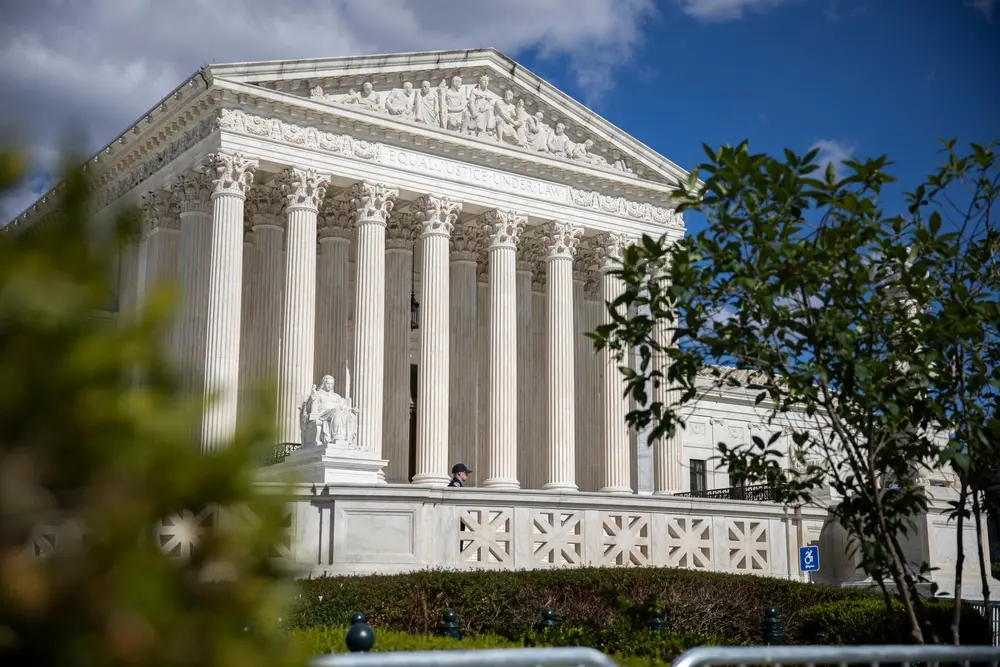
The petitions stem from conflicting rulings. The Ninth Circuit affirmed a district court decision dissolving an injunction that had shielded Kalshi, Crypto.com and Robinhood from the Nevada Gaming Control Board, finding the CEA likely does not preempt Nevada’s gambling laws.
The three-judge panel ruled 3-0. Judge Ryan D. Nelson wrote that the court disagreed with Kalshi’s reading of the CEA and that CFTC rules currently prohibit gaming-related contracts.
The Third Circuit reached the opposite conclusion. It ruled 2-1 on 6 April that Kalshi’s sports contracts are “swaps” under the CEA and that federal law shields them from New Jersey’s gambling laws, according to law firm Holland & Knight. Kalshi has lost its federal protection in Nevada and Utah, with further state suits pending.
Kalshi has not gone to the Supreme Court, but rather asked the Ninth Circuit for an en banc rehearing, which would put the appeal before the full court rather than three judges. Wallach said the Ninth Circuit granted about 1.5% of en banc requests in fiscal 2025.
What Crypto.com ask means for sport
Sports contracts drive most prediction market activity, accounting for more than 85% of trading volume on Kalshi, per a March 2026 Congressional Research Service review. The outcome will determine whether the platforms keep nationwide access or answer to individual state regulators.
Leagues have divided over how to respond. The NHL named Kalshi and Polymarket its official prediction market partners. MLB named Polymarket its official exchange. The NBA wrote to the CFTC calling for greater oversight. The CFTC has sued at least nine states over event contract restrictions.
Elsewhere, athletes have moved into the sector. Giannis Antetokounmpo became a Kalshi shareholder in February and Lionel Messi signed with the platform in June, while FIFA lined up a prediction market partner for the 2026 World Cup.
The Supreme Court is not obliged to take any petition. A denial would leave Crypto.com, Robinhood and Kalshi contesting state regulators one by one, with Ninth Circuit precedent running against federal preemption.