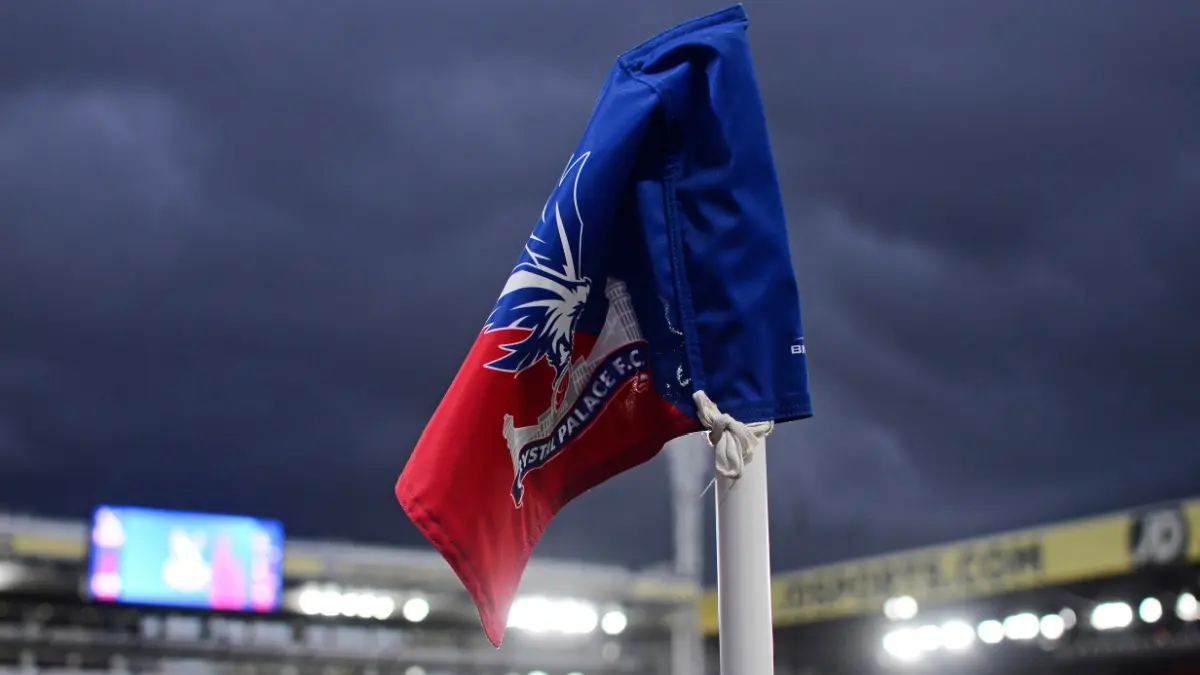




A late ownership sale, UEFA rules and a successful appeal saw Crystal Palace lose their Europa League spot to Lyon. Here’s how it all unfolded step by step.
Crystal Palace’s FA Cup triumph in May 2025 should have marked the start of their first-ever Europa League campaign. But what followed was a cautionary tale about modern football’s entanglement with multi-club ownership and regulatory bureaucracy.
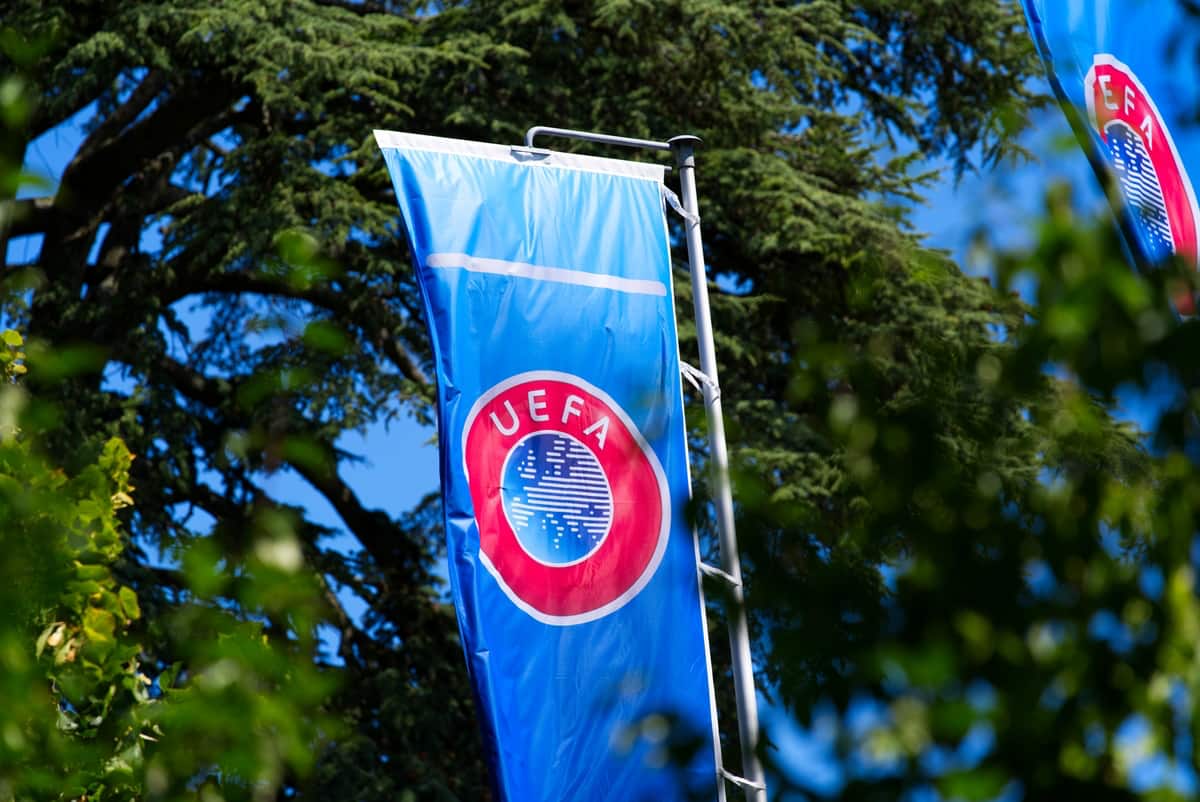
With investor John Textor holding interests in both Palace and French side Lyon – who had also qualified for the competition – UEFA stepped in.
Palace were demoted to the Conference League on July 11, after weeks of legal wrangling, a high-profile stake sale, and even Lyon’s temporary relegation. UEFA’s multi-club ownership rules, designed to prevent conflicts of interest, match manipulation, or shared sporting control, prohibit two clubs under “decisive influence” of the same entity from competing in the same European competition.
With European qualification on the line and financial rewards at stake, enforcement of these rules has become more strict in recent years, especially with the rise of multi-club ownership models.
Here’s how Palace went from celebrating at Wembley to fighting for their place in Europe.
May 17, 2025 – The fairytale begins
Crystal Palace lift the FA Cup after a historic 1-0 victory over Manchester City at Wembley Stadium, thanks to a 16th-minute goal from Eberechi Eze and a crucial penalty save by Dean Henderson.
Palace had lost their previous two FA Cup finals (1990 and 2016), both times to Manchester United. Lifting the trophy at Wembley ended a 164-year wait for silverware and, more importantly, secured its spot in the UEFA Europa League.
However, quietly in the background, another team had also claimed a Europa League spot, French club Lyon, which finished sixth in Ligue 1.

Late May 2025 – Realisation hits
Celebrations quickly gave way to uncertainty. Palace’s place in the Europa League was under threat due to UEFA’s multi-club ownership rules.
Textor’s Eagle Football Holdings owns a controlling stake in Lyon (over 75%) and a significant minority stake in Palace (43%), creating a direct conflict. While Palace qualified via their FA Cup win, Lyon’s 6th-place Ligue 1 finish meant they qualified through league performance – which UEFA prioritises in such cases.
Under UEFA rules, Lyon was considered the “stronger sporting merit” entrant, meaning Palace were relegated to the lower-tier UEFA Conference League.
June 3, 2025 – Palace presents its case
Palace executives, including John Textor and Chairman Steve Parish, met with UEFA in Switzerland to plead their case before the Club Financial Control Body (CFCB).
Their argument centred around Textor owning 43% of Palace but having only 25% voting rights. The club emphasised that Eagle Football Holdings didn’t exert “decisive influence” over Palace’s decisions.
The CFCB reiterated that decisions must be based on structures as of March 1, 2025, a hard deadline for resolving ownership conflicts. Palace argued that Eagle Football didn’t control the club’s operations, but UEFA’s threshold for “decisive influence” is broader than simple majority voting; it includes informal influence, shared executives, or overlapping decision-making infrastructure.
Unfortunately for the Premier League side, UEFA didn’t budge.
June 9, 2025 – Nottingham Forest weighs in
In a surprise move, Nottingham Forest submitted a formal complaint to UEFA, arguing Palace’s ownership structure breached competition rules, as reported by the BBC.
Nottingham Forrest, which had narrowly missed out on European qualification, argued that UEFA’s failure to act would reward a breach of governance rules. If Palace were removed from the Europa League, Forest, which finished 7th in the Premier League, would be next in line to take their spot.
Owner Evangelos Marinakis, who has been vocal on financial regulation in football and owns Greek club Olympiacos, framed the issue as a question of integrity and fairness. UEFA was now facing pressure from multiple side, not just Palace.
June 23, 2025 – Textor steps back
With pressure mounting, Textor sells his 43% stake in Crystal Palace to New York Jets owner Woody Johnson for a reported $256.21m (£190m). The sale was rushed through in under four weeks, a fast timeline for a stake of that size. Palace sources later claimed the deal had been discussed months earlier but accelerated only after UEFA’s ruling.
However, it came too late, as UEFA made clear the March 1 deadline still applied, and the sale wouldn’t reverse its stance.
June 24, 2025 – Lyon faces relegation
As frustration grew in South London, hope emerged. Lyon was facing relegation from Ligue 1 due to financial issues, which could have resolved the ownership conflict altogether.
The DNCG, France’s financial watchdog, had warned Lyon back in November 2024 to balance their books as they had failed to meet net equity and liquidity benchmarks, despite aggressive cost-cutting. The club responded by selling key players, such as Rayan Cherki, Saïd Benrahma and Maxence Caqueret, as well as their women’s team and the LDLC Arena.
Relegation from Ligue 1 would’ve barred them from European competition altogether, resolving UEFA’s ownership dilemma and potentially reinstating Palace in the Europa League. However, on June 24, the DNCG ruled Lyon hadn’t met financial requirements and upheld their relegation to Ligue 2, a decision that at the time cleared Palace’s path back to the Europa League.
July 9, 2025 – Lyon’s lifeline confirmed
Lyon submitted documentation proving €60m in liquidity, largely raised through external loans and capital injections.
UEFA and the DNCG accepted that these funds, along with wage reductions and asset sales, were sufficient to maintain Ligue 1 status. With Lyon reinstated, UEFA reverted to its original stance, prioritising Lyon’s sporting qualification over Palace’s cup route.
July 12, 2025 – Palace appeal to CAS
In a final attempt, Crystal Palace file a formal appeal with the Court of Arbitration for Sport (CAS), calling UEFA’s decision a “terrible injustice.”
The CAS has historically been reluctant to overturn UEFA’s rulings on eligibility unless procedural fairness is violated. Palace’s case rests on whether UEFA’s application of its own rules was rigid to the point of unfairness, especially given that Textor no longer has involvement in either club.
Parish, in a public statement, said the club felt like it had “won the lottery and been denied the prize.” He argued Palace had never operated as part of a multi-club setup and asked UEFA to reconsider, even without CAS intervention.
Palace emphasised by the time the European season begins, Textor will no longer be involved with either club.
July 16, 2025 – Parish speaks out
Following protests from Palace supporters on July 15 at Selhurst Park, club Chairman Parish is also attempting to make as much noise as possible.
Parish appeared on ‘The Rest is Football’ podcast on July 16. Speaking to host Gary Lineker, he confirmed Crystal Palace has submitted an appeal to CAS.
“We are still fighting,” Parish said.
“There’s an appeal process, so we go to CAS, and we’re very hopeful. We think we’ve got great legal arguments.
“We don’t think this is the right decision by any means. We know, unequivocally, that John [Textor] didn’t have decisive influence over the club. We know we proved that beyond all reasonable doubt because it’s a fact.”
Whether Palace’s appeal to CAS succeeds remains to be seen. However, for now, the club’s Europe journey will begin not in the Europa League spotlight, but in the shadows of the Conference League. For supporters, the journey from Wembley euphoria to UEFA frustration has been swift and sobering and is another example of how governance often overshadows the game.