


RCB tops franchise rankings after their maiden title win as the IPL strengthens its appeal to private capital and reinforces its position as one of the world’s most commercially resilient leagues.
The Indian Premier League’s (IPL) brand value has risen to $3.9 billion in 2025, representing a year-on-year increase of 13.8%, according to new figures published by investment bank Houlihan Lokey.
The business value of the IPL as a standalone enterprise has also grown to $18.5 billion, up 12.9% from the previous year.
“Once concentrated within the Commonwealth Nations, [cricket] is now making significant inroads into non-traditional markets, driven by a combination of strategic initiatives, innovative formats, and commercial investments,” says Harsh Talikoti, Director of Corporate Valuation Advisory Services at Houlihan Lokey.
The findings, outlined in the IPL Valuation Study 2025, position the league as one of the most commercially attractive properties in global sport. Analysts attribute the growth to a combination of predictable revenue structures, expanding global reach, and increased digital engagement.
Franchises build brand equity on and off the field
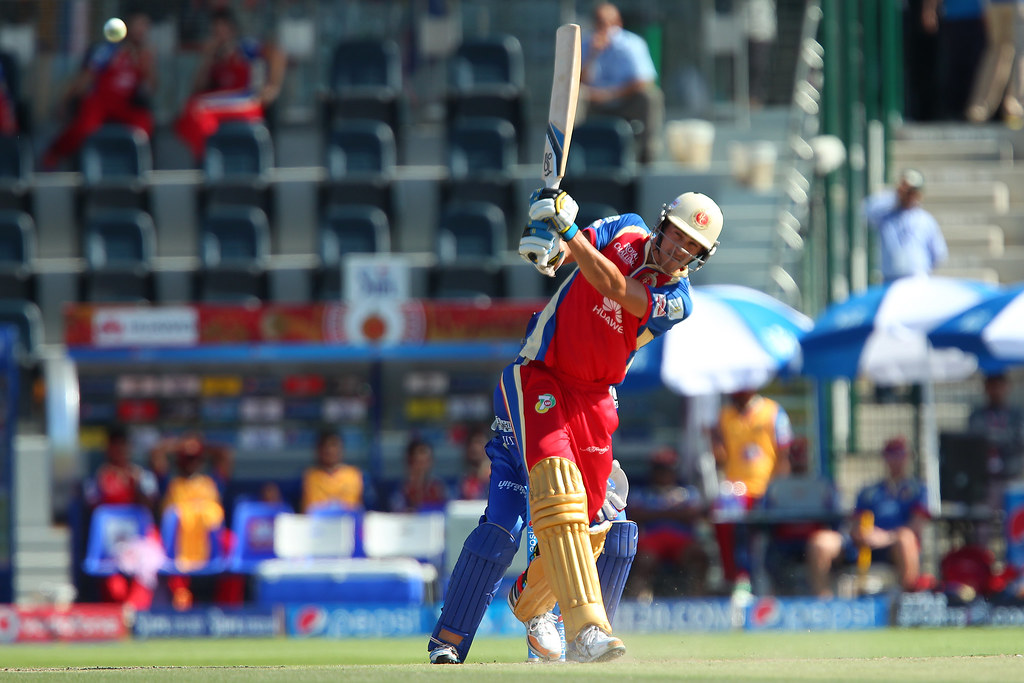
Royal Challengers Bengaluru (RCB) topped the franchise rankings with a brand valuation of $269 million, following the team’s first-ever IPL title in its 17-year history.
The win, fronted by a newly appointed captain Rajat Patidar and backed by the enduring presence of Virat Kohli, was one of the most-watched moments in IPL history. The final recorded more than 678 million views on JioHotstar, exceeding figures for the India–Pakistan clash during the ICC Championship earlier in the year.
Mumbai Indians and Chennai Super Kings retained their commercial status as leading franchises, with brand values of $242 million and $235 million respectively. Despite Chennai finishing bottom of the table, the franchise’s brand equity remained anchored in its established identity and the continued presence of MS Dhoni.
Punjab Kings was named the fastest-growing brand, with its valuation rising to $141 million. A revamped squad, led by Shreyas Iyer and coached by Ricky Ponting, reached the final and helped drive a resurgence in brand engagement. A viral fan-led campaign around Iyer’s “Sarpanch Saab” moniker contributed to the team’s digital visibility.
The franchise also pointed to long-term fan-building initiatives and content localisation strategies as factors in its growth.
Cash flow stability underpins investor interest
The report describes the IPL as a rare “compounder” in global sport, citing the league’s asset-light structure and annuity-like cash flows. Franchisee revenues are underwritten by long-term media contracts and front-loaded sponsorship deals, with up to 80% revenue visibility secured before the season starts.
Operating under a salary cap of ₹1,200 million (approximately $14.2 million) per team, franchises avoid the wage inflation and transfer fee risks that characterise European football or US basketball. The lack of fixed asset exposure, due to BCCI-owned stadium infrastructure, allows franchises to operate capital-light models with high returns on invested capital.
“From a dealmaker’s lens, IPL represents a near-perfect blend of predictable cash flows and cost discipline, a rarity in the global sports asset universe,” says Talikoti. “Franchisees operate with minimal fixed-asset exposure… translating into a capital-light model with structurally high return on employed capital.”
Viewership and advertising surge
The 2025 season delivered record viewership across platforms. Opening weekend coverage saw 1.37 billion views on JioHotstar, a 35% increase year-on-year, while Star Sports attracted 253 million unique television viewers. Total watch time over the three days reached nearly 50 billion minutes.
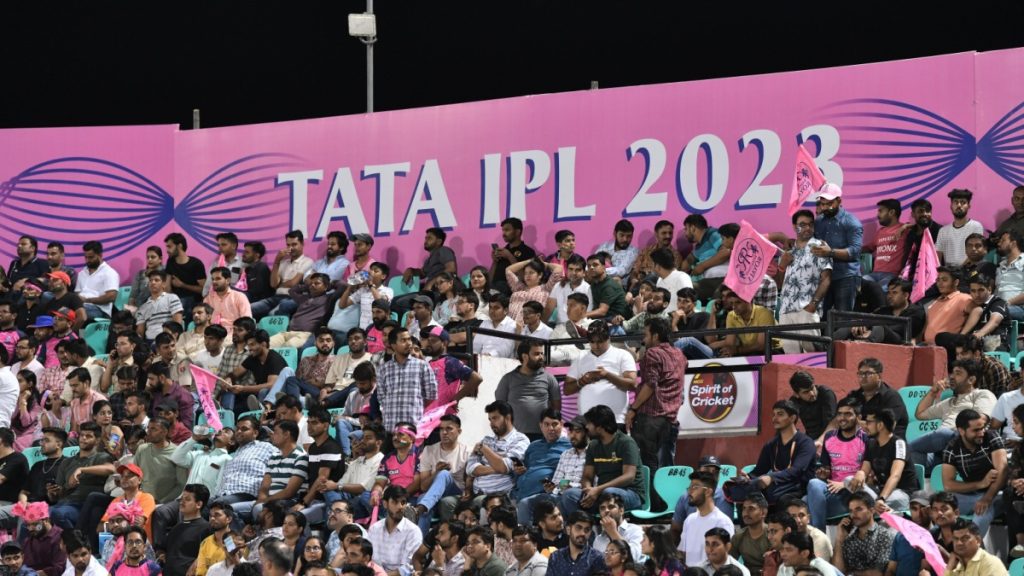
Advertising revenues were estimated to have reached $600 million, marking a 50% rise from the previous year. The league continued to attract sponsorship across sectors, including fintech, FMCG, and fantasy sports.
Tata extended its title sponsorship in a $300 million agreement running through 2028, and four associate sponsorship slots reportedly fetched ₹14.85 billion ($178 million), a 25% uplift on the previous cycle.
Franchises and capital markets
The financial structure of the IPL has become increasingly attractive to institutional investors. Torrent Group acquired a 67% stake in Gujarat Titans earlier this year for $575 million, valuing the franchise at $900 million. CVC Capital Partners retained a 33% marking one of the highest-valued franchise deals in IPL history.
The report outlines four common exit routes now available to sports franchise owners: partial stake sales, public listings, strategic mergers, and full divestments. IPL franchises, it notes, are well-positioned to benefit from growing private equity interest in global sport, mirroring trends across the NBA, MLS, and Premier League.
Notably, Houlihan Lokey places the IPL just behind the NFL in terms of per-match value, while highlighting that the league’s shorter window limits direct comparability. Nonetheless, the underlying appeal remains strong.
Global blueprint for cricket’s future
Beyond the IPL, the report notes a wider transformation in cricket’s commercial ecosystem. The success of the ICC T20 World Cup in the US, the growth of Major League Cricket, and the emergence of the Women’s Premier League are all cited as contributing to cricket’s expanding international footprint.
The IPL continues to influence these developments. With digital-first strategies, youth-oriented fan engagement, and a growing diaspora audience, the league has cemented its place as a reference point for franchise sport in new markets.
“Cricket is undergoing a transformative phase, expanding its global footprint at an unprecedented pace,” says Talikoti.
“A landmark moment in this evolution was the ICC T20 World Cup 2024, co-hosted by the United States and the West Indies… The IPL, a tournament that has redefined the commercial and entertainment dimensions of cricket, lies at the heart of this global expansion.”
While challenges remain, including calendar congestion, geopolitical risks, and talent development across formats, the 2025 edition demonstrated the IPL’s operational resilience and investor credibility.