


Free-to-air coverage of major football events reveals the rising profile of women’s football
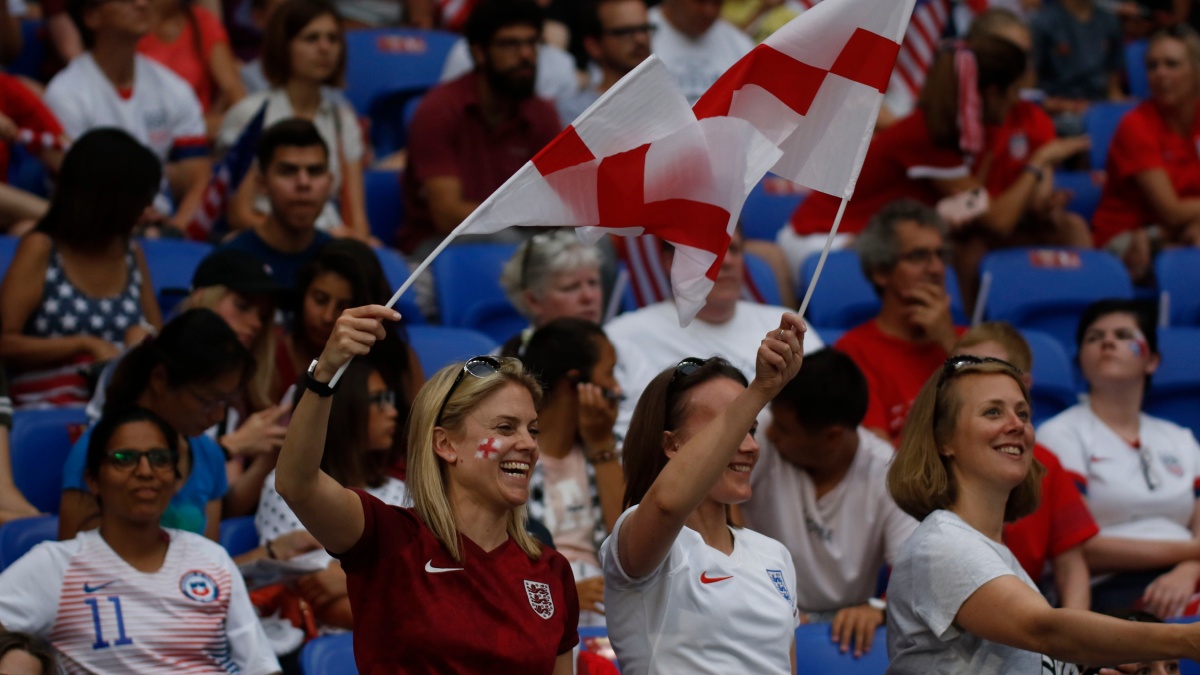
England’s Women’s UEFA Euros match against Wales drew nearly twice as many UK viewers as Chelsea’s FIFA Club World Cup final on July 13, despite both airing live on free-to-air TV at the same time.
ITV1’s coverage of the Lionesses’ 6-1 group stage win over Wales attracted a peak audience of 4.6 million viewers across all devices. Meanwhile, 5’s broadcast of Chelsea’s 3-0 Club World Cup final victory over PSG peaked at 2.4 million viewers.
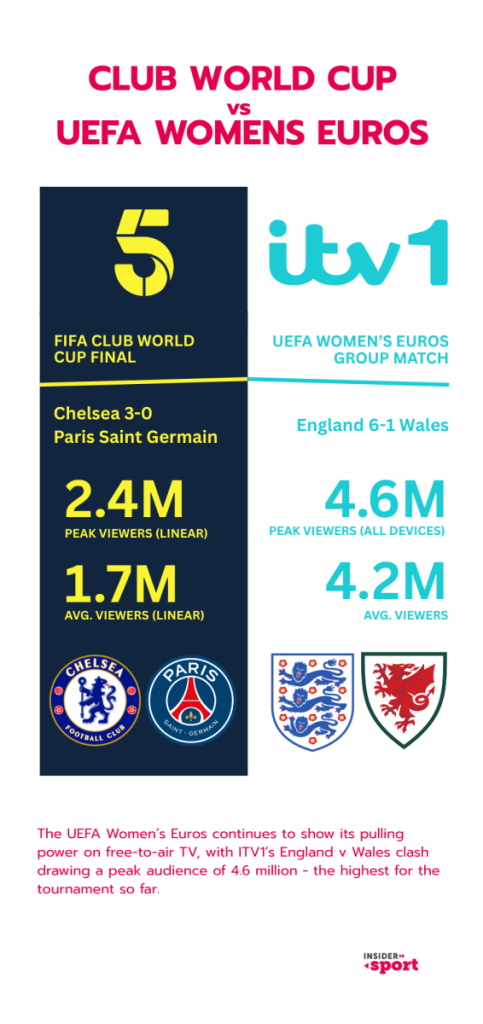
ITV noted that the seven-goal thriller marked its highest peak audience since the Britain’s Got Talent final in May and delivered ITV’s strongest Sunday night audience of 2025 so far, boosted by the concurrent broadcast of reality show Love Island on ITV2.
With the Euros ongoing, ITV will be aiming to build on this momentum as England progresses through the tournament.
All matches are being shown on ITV1, ITVX and STV, with simultaneous games airing on ITV4. The broadcaster will also show one quarter-final and has first choice of one of the semi-final fixtures. The tournament final is scheduled for July 27 on ITV1, ITVX, STV, and STV Player.
While the Club World Cup final did not match the Women’s Euros group stage in ratings, Channel 5 highlighted the tournament’s overall success. The network, in partnership with DAZN, aired 23 live matches, with the competition surpassing expectations and drawing particularly strong numbers among 16-34 year-olds and ABC1 viewers.
Among the standout matches were Chelsea’s opening game against Los Angeles FC, which peaked at 1.6 million viewers; PSG’s semi-final clash with Real Madrid, which reached 1.2 million; Real Madrid versus Al Hilal with 1.1 million; Flamengo versus Bayern Munich at 1.0 million; and Manchester City versus Wydad AC peaking at 934,000.
Across all 23 matches, 5’s linear broadcasts on 5 and 5Action attracted over 14 million UK viewers. This coverage outperformed the usual audience for the same time slots on both 5’s linear and streaming platforms and showed significant gains among key demographic groups.
“We’re thrilled that 2.4 million viewers watched Chelsea win the FIFA Club World Cup final on 5. The audience response to the whole tournament has been extremely positive, with viewing on both 5’s linear channel and our streaming service exceeding our expectations – especially as it’s brought a new and diverse audience to the channel,” said Lee Sears, President of International Advertising and Brand Studios, Paramount Global.
“There’s a clear appetite for top-tier sport on free-to-air TV, and smart partnerships like this one with DAZN are helping us deliver something genuinely exciting for viewers and advertisers through live sport on 5.”
It’s worth noting that while 5’s reported figures for the Club World Cup final reached 2.4 million viewers, the match was also available live on DAZN in the UK. DAZN has yet to release its viewership data, meaning the total audience for Chelsea’s victory could be significantly higher once those numbers are disclosed.
Reasons behind the numbers
One of the key reasons England’s Women’s Euros match drew nearly twice the UK audience of the Club World Cup final could be its broader national appeal.
The Euros pits national teams against each other, resonating strongly with a wide UK audience passionate about supporting their country. In contrast, the Club World Cup final featured Chelsea, a club with a loyal but more localised fanbase.
Another reason might be the fact the UEFA Euros is steeped in football tradition and is widely regarded as the second most important international tournament after the FIFA World Cup. This longstanding prestige naturally attracts both casual fans and football purists, creating a solid base for high TV viewership.
In the same vein, the Club World Cup lacks heritage. The tournament’s attempts to emulate American-style entertainment, such as halftime shows and high-profile but somewhat awkward moments like the trophy handover involving President Donald Trump and FIFA’s Gianni Infantino, may have alienated traditional football audiences.
This isn’t to say the competition didn’t fund marketing; in fact, they reportedly spent over $50m.
Despite heavy marketing spend, the Club World Cup struggled to attract significant crowds throughout the competition, with some matches’ tickets dropping to as low as $11 in efforts to fill seats.
Poor scheduling, with matches scattered throughout weekdays at inconvenient times, further limited live viewership potential, especially for UK audiences.
Given these factors, maintaining or growing the Club World Cup’s profile will be challenging. Without a strong legacy or consistent fan engagement, it risks remaining a niche event in the global football calendar.
Whereas, England’s Lionesses and women’s football more broadly continue to inspire and attract growing national audiences.