



Genius Sports secures exclusive betting data rights across 18 domestic leagues as tech and regulation reshape European football’s commercial future
In 1960s Britain, betting shops were first legalised, giving punters legal access to odds chalked on blackboards and relayed by runners from football grounds. Today, that blackboard has become a neural network.
As regulated sports betting continues its global expansion, European football is embracing a new era — one where official data, once traded in fragments, is now consolidated, automated, and powered by artificial intelligence.
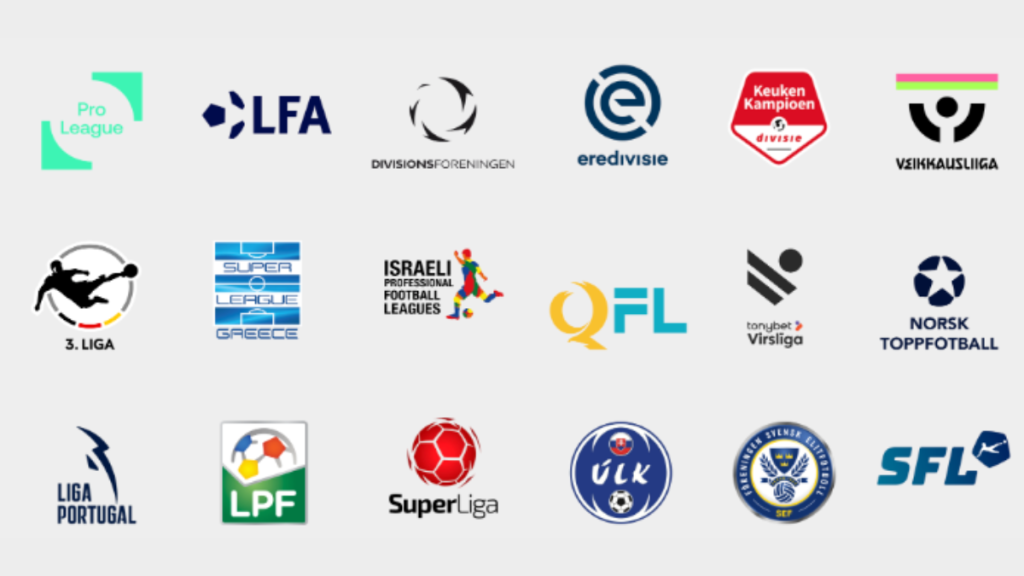
The European Leagues Association has confirmed a new multi-year agreement with Genius Sports, granting the London-headquartered data firm exclusive global rights to collect and distribute official betting data from over 8,000 matches per season across 46 competitions. The partnership involves 18 member leagues, including the Belgian Pro League, Liga Portugal, Dutch Eredivisie, Greek Super League, and Germany’s Google Pixel Frauen-Bundesliga and 3. Liga.
In addition to data distribution, Genius will also roll out its AI-powered GeniusIQ platform across participating competitions. The system supports tracking, officiating analysis, team performance tools and fan engagement applications, and has already been implemented in the Premier League, Belgian Pro League, and Danish Superliga.
Data consolidation gains ground
The agreement marks a continued move towards centralised data commercialisation in European football. For years, smaller and mid-tier leagues sold rights on a non-exclusive basis, often to multiple data providers. Sportradar, Stats Perform, IMG Arena and others historically filled that space, with arrangements varying widely between countries and leagues.
However, with the betting industry’s growing appetite for fast, reliable, and official data feeds – and sports bodies seeking to professionalise their commercial rights – collective models are becoming more common. Genius Sports’ deal with Football DataCo, covering England’s Premier League and EFL through 2029, was an early example.
Now, that approach is being extended to a wider European context.
“This landmark deal with Genius Sports reflects both the evolution of the sports data market but also the way technology will play an increasingly intertwined role in the way commercial deals come to fruition,” said Alberto Colombo, General Secretary of the European Leagues.
Steven Burton, Chief Partnerships Officer at Genius Sports, framed the agreement as a shift in the underlying business model: “Technology investment resets traditional frameworks and creating a longer runway for future revenue opportunities.”
“By delivering the next-generation, AI-powered solutions that leagues want and need, we’re deepening alignment, strengthening our competitive moat, and accelerating the next wave of technological innovation across European football.”
A competitive marketplace
The move to exclusive data rights has not gone unchallenged. Competing providers, including LSports and Sportradar, have argued that exclusivity limits competition and innovation.
In a July 2025 interview with iGaming Business, LSports CEO Dotan Lazar criticised exclusive official data agreements for fostering monopolistic control, arguing that such deals “prevent innovation” and restrict access to publicly observable match data. He called for greater openness in how leagues license and distribute their data feeds.
Others point to the ethical dimension. The “Project Red Card” case, launched by former footballers and data privacy advocates, raised questions over who ultimately owns and profits from performance data. While the case did not result in legal reform, it prompted wider debate about transparency and consent in the sports data economy.
At the same time, technology platforms like GeniusIQ are broadening the scope of what data partnerships can offer. By moving beyond raw data into tools that support refereeing decisions, tactical analysis, and broadcast augmentation, companies like Genius Sports are positioning themselves as infrastructure providers rather than just intermediaries.
The leagues involved
The 18 leagues participating in the deal represent a cross-section of European football’s professional tier below the so-called Big Five. They include:
- Belgian Pro League
- Dutch Eredivisie and Keuken Kampioen Divisie
- Liga Portugal
- Greek Super League
- Danish Superliga
- German 3. Liga and Google Pixel Frauen-Bundesliga
- Romanian, Slovak, Serbian, Latvian, Finnish, Israeli, Norwegian, Swiss and Kazakh top flights
Crucially, both men’s and women’s competitions are covered, bringing a wider diversity of matches into the official data fold.
Still, questions remain about the long-term effects of consolidation. As sports data becomes a valuable strategic asset the balance of power between leagues, data firms, and athletes will continue to evolve.
What began with runners relaying goals to backstreet bookmakers has become a high-speed, AI-enabled business. And in that transition, Europe’s football leagues are betting on scale, technology, and collective action.
September 15 will see SBC organise a ground breaking charity football event in Lisbon. Make sure you get the chance to see some of the most legendary names in football by securing your ticket today at https://www.legendscharitygame.com/