


The governing body reiterated its commitment to full and thorough investigations to safeguard the integrity of the game.
The FA will not be appealing against the alleged breaches of FA Rule E5 against Lucas Paquetá that were found not proven by the Regulatory Commission.
In a statement, the Regulatory Commission said it will decide an appropriate sanction for the breaches that were found proven and the details will be published at the earliest opportunity.
“The FA is committed to ensuring that the integrity of football is maintained, and full and thorough investigations will always be conducted into serious allegations of rule breaches,” the statement said.
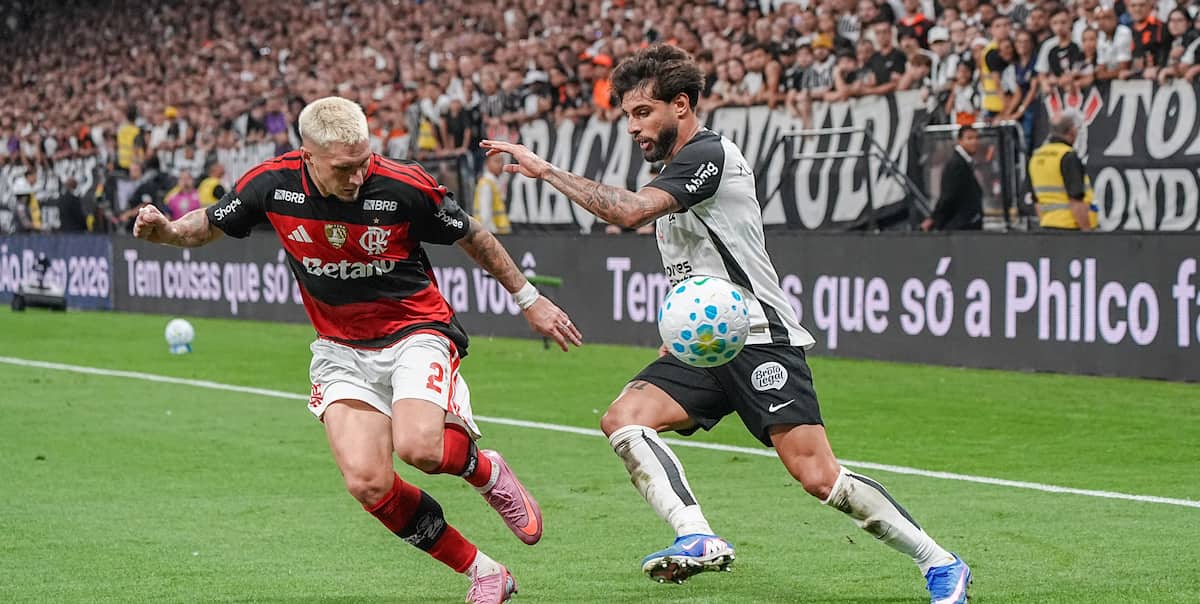
In August, the FA Regulatory Commission dismissed all four spot-fixing charges against West Ham United and Brazil midfielder Lucas Paquetá, but found him guilty of two Rule F3 breaches for failing to answer questions in FA interviews.
The Commission ruled that betting data and patterns highlighted by the FA did not prove Paquetá intentionally sought cautions in four Premier League fixtures. It said the activity could just as plausibly reflect “hot tips” circulating among bettors in Brazil, and noted limits in market coverage and the need for granular account-level data.
On-field evidence, including expert refereeing analysis, placed the cautions within a normal range of play. Individual incidents were not inherently suspicious and did not show an attempt to engineer bookings.
The panel also questioned elements of the FA’s performance integrity case. It found SPIS’s reviews were affected by confirmation bias, noted the SPIS analyst was not independent of the investigation, and recorded that SPIS did not have access to granular betting data.
While rejecting any adverse inference from Paquetá’s “no comment” interviews, the Commission concluded he breached Rule F3 by not answering questions at interviews on 11 September and 10 November 2023. It indicated any sanction is likely to be at the lower end given he acted on legal advice, but reserved the penalty for a later decision.
The FA’s E5.1 spot-fixing charges, which covered four West Ham matches between November 2022 and 2023, were unanimously dismissed. The F3 breaches were proved.
What he was accused of — and what followed
Paquetá was originally accused of breaching Rule E5.1 by intentionally seeking yellow cards in four fixtures – Leicester City (12 November 2022), Aston Villa (12 March 2023), Leeds United (21 May 2023) and AFC Bournemouth (12 August 2023) – so that connected bettors in Brazil could profit.
The FA’s case said he told at least one person in advance that he would try to be booked, knowing bets would be placed. He also faced two Rule F3 counts for failing to answer investigators’ questions.
The investigation gathered pace after alerts from UEFA and the International Betting Integrity Association (IBIA), with the FA writing to West Ham on August 14, 2023 to summon interviews and request phone downloads. Paquetá attended interviews on September 11 and November 10 answering largely “no comment” on legal advice while the FA sought device data.
On May 23, 2024, the FA formally charged him with four E5.1 counts and two F3 counts. What followed was a protracted hearing that, in the FA’s own closing, was described as the longest before any Regulatory Commission – with betting patterns and alleged links between bettors and the player framed as the “cornerstone” of the case.
The Commission’s written reasons set out why that cornerstone didn’t hold. It found the betting spikes could be explained by “hot tips” or perceived inside information spreading in Brazil, noted IBIA’s limited role as an alerting body rather than an investigator with account-level data, and criticised the FA’s reliance on summaries without granular betting records.
On the pitch, testimony from Mark Clattenburg and others placed each caution within the normal band of refereeing outcomes. The panel also recorded that phone-forensics evidence did not support an inference of deliberate deletions, and it refused to draw any adverse inference from the “no comment” stance at interview.