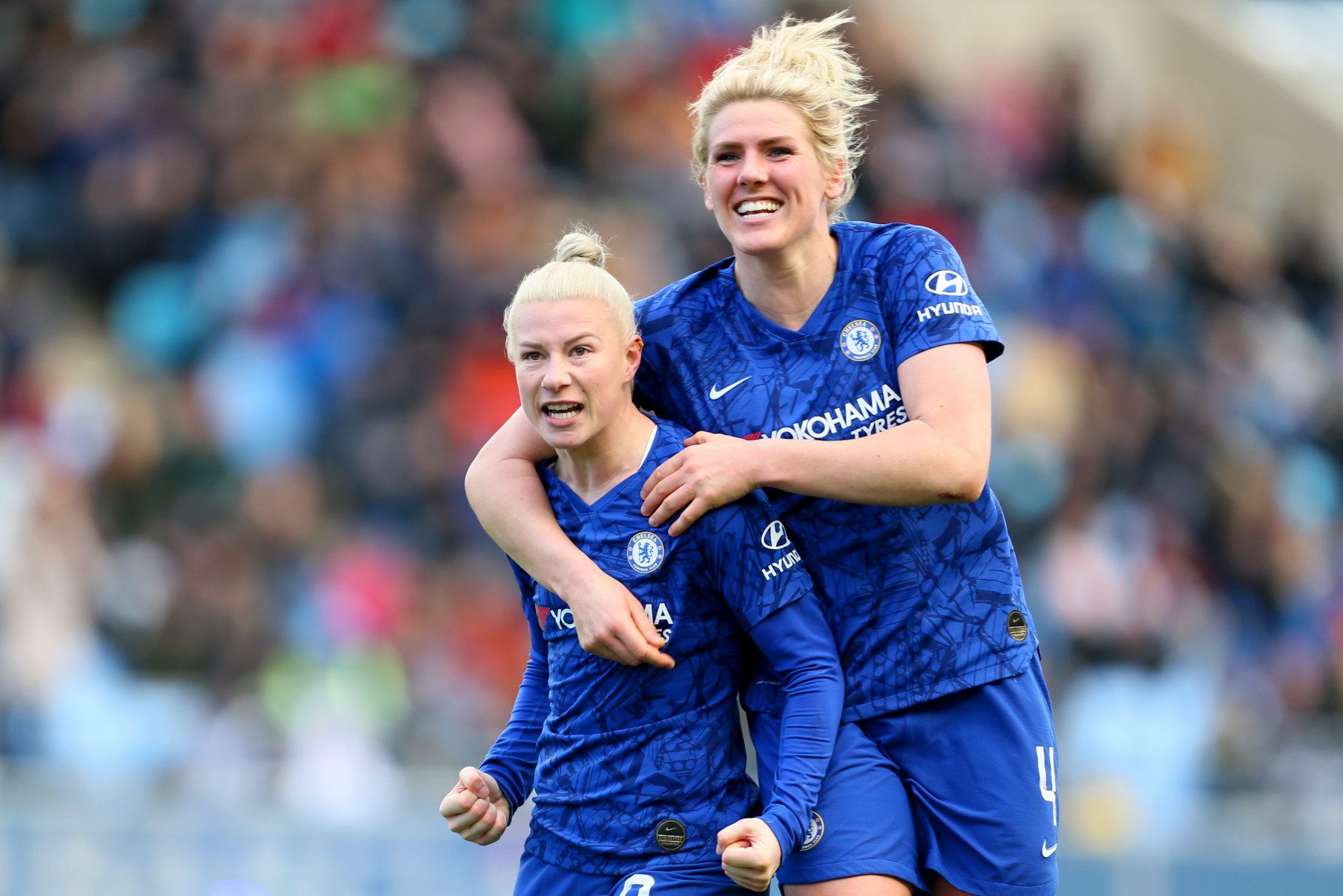



Women’s football has had to sell itself for a long time. In the early days, brands supported it because it felt like the right thing to do, a nod to equality and a pat on the back for social responsibility.
“But it doesn’t need to be sold on that anymore,” says Lisa Parfitt, Director at Women in Football and Co-Founder of The Space Between, speaking to Insider Sport.
“Brands’ responsibility is not to fund football,” she explains. “It’s to make money for their business.”
Parfitt says the women’s game has evolved into a vehicle for measurable commercial success.
“It doesn’t need to be sold on doing the right thing anymore,” she says. “It can be sold on: this is how many chocolate bars you’re going to sell, this is the value you’re going to get.”
Early days of brand support
When the FA Women’s Super League (WSL) launched in 2011, commercial backing was minimal. For its first eight seasons, most sponsorship came through corporate social responsibility or equality-focused budgets rather than direct ROI expectations.
Brands supported the game because it felt like the right thing to do, not because it promised immediate financial return.

Continental Tyres became the inaugural partner of the WSL Cup in 2011, funding prize money and visibility for the competition, but without league-wide naming rights or major branding ambitions.
In 2015, SSE became the first standalone sponsor of the Women’s FA Cup, underwriting marketing and prize funds as part of its diversity and inclusion commitments.
However, this changed when Barclays signed a multi-year, multi-million-pound title sponsorship of the WSL in 2019. While equality and inclusion still played a role in the deal, it signalled a shift toward the women’s game being taken seriously as a business opportunity.
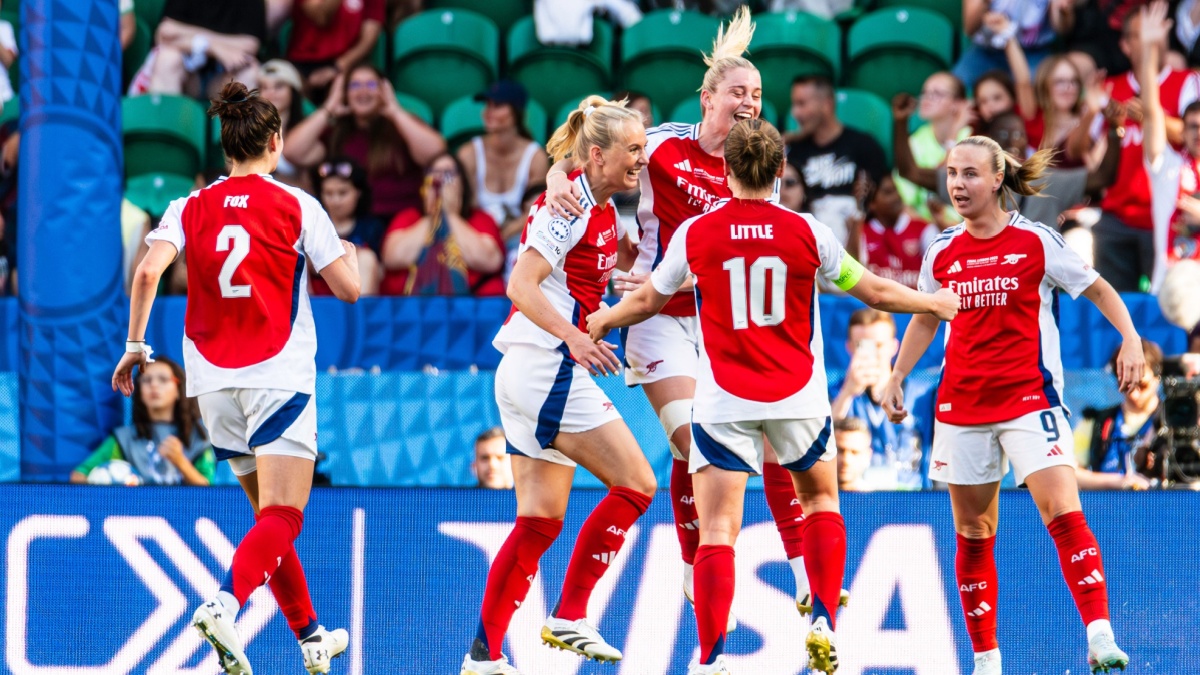
The league’s commercial ambitions were further accelerated by a structural change at the end of the 2023/24 season. All 24 clubs in the WSL and Women’s Championship voted unanimously to break away from The FA, transferring governance to Women’s Professional Leagues Limited (WPLL).
With each club now a shareholder and decision-maker, the professional tiers gained full control over sponsorships, broadcasting rights and strategic growth.
The commercial jolt
A key driver for the league’s independence was giving clubs the chance to capitalise on the commercial opportunities unleashed by the Lionesses’ Euro 2022 triumph. Earlier milestones, like England’s bronze at the 2015 World Cup, hinted at potential, but it was 2022 that delivered the defining jolt.
“There have been moments of reevaluation, big, bold, hype moments that challenge traditional perceptions of women’s football. Probably the biggest of those was 2022. That was the jolt, the shock to the system, which exponentially pushed growth,” Parfitt explains.
The impact was immediate and measurable. Since then, the sport has grown massively, but stakeholders had to recalibrate again when the Lionesses secured back-to-back Euro wins in Switzerland earlier this year.
“Well, I think it’s another big moment, right?” Parfitt says.
“When you’re reflecting on what has happened commercially with the game, it’s almost like traveling somewhere with your GPS, and the GPS is constantly recalculating. Things are changing, new bridges are being built, new buildings are rising, and you end up at a completely different destination than you expected. That’s what it’s felt like.”
Women’s football goes mainstream
Euro 2025 cemented women’s football as a mainstream, commercially compelling sport. England’s semi-final win over Italy pulled in more than 10 million viewers on ITV, while the Lionesses’ group-stage clash against Wales doubled the viewership of the men’s Club World Cup final, despite airing at the same time.
The tournament generated $149.3m (€128m) in revenue, nearly 10 times more than 2017, sponsorships nearly tripled, and ticket sales broke records, with most matches sold out.
“It’s been joyful. It’s a win, and it’s really established the game perfectly as a mainstream interest,” says Parfitt.
“It’s all of those levers that do create and turn something into a mainstream moment… it is very much a mass-market product now. And, of course, we’re talking at a national level of the game.”
The 2025 Euros also reinforced the shift in brand strategy. Parfitt highlights sponsorship in women’s football doesn’t have to be purely about purpose or gender equality. While these elements remain important, the focus has increasingly moved toward performance.
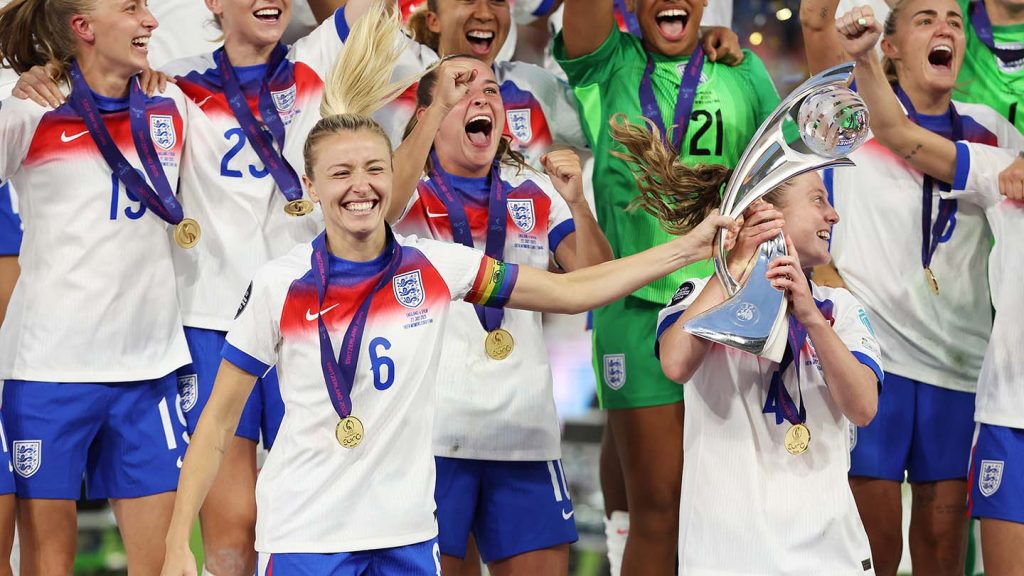
“The difference you start to see is more brands activating in quite a joyful way, putting the performance on a pedestal rather than the purpose on a pedestal… it’s been a really nice shift in tone.”
It’s clear why more brands are changing their reason for getting involved. Female football fans offer a level of engagement and loyalty that is rare in sports sponsorship.
Research by The Space Between shows fans of the women’s game over-index in preference for brands that sponsor the sport, meaning they are more likely to talk about them, buy from them and engage with them compared to men’s supporters.
The international reach of the game is expanding as well. Euro 2025 attracted fans from 160 nations, with 35% of ticket sales coming from overseas supporters. Broadcast audiences also shattered records in the US, proving engagement is no longer confined to domestic competitions.
“They’ve had massive numbers, brilliant viewership… that’s extraordinary, because typically you only expect the US to engage when the US are competing,” Parfitt notes.
For brands and broadcasters, the challenge is now how to engage these audiences consistently, both domestically and internationally.
Parfitt emphasises the importance of recalibration: “Let’s have a look at the game now. We’ve just had an influx of another five million fans. We need to work out who they are. Do they fit for us? How do we speak to the existing fans who’ve been there for years? How do we speak to the new ones coming in for the first time?”
The road ahead
Even amid the joy and excitement of Euro 2025, Parfitt is clear the women’s game still faces structural challenges.
She tells Insider Sport that 12 WSL clubs didn’t turn a profit last year, and the domestic game is not yet commercially sustainable. Player pay outside the national team remains low, coaching pathways are limited and much of the game’s growth depends on consistent fan engagement to drive broadcast revenue, which in turn funds investment in players, coaching and performance.
“The most important job for the game is the consistency and the return of fans — both in attendance at stadiums and watching broadcasts. And it’s not easy,” she adds.
Even with record-breaking crowds and high-profile players, the league must ensure that audience growth sticks. Thoughtful scheduling, like Sky’s Sunday lunchtime broadcast slot, has already made attending games easier for families.
Parfitt also points to the potential of social media and digital innovation as the next frontier. Last season, while some attendance and broadcast numbers dipped, engagement with women’s sport content on social platforms rose significantly.
“I’d love to see what’s next in social… YouTube has been a brilliant partner, and Sky has given players rights to use clips of themselves from games in their social media. That’s genius,” she says.
As the women’s game continues to grow, the focus is shifting from celebrating milestones to sustaining them. Consistent fan engagement, clever use of digital platforms, and innovative in-stadium activations will be key to ensuring the sport’s commercial and cultural momentum doesn’t just peak at tournaments.