


As the Women’s Rugby World Cup 2025 reaches its climax at a sold-out Twickenham, the tournament has showcased not just record-breaking crowds but a sport finding its commercial footing, with sponsors, broadcasters and unions all vying to shape its future.
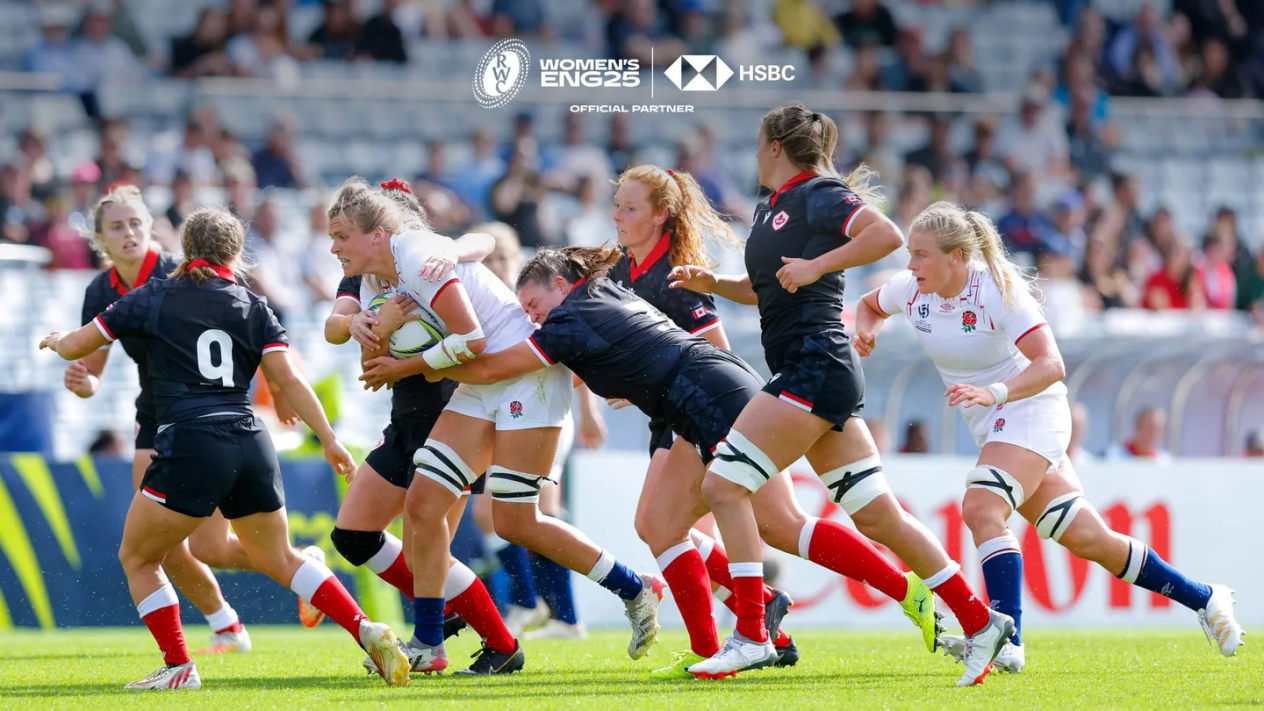
When England (the Red Roses) and Canada walk out at Twickenham tomorrow for the Women’s Rugby World Cup final, the contest will not only decide a world champion but also mark a watershed for the business of women’s rugby.
This year’s tournament has showcased a sport that is beginning to attract serious corporate investment, stronger broadcast commitments, and unprecedented fan interest. Yet the question remains whether the commercial momentum can sustain itself once the final whistle blows.
World Rugby has overseen the competition under its restructured delivery model, taking a more direct role alongside the RFU to professionalise operations, share commercial risk, and create scalable assets. The strategy reflects the broader ambition to place the women’s World Cup on equal footing with the men’s, not just on the field but in revenue generation and media visibility.
Part of that approach has been the renewed appointment of Host Broadcast Services (HBS) as production partner through 2029, covering both men’s and women’s tournaments. Over the years, the partnership has driven significant advances in audience growth, with Rugby World Cup France 2023 achieving 1.33 billion viewing hours, a 33% increase on the 2019 edition, with significant audience growth achieved in the USA and Germany among other strategic markets.
The last Women’s Rugby World Cup in New Zealand also attracted record viewing audiences with over a quarter of the population in New Zealand tuning in to the final. Both events received industry awards for their innovative and impactful coverage.
For this year’s competition, HBS has rolled out an ambitious plan for 2025, with 23 cameras at the final, drone footage, and an Additional Content Feed allowing broadcasters to tailor coverage for different platforms.
The investment points to a recognition that broadcast presentation is central to brand value and sponsor ROI.
Sponsorships signal confidence
The sponsor roster for 2025 spans established rugby backers and consumer-facing newcomers. O2 has signed on as an official partner, using its Priority platform to drive fan experiences, while HSBC, Emirates, Defender, and Unilever have joined the slate.
Allianz has come in as an official supporter – the winner of this year’s tournament will be crowned at Allianz Stadium, where they will lift the newly unveiled Women’s Rugby World Cup trophy. “We know and understand the power of sport to inspire and unite so to be part of this journey for Women’s Rugby is very special,” said Allianz UK CEO, Colm Holmes.
Kettle Foods and Volvic have also signed on to support this year’s competition, representing the consumer goods category. Ticketmaster, meanwhile, has handled official ticketing in a tournament where demand has far exceeded supply.
O2’s ‘Voice of a Nation’ campaign
For the final, O2 has sought to capture fan emotion through its ‘Voice of a Nation’ initiative. The project collated voice notes from supporters across the UK, submitted via WhatsApp, and used AI audio technology to transform them into a single pre-match rallying cry for England’s Red Roses.
The campaign has blended grassroots engagement with high-profile backing from figures such as TV personality Vicky Pattison, member for parliament Marie Rimmer, and presenter Olivia Attwood. Rugby clubs nationwide also took part, lending their voices to the message.
The activation is just one example of how sponsors are experimenting with technology and fan interactivity to create memorable assets that extend beyond traditional branding.
This diversification of sponsors is notable. Financial and telecoms brands remain present, but FMCG and lifestyle players are increasingly visible. Their entry suggests that women’s rugby is no longer perceived as a niche property but one that delivers mainstream reach and positive brand association.
At national level, unions have also activated aggressively. In Ireland, Vodafone has taken on dual roles as team sponsor and broadcast sponsor of RTÉ’s coverage. Energia and Bank of Ireland have amplified messaging through stadium branding and outdoor campaigns. Such multi-layered activations show that brands are thinking beyond logos on shirts, tying themselves into content and storytelling.
Broadcast reach expands
Broadcasting has been a cornerstone of this edition. In the UK, the BBC has carried every match across TV, iPlayer, and digital platforms. Early data shows the tournament has reached 9.8 million BBC TV viewers ahead of the final, and driven 8.8 million streams across BBC iPlayer and the BBC Sport platforms.
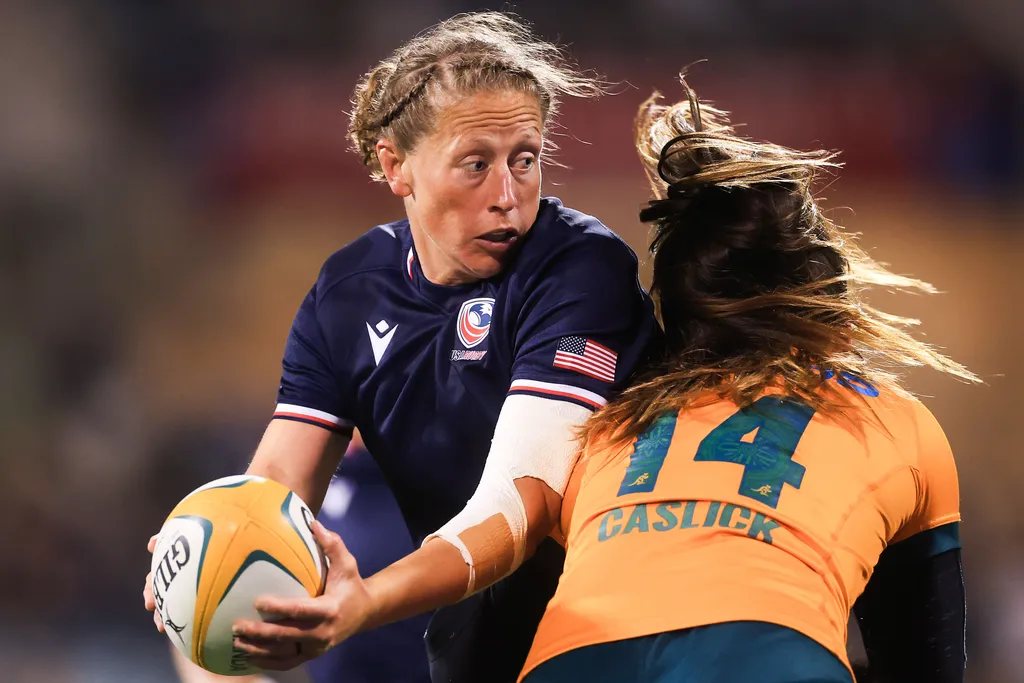
In the US, a landmark deal with CBS Sports and Paramount+ has made the tournament part of a multi-year World Rugby package. The move gives the women’s game its most significant US exposure yet, reflecting a recognition that North America will host the men’s and women’s World Cups later this decade.
“With rugby’s popularity continuing to grow here in the US, this is the perfect moment to bring every major World Rugby competition to CBS Sports and Paramount+,” said Executive Vice President of Programming, CBS Sports, Dan Weinberg. “We’re elevating rugby’s presence nationwide and providing fans for the first time unmatched access to some of the sport’s most prestigious competitions.”
The USA Eagles’ Summer Series already set new records for ticket sales, while the women’s national team encounter with Canada in Kansas City earlier this year played out in front of a packed stadium that also generated the largest-ever American attendance for a women’s rugby international.
“By showcasing both our USA Eagles and broader international competition, we’re building bridges between American sports fans and the excitement of the global game” said USA Rugby CEO, Bill Goren. Together with CBS Sports and World Rugby, we’re proud to lay a new foundation for rugby’s future in the United States.”
The results are already encouraging: England’s semi-final victory over France drew more than 3 million viewers in the UK, a record for the tournament. Globally, the use of the Additional Content Feed has allowed broadcasters to experiment with alternative coverage styles, better suiting digital and younger audiences.
But while exposure is growing, there remains a question of consistency as women’s rugby still lacks the week-to-week broadcast presence which builds long-term commercial value between major events.
Attendance sets new benchmarks
If broadcasting has elevated the tournament globally, ticketing has demonstrated its domestic pull.
Attendance has more than tripled compared to the 2022 edition, with more than 440,000 fans had passed through the gates before the semi-finals.
Figures for the final will surpass the 58,498 who watched England beat France at the same stadium in the 2023 Six Nations – the previous record for a XV-a-side match – and the 66,000 who watched the women’s rugby sevens at Stade de France during the 2024 Olympics in Paris as Twickenham is sold out at over 80,000 seats.
Ticket sales are not only a marker of popularity but also a business opportunity. Corporate hospitality, premium seating, and fan-zone activations have all been in play, while ancillary revenues from merchandise and concessions have benefited from larger volumes.
The challenge for the RFU and World Rugby will be to sustain that momentum in domestic competitions once the World Cup circus leaves town.
“Rugby’s values of integrity, passion and respect resonate with HSBC and our customers. From grassroots to the global stage, our aim is to support the growth of rugby – helping players, fans and communities achieve their ambitions both on and off the pitch.” – Becky Moffat, Head of Customer for HSBC UK
What happens after the final?
The Women’s Rugby World Cup 2025 has succeeded in capturing public attention and attracting corporate capital.
Yet the critical challenge is what follows. Domestic leagues, player pathways, and regular broadcast slots must absorb the new fans generated by the tournament. Sponsors will only continue to commit if they see continuity rather than a four-yearly spike.
For World Rugby and its partners, the final at Twickenham will be a commercial high point. The test will be ensuring it is not a one-off but a platform for structural growth.