


World Athletics is preparing a new biennial championship with record prize money and a made-for-TV format. Whether it strengthens the sport or fragments it is less certain.
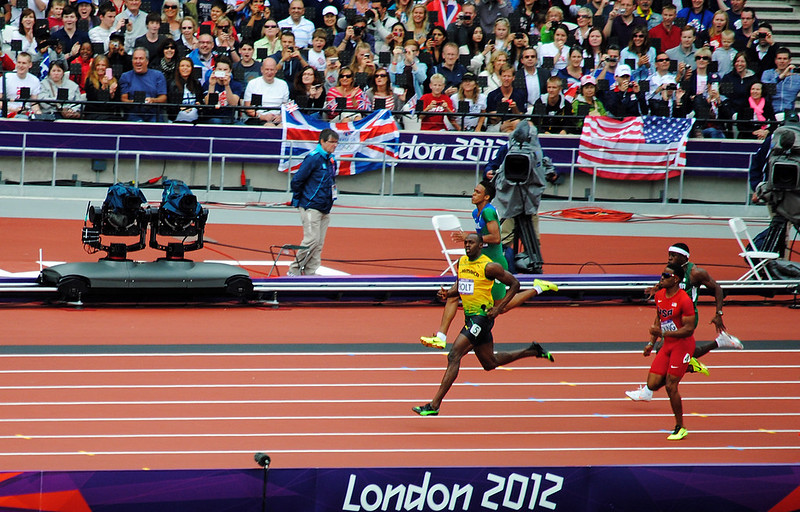
When athletics first allowed athletes to be paid for competing in the early 1980s, the move was seen as a break with the sport’s amateur traditions. The International Amateur Athletics Federation, as World Athletics was then known, had resisted prize money for decades, preferring to protect the Olympic ideal of amateurism. Yet commercial reality eventually won out, and by the mid-1980s athletes could finally be rewarded openly for their performances.
Four decades later, the sport is again at a crossroads. World Athletics has unveiled the Ultimate Championship, a new biennial competition that will carry the richest prize fund in track and field history.
Scheduled to debut in Budapest in 2026, the event is designed to showcase only the very best performers in a compressed, broadcast-ready format. Supporters see it as a natural evolution of the sport’s professional era; critics question whether it risks bending athletics too far towards television spectacle.
A new flagship for athletics
The Ultimate Championship is being positioned as a season-ending global finale, to be staged every two years in the calendar slots where there are no Olympic Games or World Championships. The inaugural edition will take place in Budapest from September 11-13, 2026, condensed into three evening sessions.
The format is deliberately streamlined: 28 disciplines will be contested, with no heats or qualification rounds. Only the highest-ranked athletes, along with Olympic and world champions and Diamond League winners, will be invited. In theory this ensures that the best of the best go head-to-head, though it also means that some events, such as combined events and race walking, have been left off the programme.
Central to the pitch is a record prize pot of $10m, with winners set to receive $150,000 each – the largest individual pay-outs the sport has ever offered. That level of investment is intended not just to reward athletes, but to elevate the competition to the status of a commercial flagship.
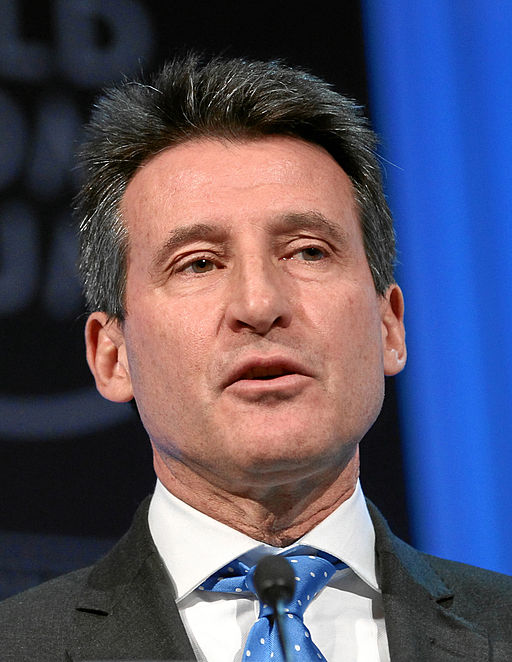
World Athletics President Sebastian Coe has called the Ultimate Championship “the next major global flagship outdoor track and field championship in the calendar,” stressing that it will provide a meaningful conclusion to every season.
Yet the challenge will be whether this compressed format can win over both athletes and fans, and whether it complements or disrupts the existing ecosystem of meetings and circuits that fill the track calendar.
Branding the ‘Class of One’
Alongside the competition format, World Athletics has placed considerable emphasis on how the Ultimate Championship will look and feel. The governing body commissioned consultancy FutureBrand to create the event’s visual and verbal identity, aiming to frame the competition as a break from tradition.
At the centre of the design is the ‘Star Flare’ logo, a three-pronged symbol intended to reflect running, jumping and throwing. Rendered in 3D and designed to work across digital channels, it is surrounded by a monochrome palette punctuated with iridescent gradients. The tone of voice is described in materials as “obsessive, audacious and dramatic,” intended to energise existing fans and attract new ones.
The overarching brand idea, labelled “Class of One,” seeks to strip the sport back to its competitive essence: a single champion, a single moment. Maria Ramos, World Athletics’ Director of Brand and Marketing, said the strategy was designed to “stand apart through its distinctive tone, ambition and vision.”
The approach is a marked contrast with the traditional visual language of athletics championships, which has tended to foreground host cities or national motifs. By creating a portable brand identity, World Athletics is signalling its intent to make the Ultimate Championship a global property in its own right, less tied to its host and more aligned with broadcast and commercial needs.
Athletes at the centre
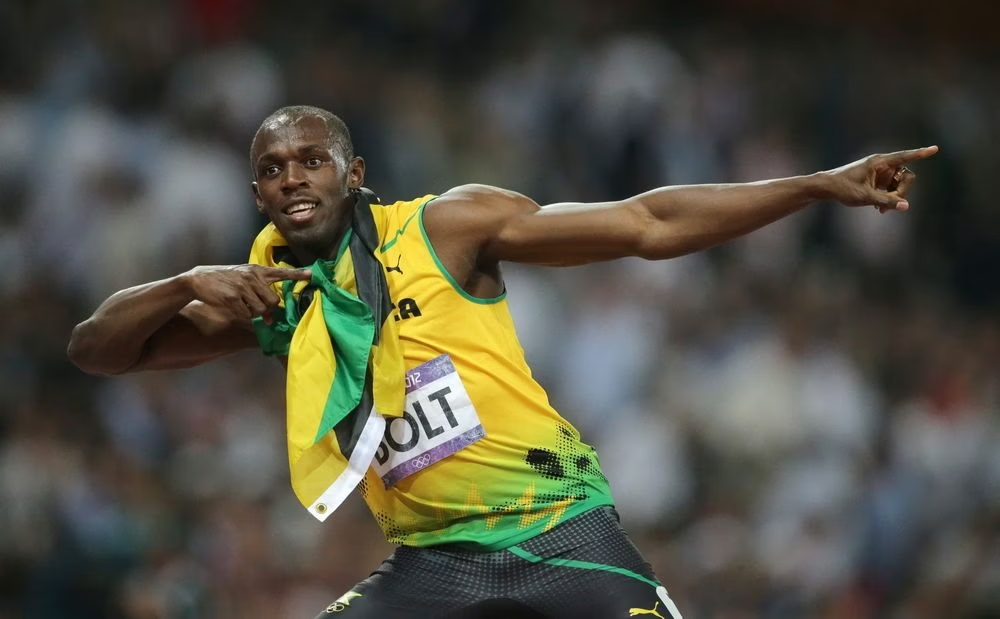
If the branding provides the frame, World Athletics has been quick to ensure the Ultimate Championship is associated with recognisable personalities. Usain Bolt, who retired in 2017, has been named the first “Ultimate Legend,” a symbolic role designed to connect the event with athletics’ recent golden era.
Current stars have also been enlisted. World pole vault record-holder Mondo Duplantis has been unveiled as the inaugural “Ultimate Star,” a position that extends beyond competition into cultural crossover in areas such as fashion and music. Speaking at the one-year countdown in Tokyo, Duplantis said:
“If I win at the Ultimate Championship, I’ll have a title that Usain (Bolt) won’t have, which is very rare and not many athletes can do, so I’m super excited.”
Triple jump world champion Thea LaFond has welcomed the format for its clarity and stakes. “I love a good one-and-done deal, I really do,” she said.
“I think it puts a little bit more pressure on that one event and I think it’s exciting for the crowd, for sure. I think one of the best things that has come from the Ultimate is the pay structure.”
The decision to foreground individual athletes reflects a wider trend in global sport, where governing bodies are increasingly reliant on stars to cut through to younger audiences and to serve as commercial ambassadors. For World Athletics, which has sometimes struggled to maintain mainstream visibility between Olympic cycles, tying the Ultimate Championship closely to its most bankable figures may prove a necessary strategy.
Commercial opportunity and financial pressure
The Ultimate Championship also needs to be understood in the context of World Athletics’ financial trajectory. The federation’s 2024 annual report showed record revenues of $99.3m, boosted by a $39.6m dividend from the International Olympic Committee following the Paris Games. Excluding that one-off contribution, revenues rose 10.5% to $59.8m, supported by new partnerships with companies including Honda, Sony and Deloitte, alongside an expanded broadcast agreement with the European Broadcasting Union.
Despite this growth, nearly 40% of total income came directly from the IOC, underscoring the structural challenge of sustaining financial independence between Olympic cycles. Expenditure has also risen, with more than half of outgoings directed to competitions and prize money.
Against that backdrop, the Ultimate Championship represents both an opportunity and a risk. The $10m prize pool is the richest in track and field history and signals an ambition to elevate athletics alongside other commercially-driven sports properties. At the same time, the financial commitment required to stage the event is significant, and its long-term viability will depend on attracting broadcast audiences and sponsorships that extend beyond Olympic years.
Coe has argued that innovation is central to securing the sport’s future. In the federation’s strategic plan, Pioneering Change (2024–2027), he pointed to “developing data-driven strategies” and creating new products to keep pace with changing consumption habits. The Ultimate Championship is the clearest expression yet of that philosophy.
Risks and criticisms
For all its promise, the Ultimate Championship carries risks. The decision to stage only finals across three evenings has been made with television in mind, but it reduces the opportunity for athletes who typically build through heats or semi-finals. While that may create a sharper narrative for broadcasters, it risks sidelining some of the depth and unpredictability that has long been part of championship athletics.
Certain disciplines will also be absent altogether. Combined events and race walking, both Olympic fixtures, are excluded from the programme. For athletes in those fields, the omission limits visibility and reduces the incentive structures that major championships provide. Critics argue that this narrow focus could deepen existing inequalities within the sport by prioritising events that are easier to package for television.
There is also the broader question of balance. By concentrating prize money and exposure in a single season-ending event, World Athletics is betting that a premium product can lift the sport as a whole. Yet there are concerns that it may overshadow existing competitions such as the Diamond League, or that the resources needed to deliver the Ultimate Championship could come at the expense of grassroots and development initiatives.
The challenge, then, is not just to stage a successful launch in Budapest, but to demonstrate that this new format can complement rather than displace the structures that sustain the sport at every level.
Budapest and beyond
Budapest will provide the backdrop for the Ultimate Championship’s debut. Hungary has already invested heavily in positioning itself as a hub for athletics, having staged the 2023 World Championships at the National Athletics Centre. That event drew more than 400,000 spectators and reached an estimated television audience of over one billion, with World Athletics President Sebastian Coe describing it as the “best ever” edition.
Local organisers are keen to recreate that momentum. Adam Schmidt, Hungary’s State Secretary for Sports, has called the Ultimate Championship a chance to again showcase “the best of the best” on home soil. The presence of senior government figures at the one-year countdown in Tokyo underlined the political capital being placed behind the event.
For World Athletics, Budapest offers a proven venue and a supportive host government. But the longer-term question is whether other cities will commit similar levels of resource outside of the Olympics or World Championships. A portable brand identity may help to attract future hosts, yet the financial and infrastructural demands of staging a made-for-TV global final could narrow the pool of candidates.
The Budapest edition will therefore serve not only as the launch of a new competition, but also as a test case for how far cities are willing to invest in athletics beyond the sport’s traditional tentpoles.
The ultimate gamble
Athletics has always wrestled with the balance between tradition and reinvention. From the end of amateurism in the 1980s to the rise of the Diamond League, every shift has reflected both sporting ideals and commercial necessity. The Ultimate Championship is the latest of those shifts; bold in its ambition, significant in its investment, but untested in its impact.
Its success will depend less on the logo or prize money than on whether fans, broadcasters and athletes themselves accept it as a fixture that adds to the sport rather than fragments it. If Budapest delivers a compelling spectacle, the model could give athletics the regular global spotlight it has long sought.
If it does not, the Ultimate risks being remembered as another well-intentioned experiment that struggled to find its place between Olympic cycles.