


















England Athletics’ CEO Chris Jones sets out how the governing body is redefining value, resilience and relevance in a changing sports economy
Athletics is one of the UK’s most accessible sports, but access does not automatically translate into a resilient business model. The organisations which sit behind participation must still answer hard questions: how do you retain members, fund pathways, support facilities, and professionalise volunteer workforces while building commercial value that feels authentic to the community?
England Athletics is attempting to do that by broadening its membership offer, investing in digital transformation, and reshaping events and competition formats to improve participant and spectator experience. With major championships on home soil in 2026, the organisation is also looking to turn inspiration into measurable growth among young people.
In this wide-ranging interview, CEO Chris Jones outlines the income streams England Athletics is prioritising, the brand categories it wants to attract through purpose-led partnerships, and the KPIs he believes should define progress over the next 12 months.
Read the the full interview below
How has England Athletics’ revenue mix evolved in recent years, and which income streams are most critical to long-term stability?
England Athletics is the membership and development body for athletics and running clubs in England, and our purpose is to inspire more athletes and runners of all abilities and backgrounds to fulfil their potential and to have a lifelong love for the sport.
We are a not-for-profit limited company with a charitable foundation, Personal Best Foundation, that is doing some excellent and important work in creating more opportunities for young people to enjoy our sport in communities across the country.
As a national governing body, we are largely reliant on membership from athletes, runners, and member clubs and bodies for a large proportion of our income. We are driven by purpose, and a vision for athletics and running to become an inclusive sport where everyone belongs and can flourish, and driving participation and membership is key to our wider strategic goals as well as financially. Our strategy from 2021 through to 2032, athletes and runners at the heart, highlights our aim to create opportunities, enhance experiences and power potential.
Government funding via Sport England is also a key income stream, and other significant strategic income streams include education qualification courses for coaches and officials, competition entry and licensing income, and commercial partnerships – an area we are currently looking to grow further.
Our strategy is to reduce dependency on one individual income stream to no more than 25% of annual income and to spread risk across several income streams.
What is England Athletics’ value proposition to commercial partners, and which brand categories are you looking to engage more deeply?
Mental health, wellbeing, and inclusion is central to everything that we do. We are a truly lifelong sport and activity. As published in our recent 2025 Annual Report, we have nearly 200,000 registered club athletes and runners between the ages of 5-91 and of all backgrounds, abilities, and aspirations.
We also have 250,000 social runners in our leader-led running group programme, RunTogether, with over 3,000 qualified and insured run leaders providing opportunities for those often taking their first steps into jogging and running, whatever their motivations.
We also license and insure over 3,000 off-track and multi terrain events over different distances and work collaboratively with a number of private, public, and commercial event providers in doing so. We are looking to grow the number of volunteers working in our sport beyond the 25,000 licensed coaches, leaders, and technical officials, to enable more people to enjoy our great sport, and of course to support those talented athletes on our youth, junior, and senior pathway programmes.
We take around 30 international teams to represent England every year and provide the foundations for those to then go onto represent GB and NI in Olympic and Paralympic competition thereafter. In 2026, the UK hosts both the Commonwealth Games (Glasgow) and European Track and Field Champs (Birmingham), and we will use that inspiration to turbo charge our focus on young people through our new funetics Multi Challenge programme and through exciting run, jump, throw competitions in schools, clubs, and communities across England for our Under 10s and 12s audiences – all of these are sponsorable opportunities. There are over six million people taking part in our sport every week in England, so the reach and opportunity is huge.
From a partner perspective, we are diverse and far reaching and are looking to develop purposeful, ethical commercial partnerships with brands that share our values of inclusion, integrity, inspiration, and fun – we place the virtues of family and community at the heart of what we do.
For example, our commitment to sustainability and ESG is demonstrated through our innovative partnership with Citroën EV, including our aforementioned official charity, Personal Best Foundation, with all three organisations sharing a belief that athletics has the power to change lives. We have been teaming up to deliver a schools’ athletics programme to under-served communities as well as supporting the next generation of emerging talent, to create real, lasting opportunities for young people to thrive, both in the sport and in life.
We are keen to engage partners who share these values and purpose-led approach to use our combined influence and reach to create lasting change.
How are you converting England’s large athletics participation base into sustainable commercial value?
We are doing this by building long-term, authentic engagement with our community. We continue to create memorable experiences across our almost 200,00 registered athletes in running and athletics clubs, as well as the 250,000 people in our RunTogether groups and even more in the events we host and license throughout the year.
We offer ongoing, relevant education courses and qualifications for people to improve their knowledge in the sport and to enable them to guide others through their journeys in our sport. We create further commercial value through our partnerships, such as our Citroën partnership in which we work together to grow opportunities for children and young people, allowing them to experience the benefits of athletics and running at an early age, throughout school and into adulthood.
Retaining our members is a key focus, and we are also ambitious in broadening our reach and expanding into new audiences, for example recently introducing a new individual running membership, RUN:EA, giving an option for runners who prefer to run on their own terms rather than joining a club, and creating a new revenue stream, presenting members with real value in the form of exclusive offers, race discounts, and tips and advice from elite running experts.
What role do digital platforms and participant data play in your growth strategy?
We are in an ongoing process of digital transformation at England Athletics, ensuring that customer experience and journey is at the heart of all that we do in terms of engagement. Our ability to engage with our members regularly, whatever their involvement in our sport, is essential in the context of growing but also retaining people in our sport and maximising commercial engagement with our audiences.
Everything we do at England Athletics aims to grow the sport, making it more accessible for all people to engage – our members are at the heart of our growth strategy. Creating meaningful partnerships is key to this.
What changes are you making to the events and competition ecosystem to strengthen commercial viability?
We have modernised our own track and field events in the last two years, enhancing the athlete and spectator experience, taking a particular focus on timetabling, music and commentary, information and exhibiting, food and refreshment options, and entry, results and post-event experience.
We are in a competitive marketplace with a lot of other sports, trying to attract the attention of similar participants, so we need to continually review, listen, engage with participants, and evolve accordingly. We then need to encourage other providers of competition in our sport to adapt and evolve. Our ability to influence and work with others to change is critical in this regard. We are starting to change the way in which we fund competition providers and making important decisions on funding new types of events that meet the need of our audiences – particularly young athletes in track and field.
How are you managing the financial pressures of supporting elite talent pathways in the current funding landscape?
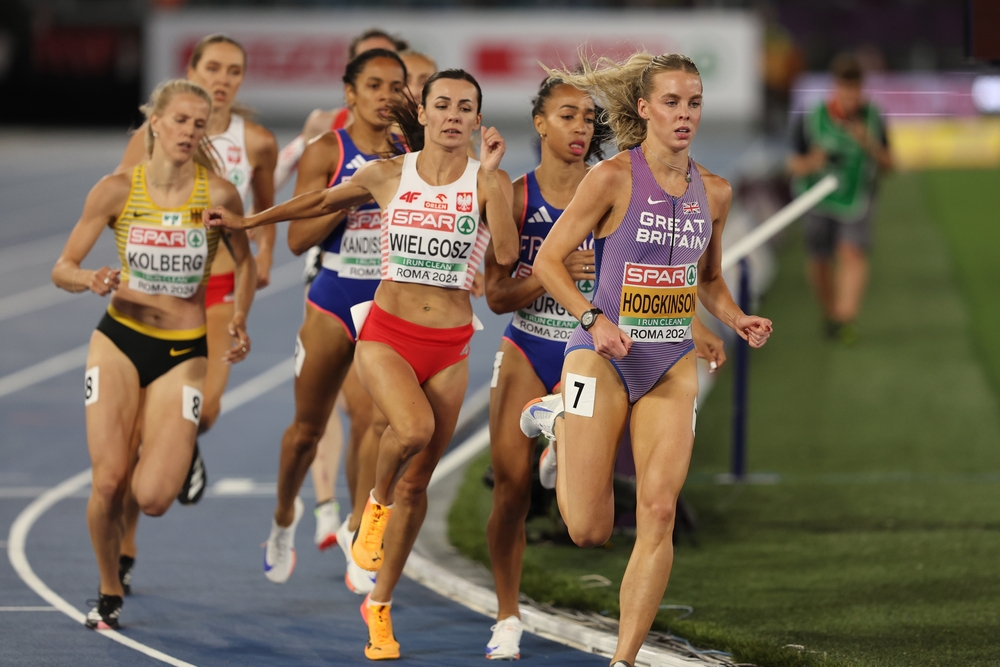
We are very fortunate to receive great financial support from partners such as Sport England, London Marathon Events and our own member income to back our talent pathway programme in England. There are roughly 750 athletes on that pathway at any one time, alongside their personal coaches. For example, World and Olympic medallists Keely Hodgkinson and Ben Pattison have accessed our Talent Hubs in recent years. The Talent Hubs are spread throughout England, and aim to create a training and educational environment for pathway athletes and their coaches. At each of the Hubs, athletes and coaches are able to access training camps, coaching support, coach education, mentoring, and a range of sports science and therapy services.
As with all that we do, we need to maintain a balanced approach to income and continue to focus on several income streams to sustain and safeguard important work. Commercial revenue is key in this context, and we are working to identify commercial partners to join us on this journey.
What partnerships or business models are you exploring to safeguard and improve athletics facilities across England?
We have a strategic and regulatory function as a sports national governing body to help protect, preserve, and develop existing and new facilities but we are always focused on innovating in terms of the design of our facilities enjoyed by our members and participants in athletics and running.
Protecting tracks, fields, parks and open space where our sport can be enjoyed is fundamentally important, but we also need to work collaboratively with other sports and recognise that our sport can co-exist with others with creative thinking and design.
We are in the process of updating our facilities strategy during early 2026 and recently, with partnership from Sport England, published a new design guide for facilities across England that demonstrates such innovation in approach.
We provide facility advice and a support service, which links into our strategic plan for sustainable clubs, with clubs, club leaders and facilities being a key area of focus in the ten-year plan.
We are also very fortunate to have some great partnerships in place with facility contractors such as Labosport, Polytan, Kingfisher Lighting and Technical Surfaces to provide guidance to our member clubs, competition providers, and facility owners on best practice and installation.
We also collaborate with trade bodies such as SAPCA, and our Trackmark accreditation is central to ensuring the maintenance and minimum standards of provision in track and field facilities.
In addition, we chair the All-Party Parliamentary Group for Running, which helps us advocate for investment in community facilities for sport.

How are you investing in the coaching and officiating workforce to ensure long-term sustainability?
We are launching a new digital-led learning and management system in summer 2026 to enhance customer experience.
We are renewing and refreshing our focus on coach and officials development, ensuring our qualifications meet the needs of our sport but also removing unnecessary bureaucracy where needed given how busy volunteers are but without compromising standards in areas such as welfare and safeguarding.
Our Coach and Officials Development Managers are central to making all of this come to life, as are the coaches themselves with who we will continually engage and consult to position our offers accordingly.
We have growing numbers of coaches and officials gaining qualifications in the last 12 months, with over 3,200 new coaches qualified last year and over 1,000 officials obtaining new qualifications. We had a 6% increase in the number of licensed coaches and leaders, now totalling more than 21,000, and a 19% increase in the number of licensed officials, now totalling more than 4,000.
What governance or organisational reforms have been most important for modernising England Athletics?
The code for sports governance was central helping many NGBs to modernise in 2017 – as a tier 3 funded body, we are mandated to comply with the requirements of the code, but fortunately we were already on that journey when the code came into being, appointing our first independent Board Chair in 2013 alongside our first independent Non-Executive Directors.
Fast forward to 2025, and we have a balance between representative and independent non-executive directors, gender and ethnic diversity around the Board table, and overall a skills and experience-based Board that collaborates well with our executive staff, and which gets a good balance between constructive challenge and support.
The three key pillars of our governance structure are our Board, consultative National and Regional Councils across the nine regions, and our paid workforce who are charged by the Board, and Council, to execute the adopted strategy of the company which was introduced back in April 2021 and which is a 10-year line of sight strategically on the key priorities and opportunities ahead of us as a sport. As a diverse participation sport, we need to continually work to ensure that the governance structures best mirror this. I am very proud of the progress we have made in this regard during the last decade.
Which three KPIs should England Athletics be judged on by the end of 2026?
We aim to continue to deliver on our strategic plan, with a vision for athletics to become an inclusive sport where everyone belongs and can flourish, and our purpose to inspire more athletes and runners of all abilities and backgrounds to fulfil their potential and have a lifelong love for the sport.
We also aim to continue to develop skilled, resilient athletes and coaches through our talent pathway for senior international success heading into the 2026 Commonwealth Games, creating a positive, inclusive environment for talent retention and progression to the UK Athletics World Class Programmes.
We have a number of KPIs enshrined into our performance dashboard which covers participation, talent, and financial performance, so it is difficult to refine them to three. The performance of our athletes at the Commonwealth Games during 2026 will of course be important.
Three key aims as part of these KPIs would be:
- Growth in the number of registered competing athletes and runners in our member clubs – with a specific focus on the number of young people taking part in track and field athletics
- Growth in the number of participants in our social running programme, RunTogether, and the number of children and young people taking part in our sport through school and community athletics – particularly through the government school games and the work of our charity, Personal Best Foundation.
- Growth in the number of qualified and licensed coaches and officials available to work in our sport.