


Rory MacFadyen explains how his company Reflo is driving real sustainability, expanding across sports and building credibility with partners such as Harry Kane.
Sustainability has become a focus for sportswear brands, though not all approaches are equally meaningful. Rory MacFadyen, Co-founder of Reflo, likens many efforts to McDonald’s adding salads, small gestures layered on top of core practices rather than a real change.
Reflo is taking a different approach, with the company having expanded across golf, running, fitness and padel, and partnered with football clubs including Luton Town and Forest Green Rovers. High-profile figures like Harry Kane have joined as ambassadors and investors, helping the brand open doors commercially while staying grounded to its original values.
Insider Sport sat down with MacFadyen to discuss how Reflo is turning sustainability into action, building performance apparel and creating partnerships which aim to balance commercial growth with authenticity.
Reflo has expanded into golf, running, fitness and padel rather than focusing on a single sport. How does diversifying across sports create commercial opportunities and strengthen the brand?
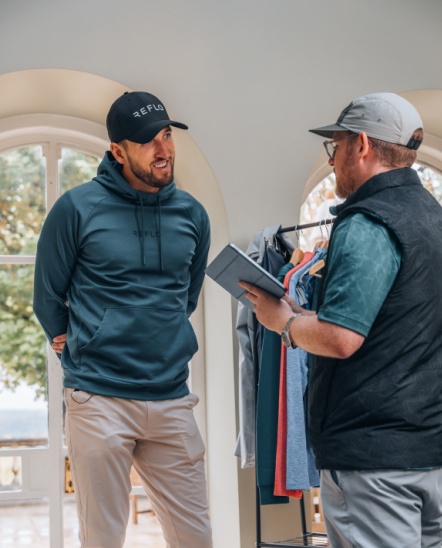
Reflo grew out of the sports we genuinely love. I’m obsessed with golf, Pete Philippou (Co-founder) lives in the gym, and as a team we all play padel, so the early product development naturally followed our own lives. That authenticity matters because we’re designing from real experience, not market guesswork.
Commercially, diversifying across sports gives us multiple routes to scale. Golf opens doors through retail and major tournaments, fitness and running create year-round demand, and padel is one of the fastest-growing sports globally. But more importantly, it allows us to design modular performance pieces that work across activities. We don’t believe people need a different T-shirt for lifting, running and padel. The reality is that mindset is often driven by selling more products, not better products.
Our approach is about creating versatile, high-performance apparel that lets people buy better, buy less and wear more. That reflects how people actually move today, blending sport, training and everyday life, and it builds a stronger, more resilient brand rooted in trust across multiple communities.
You delivered the world’s first recyclable kits for Luton Town and Forest Green Rovers. How did those partnerships come about, and do you expect more clubs to adopt similar initiatives?
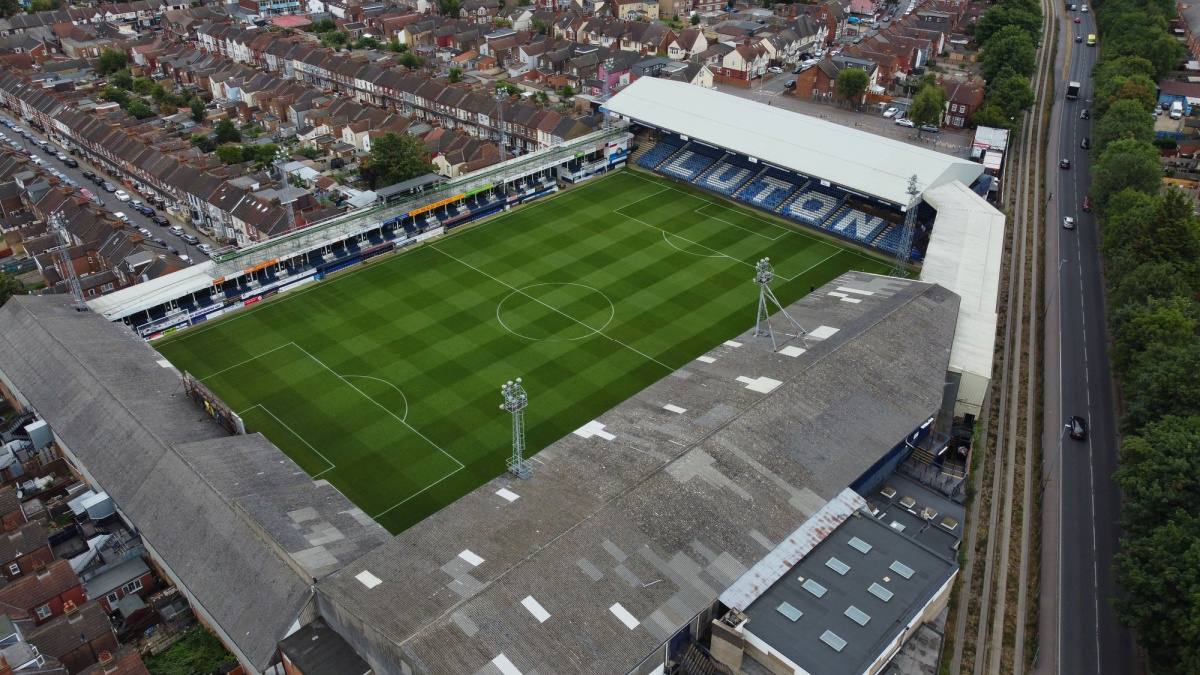
Those deals started with shared values. Clubs approached us wanting real solutions, not greenwash. Luton wanted performance-first designs that reflected heritage but also a look ahead to their future at Power Court; Forest Green Rovers are already the world’s most sustainable club, so the fit was obvious. Our Reloop shirts are the practical output of those conversations – mono-fibre, mechanically recyclable shirts that can be turned back into a pellet of recycled polyester.
Yes, we expect wider adoption. Once clubs and more Formula E teams see the operational model and fan appetite, switching from single-use seasonal kit to a circular approach becomes not just possible but attractive. It’s something we want to roll out to all sports due to the scale of waste in the industry.
Sustainability is crowded and greenwashing accusations are common. How does Reflo prove its impact and stand out as it scales globally?
We insist on independent testing and verifiable metrics. We brought in Reloop which is a mechanical fibre-to-fibre recycling system you can inspect and audit; our fabrics are traceable and we publish impact numbers – bottles recycled, trees planted – alongside product testing. We also design end-of-life pathways into products from day one so sustainability is intrinsic, not an add-on. Transparency, external certification where possible and real partnerships that show use-cases – clubs, events, tournaments – are how we earn trust.
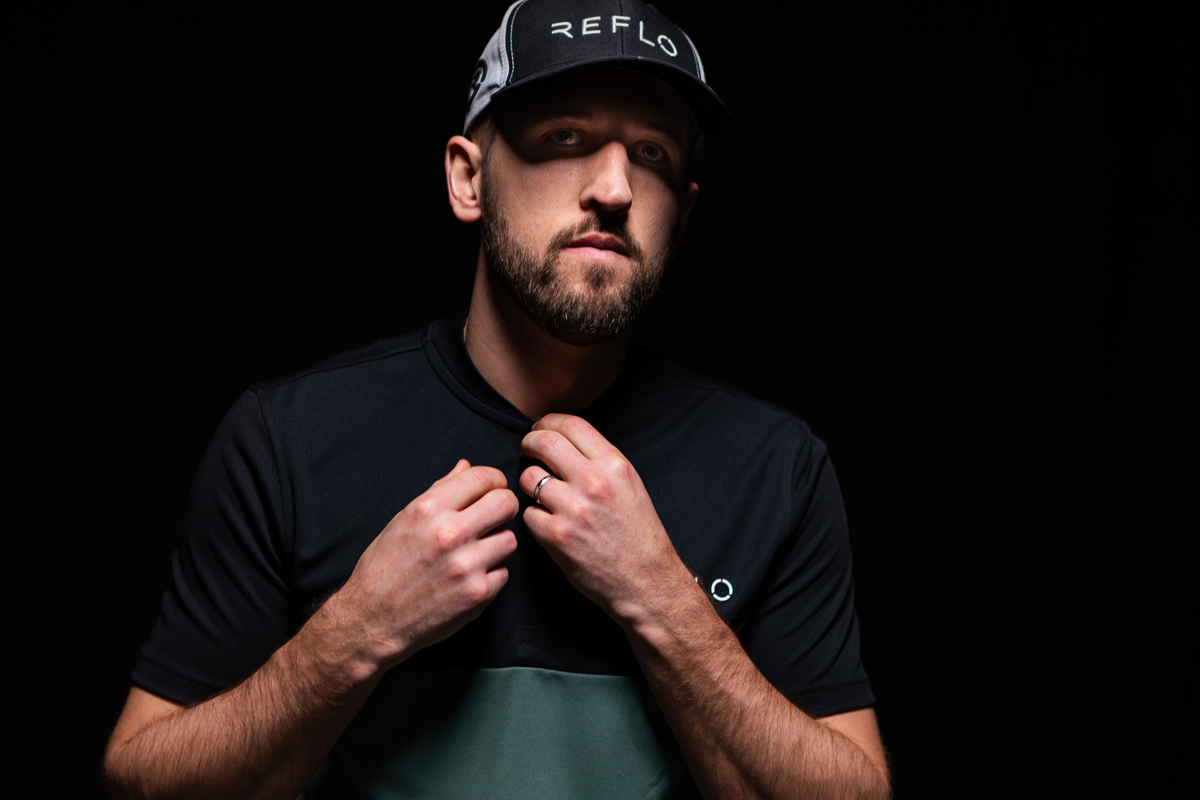
Harry Kane joined as lead ambassador and investor last year. How has his profile and connections helped Reflo open doors commercially and build credibility?
Harry brings enormous credibility and reach to Reflo. His investment validates our proposition with partners and investors and opens doors to conversations that might otherwise be difficult to access. But beyond the cut-through, he’s genuinely engaged. He isn’t just a name attached to the brand, he takes the time to understand what we’re building and why.
He’s also the epitome of modern performance. Longevity, consistency and looking after your body are at the heart of his career, which aligns naturally with how we think about sustainable performance wear. Harry is very clear that he’s not a sustainability expert, but he believes in backing people and brands who are trying to make genuine change. That belief, combined with his integrity, helps build trust with athletes, fans and partners alike. It’s both commercial acceleration and brand elevation, grounded in authenticity rather than hype.
Reflo has leaned on high-profile partnerships, such as Harry Kane and Formula E. How do you balance star-driven marketing with grassroots storytelling to keep the brand authentic?
We use star power to amplify the real stories, not replace it. High-profile partners open doors, but the heart of the brand is community, product and proof. We stay authentic by making sure every big moment is backed by something tangible – a kit a club can actually recycle, a tree-planting programme fans can see, or a golf collection with genuine heritage behind it. The stars get people listening, but the substance keeps them tuned in.
Looking ahead, what trends do you see shaping sportswear marketing in 2026, and how is Reflo preparing to adapt?
By 2026, performance alone won’t be enough. Consumers will expect real innovation, real proof and real transparency. Circularity and traceability will dominate, with fans wanting to know not just how a product performs, but what it’s made from and what happens to it at the end of its life. At the same time, functionality and modularity will win – pieces that work across training, travel and everyday life rather than single-use products.
Innovation will be the real differentiator. New fabrics, smarter construction and sustainable performance breakthroughs will separate brands that are moving the industry forward from those simply repackaging old ideas. At Reflo, we’re investing heavily in material innovation, independent testing and modular product systems, while continuing to raise the bar on sustainability and performance through our Reloop technology. The brands that win will be the ones setting new levels, not following trends.
Nike and Adidas are investing heavily in sustainability. How does Reflo compete with these global brands and what advantages does a challenger have in this space?
The big brands are talking a lot about sustainability, but it still feels like a marketing layer rather than the core of the business. It’s a bit like McDonald’s adding salads – you know what the main product really is, it doesn’t make them a healthy food store. That’s where trust becomes the key battleground.
As a challenger, our advantage is clarity and intent. Sustainability isn’t a campaign or a capsule collection for Reflo, it’s the foundation of every product we make. We move faster, prototype quicker and work directly with teams and partners to put new ideas into real-world use, not just into press releases. Being smaller gives us permission to be braver, more transparent and more accountable. When you build from purpose rather than retrofitting it, people can feel the difference.
You’ve grown Reflo from 2 people to 50 globally. What lessons have you learned about building a team in a fast-growing company?
Scaling from two to 50 exposes every strength and every weakness. The biggest lesson for me is that culture has to be intentional. In a fast-growing company, speed creates chaos unless your values are rock solid. We’ve learned to communicate more, celebrate small wins and make sure everyone knows why their work matters. You also have to let go – give people room to make decisions and even mistakes. When you hire brilliant, motivated people and trust them with real responsibility, the business grows faster than you ever could by controlling everything.
Looking ahead to 2026 and beyond, what’s the next big milestone for Reflo in product innovation, partnerships or market expansion?
Our ambition is to keep pushing what’s possible in sustainable performancewear. On the product side, we’re working on new fabric innovations and construction methods that we genuinely believe will be game changers – but we’re keeping some of that under wraps until we’re ready to launch.
From a partnerships perspective, we want to keep scaling with forward-thinking teams and organisations across sport, making sustainable kit the norm rather than the exception. Commercially, that means expanding into new markets, deepening our presence in existing ones and growing our manufacturing capabilities so high-performance sustainable products are accessible at scale. The next phase for Reflo is about proving that doing things the right way can also be the most successful way.